
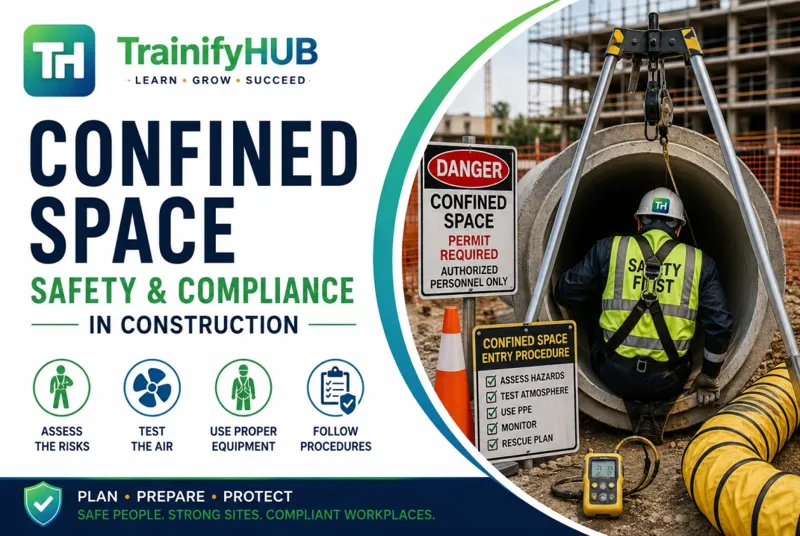
Confined Space Safety and Compliance in Construction
Comprehensive confined space safety training covering UK legal duties, hazard identification, safe entry systems, rescue planning, and best practice compliance for construction environments.
No ratings yet
3.00 CPD Points
MODULES
8
DURATION
3h
STUDENTS
6+
LEVEL
beginner
Course Price
GBP 25.00
One-time payment - Lifetime access
This course includes:
8 comprehensive modules
3h of video content
PDF, PPT & Infographics included
Final assessment included
Lifetime access on mobile & desktop
Certificate of completion
3.00 CPD Points
CATEGORY
ConstructionLAST UPDATED
Jul 2026
Course Price
GBP 25.00
One-time payment - Lifetime access
This course includes:
8 comprehensive modules
3h of video content
PDF, PPT & Infographics included
Final assessment included
Lifetime access on mobile & desktop
Certificate of completion
3.00 CPD Points
CATEGORY
ConstructionLAST UPDATED
Jul 2026
About this course
This Confined Space Safety course provides a structured and practical understanding of confined space work within construction environments. Aligned with the Confined Spaces Regulations 1997, the Health and Safety at Work Act 1974, and HSE guidance, the course equips learners with the knowledge required to identify confined spaces, recognise life-threatening hazards, and implement legally compliant control measures.
Across seven modules, learners will explore:
• Legal definitions and regulatory duties
• Atmospheric and physical hazard identification
• Risk assessment and safe entry decision-making
• Permit-to-work systems and engineering controls
• Personal protective and respiratory protection measures
• Rescue planning and emergency preparedness
• Roles, responsibilities, and competence standards
• Best practice safety culture and continuous improvement
The course emphasises prevention first — avoiding entry where possible — and ensuring that when entry is unavoidable, it is properly engineered, authorised, monitored, and supported by a robust rescue plan.
This training is suitable for construction workers, supervisors, site managers, safety representatives, and anyone involved in confined space operations.
Learning Outcomes
Module 1: Confined Space Safety and Legal Compliance in Construction
By the end of this module, learners will be able to:
• Define what legally constitutes a confined space in construction and industrial environments
• Identify the primary hazards associated with confined spaces
• Explain the requirements of the Confined Spaces Regulations 1997
• Understand the hierarchy of control for managing confined space risks
• Recognise the importance of safe systems of work and permit-to-work procedures
• Describe legal responsibilities of employers and workers in confined space operations
Module 2: Confined Space Hazard Identification and Dynamic Risk Awareness
By the end of this module, learners will be able to:
• Identify common atmospheric hazards including oxygen deficiency and toxic gases
• Recognise physical hazards such as engulfment, structural instability and restricted access
• Understand how confined space risks can change during work activities
• Identify ignition risks and hazardous atmospheres
• Apply dynamic risk awareness principles during confined space operations
• Recognise warning signs and conditions that require reassessment or stop-work actions
Module 3: Confined Space Risk Mitigation and Safe Entry Decision Making
By the end of this module, learners will be able to:
• Conduct structured risk assessments before confined space entry
• Apply the hierarchy of control to eliminate or reduce confined space hazards
• Identify when confined space entry can be avoided through alternative methods
• Understand engineering controls such as ventilation and atmospheric monitoring
• Recognise the importance of documented safe systems of work
• Make informed decisions that prioritise worker safety and regulatory compliance
Module 4: Confined Space Safe Entry Systems and Personal Protection Controls
By the end of this module, learners will be able to:
• Understand the purpose and structure of permit-to-work systems
• Identify essential equipment required for safe confined space entry
• Recognise the importance of atmospheric monitoring and ventilation systems
• Understand communication and monitoring requirements during confined space entry
• Identify appropriate personal protective equipment (PPE) and respiratory protective equipment (RPE)
• Explain how engineering controls and PPE work together to maintain safe entry conditions
Module 5: Confined Space Rescue Planning and Emergency Preparedness
By the end of this module, learners will be able to:
• Explain why rescue planning is essential for confined space operations
• Understand the risks associated with unplanned rescue attempts
• Identify the elements of an effective confined space rescue plan
• Recognise the importance of trained rescue personnel and specialist equipment
• Understand communication and coordination during emergency situations
• Apply emergency preparedness principles to minimise response times and protect workers
Module 6: Confined Space Roles, Responsibilities and Competence
By the end of this module, learners will be able to:
• Identify the responsibilities of employers, supervisors and workers in confined space operations
• Understand the importance of training, competence and supervision
• Recognise the role of permit-to-work systems in maintaining safety
• Apply stop-work authority when unsafe conditions arise
• Understand the importance of safety culture and shared accountability
• Recognise how effective teamwork reduces confined space risks
Module 7: Confined Space Safety Best Practice and Regulatory Compliance
By the end of this module, learners will be able to:
• Identify best practices for maintaining safe confined space operations
• Understand the importance of continuous atmospheric monitoring
• Recognise the value of effective communication between team members
• Apply lessons learned from near misses and safety incidents
• Understand the regulatory framework including the Health and Safety at Work Act 1974 and related regulations
• Demonstrate awareness of safe working practices before undertaking confined space tasks
Accreditation & Recognition
This course is officially recognised and certified
3.00
CPD
Points Awarded
All accreditations are verified and recognised by relevant industry bodies. Upon successful completion, your certificate will display the appropriate accreditation marks.
Frequently Asked Questions
5 questions answered
Construction workers, supervisors, safety officers, managers, and anyone involved in confined space operations.
Yes. The course aligns with the Confined Spaces Regulations 1997, Health and Safety at Work Act 1974, and HSE guidance.
No. This is theoretical and awareness-based training. Practical confined space training must be delivered separately where required.
Approximately 3 hours depending on learner pace.
Yes. A digital certificate is issued upon successful completion.
What You'll Learn
By the end of this course, learners will be able to:
• Define what legally constitutes a confined space
• Identify atmospheric and physical confined space hazards
• Explain the hierarchy of control and entry avoidance principles
• Implement safe systems of work and permit-to-work procedures
• Apply atmospheric monitoring and ventilation controls correctly
• Understand PPE and RPE requirements for confined spaces
• Recognise rescue planning obligations and emergency readiness standards
• Understand employer and worker legal responsibilities
• Apply the five essential confined space best practices
• Demonstrate compliance with UK confined space legislation
Why This Course
Confined spaces remain one of the most hazardous work environments in construction, with fatalities often linked to oxygen deficiency, toxic gases, engulfment, and failed rescue attempts.
This course ensures:
• Legal compliance with UK regulations
• Reduced risk of serious injury and fatalities
• Improved hazard recognition and decision-making
• Stronger site safety culture
• Competence-based authorisation for confined space work
It supports organisations in meeting HSE expectations and safeguarding workers through structured, defensible safety systems.
Certificate of Completion
Upon successful completion of this course and passing the final assessment, learners will receive a:
Certificate in Confined Space Safety and Risk Management
This certification confirms that the learner has demonstrated knowledge of:
• Legal definitions and safety requirements for confined spaces in construction and industrial environments
• Hazard identification including atmospheric, structural and environmental risks
• Compliance with the Confined Spaces Regulations 1997 and associated HSE guidance
• Risk assessment procedures and the hierarchy of control for confined space operations
• Permit-to-work systems and safe entry procedures
• Engineering controls including ventilation, atmospheric monitoring and isolation
• Personal protective equipment (PPE) and respiratory protective equipment (RPE) requirements
• Rescue planning, emergency preparedness and safe response procedures
• Roles, responsibilities and competence requirements for confined space work
• Best practices for maintaining safe and compliant confined space operations
The certificate supports workplace safety compliance, regulatory training requirements, and evidence of competence for individuals working in environments where confined space hazards may be present.
Course Highlights
6+
Students Enrolled
New
Be the first!
3h
Total Duration
Student Reviews
0.0
0 stars
Based on 0 reviews
5
0
4
0
3
0
2
0
1
0
🔒 Log In to Review
You must be logged in to submit a review. Please log in or create an account.