
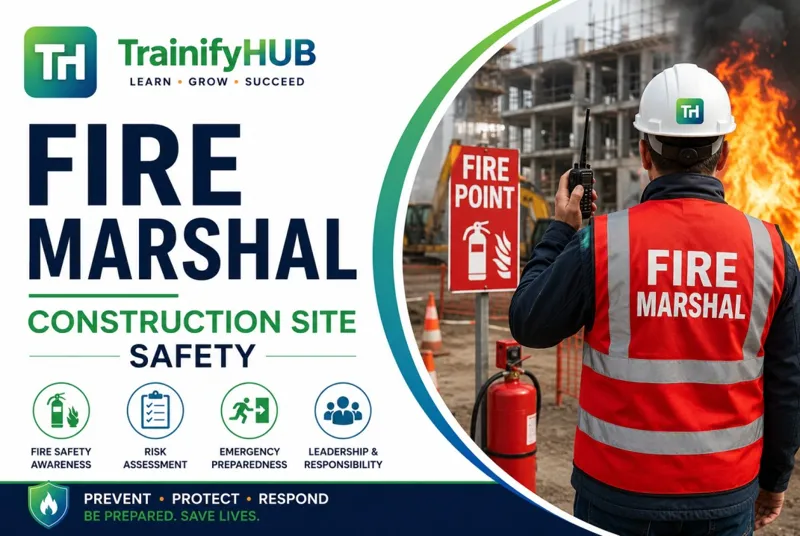
Fire Marshal – Construction Site Safety
UK-focused fire safety training for construction sites covering fire prevention, common hazards, emergency response, and evacuation support. Includes certificate and 4 CPD hours.
No ratings yet
4.00 CPD PointsCPD Standard
MODULES
11
DURATION
4h
STUDENTS
7+
LEVEL
beginner
Course Price
GBP 25.00
One-time payment - Lifetime access
This course includes:
11 comprehensive modules
4h of video content
PDF, PPT & Infographics included
Final assessment included
Lifetime access on mobile & desktop
Certificate of completion
4.00 CPD Points
CATEGORY
ConstructionLAST UPDATED
Jul 2026
Course Price
GBP 25.00
One-time payment - Lifetime access
This course includes:
11 comprehensive modules
4h of video content
PDF, PPT & Infographics included
Final assessment included
Lifetime access on mobile & desktop
Certificate of completion
4.00 CPD Points
CATEGORY
ConstructionLAST UPDATED
Jul 2026
About this course
Construction sites can present serious fire risks — from hot works and electrical equipment to flammable materials, temporary heating, and changing site layouts. Fires can spread quickly, especially in unfinished buildings where escape routes may be limited or constantly changing.
This course is designed to give learners a clear, practical understanding of Fire Marshal responsibilities in a construction environment. It explains how fires start, what to look out for on site, and how simple controls — such as good housekeeping, correct storage, and safer working behaviour — can significantly reduce risk.
You’ll also learn how Fire Marshals support emergency response, including raising the alarm, supporting calm evacuation, and keeping fire safety standards consistent across the site.
This is an awareness course and should be used alongside site fire risk assessments, site-specific procedures, and practical drills where required.
Learning Outcomes
Module 1: The Fire Marshal Role and Construction Site Fire Risks
By the end of this module, learners will be able to:
• Explain the responsibilities and duties of a Fire Marshal (Fire Warden)
• Identify common fire hazards present on construction sites
• Recognise the risks associated with flammable materials, hot works and temporary electrical systems
• Understand how unfinished structures increase fire spread risk
• Identify the Fire Marshal’s role in fire prevention and emergency response
• Understand the importance of coordination between workers and site management
Module 2: UK Fire Safety Law & Legal Responsibilities on Construction Sites
By the end of this module, learners will be able to:
• Identify key UK fire safety legislation affecting construction sites
• Understand duties under the Regulatory Reform (Fire Safety) Order 2005
• Recognise the responsibilities of employers, Responsible Persons and workers
• Understand the importance of fire risk assessments in legal compliance
• Identify enforcement consequences resulting from non-compliance
• Apply safe practices aligned with statutory fire safety regulations
Module 3: Fire Science in Construction: How Fires Start, Spread and Can Be Prevented
By the end of this module, learners will be able to:
• Explain the Fire Triangle and how combustion occurs
• Identify the three mechanisms of fire spread: conduction, convection and radiation
• Recognise ignition sources commonly found on construction sites
• Understand how site conditions influence fire development
• Identify methods for interrupting the fire triangle to prevent fires
• Apply fire science knowledge to improve hazard awareness and prevention
Module 4: Construction Site Fire Prevention & Hazard Identification
By the end of this module, learners will be able to:
• Identify common fire hazards in construction environments
• Recognise risks associated with hot works and flammable materials
• Understand the importance of housekeeping and waste management
• Apply permit-to-work systems for high-risk activities
• Identify safe storage procedures for hazardous materials
• Exercise stop-work authority when unsafe conditions arise
Module 5: Fire Risk Assessment (FRA): Foundations of Site Fire Risk Management
By the end of this module, learners will be able to:
• Explain the purpose and importance of Fire Risk Assessments
• Identify ignition sources, fuel sources and persons at risk
• Evaluate existing fire safety control measures
• Understand how to implement improvements to reduce fire risks
• Recognise the importance of reviewing FRAs as site conditions change
• Support ongoing fire risk management in construction projects
Module 6: Industrial Fire Prevention & Control: The Prevention-First Strategy
By the end of this module, learners will be able to:
• Understand the prevention-first approach to fire safety
• Identify the five key pillars of fire defence strategies
• Apply safe hot-work permit procedures
• Recognise the importance of electrical safety inspections
• Implement safe storage and housekeeping practices
• Understand how fire separation and compartmentation reduce fire spread
Module 7: Fire Detection, Alarm Systems & Emergency Lighting
By the end of this module, learners will be able to:
• Identify components of fire detection and alarm systems
• Understand the function of smoke detectors, heat detectors and manual call points
• Recognise the importance of emergency lighting during evacuations
• Understand differences between permanent and temporary alarm systems
• Conduct routine checks and report defects promptly
• Ensure fire safety systems remain operational and effective
Module 8: Fire Extinguishers: Selection, Safe Use & Emergency Decision-Making
By the end of this module, learners will be able to:
• Identify different types of fire extinguishers and their uses
• Understand the classification of fires and appropriate extinguisher selection
• Recognise colour coding and operational characteristics of extinguishers
• Apply safe procedures when tackling small fires
• Understand when evacuation is the safest option
• Maintain clear escape routes during firefighting attempts
Module 9: Emergency Procedures & Safe Evacuation Protocols
By the end of this module, learners will be able to:
• Identify the correct emergency response procedures during a fire incident
• Raise alarms and initiate evacuation protocols promptly
• Follow designated escape routes safely
• Assist vulnerable persons during evacuation
• Conduct roll calls at designated muster points
• Coordinate effectively with emergency services during incidents
Module 10: Fire Safety Leadership: Training, Communication & Continuous Compliance
By the end of this module, learners will be able to:
• Understand the importance of regular fire safety training and drills
• Maintain accurate training and compliance records
• Communicate fire safety procedures clearly to the workforce
• Promote proactive fire prevention practices on site
• Identify opportunities for continuous safety improvement
• Foster a strong fire safety culture within construction teams
Accreditation & Recognition
This course is officially recognised and certified
4.00
CPD
Points Awarded
Accredited
CPD Standard
All accreditations are verified and recognised by relevant industry bodies. Upon successful completion, your certificate will display the appropriate accreditation marks.
Frequently Asked Questions
6 questions answered
Fire Marshals (Fire Wardens), supervisors, managers, and anyone responsible for supporting fire safety and evacuation on construction sites.
It is designed around UK workplace expectations and supports good practice for fire risk awareness. It should be used alongside site fire risk assessments and site-specific procedures.
No. This course provides awareness training. Practical extinguisher training and drills should be completed separately if required by your emplo
Hot works, faulty electrics, temporary heaters, flammable liquids, poor storage, and waste build-up are among the most common risks.
Around 4 hours on average. You can pause and continue anytime.
Yes. After completion, you can download a digital certificate of completion.
What You'll Learn
The Fire Marshal role and key responsibilities on construction sites
Common causes of fire in construction environments
Fire hazards: hot works, electrics, fuels, waste, and poor storage
How fires start and how they spread in unfinished buildings
Fire prevention basics and the importance of housekeeping
Safe behaviour around hot works and temporary equipment
What to do in an emergency and how to support evacuation
Keeping escape routes clear and reporting issues early
Why This Course
Fire safety on construction sites is not just about extinguishers — it’s about prevention, awareness, and quick action when something goes wrong.
This course is ideal if you:
have been appointed Fire Marshal / Fire Warden
supervise teams or manage site standards
work around hot works or temporary electrics
need stronger fire safety awareness and site control
want recognised CPD hours and a certificate for training records
Certificate of Completion
Upon successful completion of this course and passing the final assessment, learners will receive a:
Certificate in Fire Marshal and Construction Site Fire Safety Management
This certification confirms that the learner has demonstrated knowledge of:
• Fire Marshal roles and responsibilities in construction environments
• Common fire hazards and fire prevention strategies on construction sites
• UK fire safety legislation and compliance requirements
• Fire detection systems, alarm procedures and safe evacuation protocols
• Correct selection and safe use of fire extinguishers
• Emergency response and site fire safety coordination
The certificate supports workplace fire safety training requirements and demonstrates competence in managing fire risks and emergency procedures within construction and industrial environments.
Course Highlights
7+
Students Enrolled
New
Be the first!
4h
Total Duration
Student Reviews
0.0
0 stars
Based on 0 reviews
5
0
4
0
3
0
2
0
1
0
🔒 Log In to Review
You must be logged in to submit a review. Please log in or create an account.