
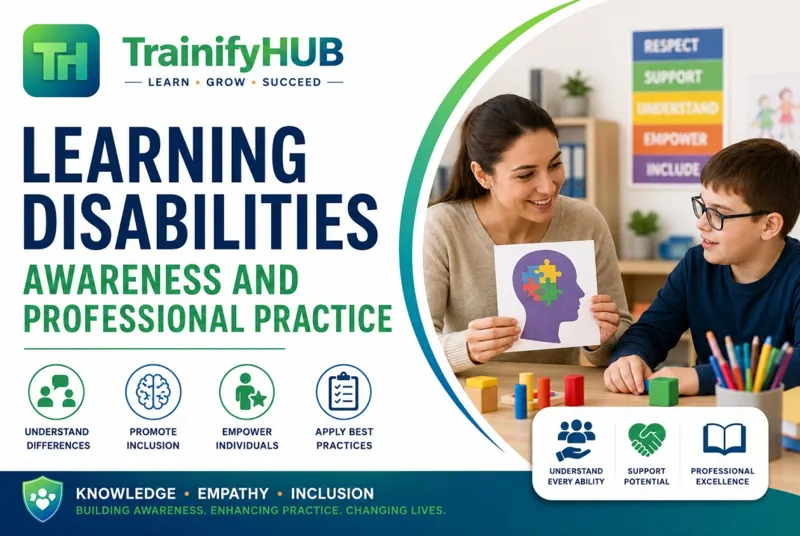
Learning Disabilities Awareness and Professional Practice
This course provides essential knowledge for supporting individuals with learning disabilities in health and social care settings. It explores key principles of person centred care, communication strategies, legal frameworks, safeguarding responsibilities, and collaborative working. Learners will gain the skills needed to promote inclusion, dignity, independence, and wellbeing while following UK legislation and professional care standards.
No ratings yet
4.00 CPD Points
MODULES
13
DURATION
4h
STUDENTS
11+
LEVEL
beginner
Course Price
GBP 25.00
One-time payment - Lifetime access
This course includes:
13 comprehensive modules
4h of video content
PDF, PPT & Infographics included
Final assessment included
Lifetime access on mobile & desktop
Certificate of completion
4.00 CPD Points
CATEGORY
Health & Social CareLAST UPDATED
Jul 2026
Course Price
GBP 25.00
One-time payment - Lifetime access
This course includes:
13 comprehensive modules
4h of video content
PDF, PPT & Infographics included
Final assessment included
Lifetime access on mobile & desktop
Certificate of completion
4.00 CPD Points
CATEGORY
Health & Social CareLAST UPDATED
Jul 2026
About this course
This course provides a comprehensive introduction to learning disabilities and the professional practices required when supporting individuals in health and social care environments. It explains how learning disabilities affect communication, daily living, independence, and access to services, and highlights the importance of delivering person centred and inclusive care.
Throughout the course, learners will explore key topics including recognising different types of learning disabilities, effective communication techniques, promoting independence, safeguarding responsibilities, and working collaboratively with families and multidisciplinary teams. The course also introduces important UK legislation and guidance such as the Equality Act 2010, the Human Rights Act 1998, and the Mental Capacity Act 2005, which form the legal foundation for ethical and lawful care practice.
By the end of the programme, learners will understand how to apply professional standards, remove barriers to inclusion, and support individuals with learning disabilities to live safe, dignified, and fulfilling lives. The course concludes with a final assessment designed to confirm understanding of the concepts covered across all modules.
Learning Outcomes
Module 1: Foundations of Learning Disabilities Awareness
By the end of this module, learners will learn:
The definition and key characteristics of learning disabilities
How learning disabilities differ from learning difficulties and other conditions
The impact learning disabilities can have on communication, independence, and daily living
Why awareness is essential for safe and respectful support in care environments
The role of care professionals in promoting dignity, respect, and inclusion
Module 2: Understanding the Spectrum of Learning Disabilities
By the end of this module, learners will learn:
How learning disabilities exist across a spectrum of support needs
The different levels of learning disabilities and their potential impact
Why individuals with the same diagnosis may require different types of support
The importance of avoiding assumptions and stereotypes in care practice
How recognising individual strengths and needs improves person centred care
Module 3: Causes and Misconceptions of Learning Disabilities
By the end of this module, learners will learn:
Biological and developmental factors that may contribute to learning disabilities
Common misconceptions and myths surrounding learning disabilities
Why learning disabilities are not caused by parenting style or education
The importance of evidence based understanding in care practice
How accurate knowledge helps reduce stigma and discrimination
Module 4: Communication and Adaptive Interaction in Learning Disabilities
By the end of this module, learners will learn:
Common communication barriers experienced by individuals with learning disabilities
Techniques for adapting communication to improve understanding
The role of clear language, visual aids, and active listening
How communication supports autonomy and informed decision making
Why respectful interaction builds trust and reduces distress
Module 5: Principles of Person Centred Care in Learning Disabilities
By the end of this module, learners will learn:
The core values of person centred care including dignity, choice and independence
How care plans should be designed around individual needs and preferences
The importance of empowering individuals to participate in decisions about their care
How personalised support promotes wellbeing and quality of life
The role of professionals in maintaining respectful and inclusive care environments
Module 6: Equality Diversity and Inclusion in Learning Disabilities Care
By the end of this module, learners will learn:
The principles of equality, diversity and inclusion within care settings
The legal protections provided by the Equality Act 2010 and Human Rights Act 1998
How discrimination and barriers can affect individuals with learning disabilities
The importance of reasonable adjustments in services and care environments
How inclusive practices promote dignity and equal access to support
Module 7: Mental Capacity Act and Decision Making in Learning Disabilities Care
By the end of this module, learners will learn:
The purpose and principles of the Mental Capacity Act 2005
How capacity is assessed using the functional test of decision making ability
The five guiding principles of the Mental Capacity Act
How to support individuals in making their own decisions wherever possible
The importance of acting in a person’s best interests when capacity is lacking
Module 8: Safeguarding Procedures and Reporting in Learning Disabilities Care
By the end of this module, learners will learn:
The meaning and importance of safeguarding in care practice
How to recognise signs of abuse, neglect, or exploitation
The responsibilities of professionals when safeguarding concerns arise
The correct procedures for reporting safeguarding incidents
How safeguarding protects vulnerable individuals from harm
Module 9: Health Equality and Wellbeing in Learning Disabilities Care
By the end of this module, learners will learn:
The health inequalities experienced by people with learning disabilities
Barriers that may prevent individuals from accessing healthcare services
The importance of annual health checks and health action plans
The role of professionals in supporting healthy lifestyles and wellbeing
How advocacy improves access to healthcare and support services
Module 10: Positive Behaviour Support and Managing Distress in Learning Disabilities Care
By the end of this module, learners will learn:
The principles of Positive Behaviour Support (PBS)
How behaviour can be a form of communication
How to identify triggers and environmental factors that cause distress
Strategies for preventing challenging situations and supporting positive outcomes
Why restrictive practices should only be used as a last resort
Module 11: Collaborative Care and Multidisciplinary Communication in Learning Disabilities Support
By the end of this module, learners will learn:
The importance of teamwork in learning disability support
The roles of multidisciplinary professionals such as therapists, social workers and psychologists
How effective communication supports coordinated care delivery
The value of collaboration with families and advocates
How information sharing and documentation improve continuity of care
Module 12: Practice Standards and Final Assessment Preparation
By the end of this module, learners will learn:
How to review and consolidate knowledge from previous modules
The key legislation and professional standards guiding learning disability practice
The importance of reflection and continuous professional development
The role of organisations such as NHS England, GOV.UK and the Care Quality Commission
How to prepare for the final assessment and apply learning in professional settings
Accreditation & Recognition
This course is officially recognised and certified
4.00
CPD
Points Awarded
All accreditations are verified and recognised by relevant industry bodies. Upon successful completion, your certificate will display the appropriate accreditation marks.
Frequently Asked Questions
5 questions answered
This course is designed for health and social care staff, support workers, carers, and anyone who works with or supports individuals with learning disabilities. It is also useful for those who want to improve their understanding of inclusive care practices.
The estimated duration of the course is approximately 4 hours, depending on the learner’s pace and the time taken to review each module.
Yes. The course includes a final online assessment that evaluates understanding of the topics covered throughout the modules.
Learners must achieve a minimum score of 80% in the final assessment to successfully complete the course and receive their certificate.
Yes. After successfully completing the course and passing the assessment, learners will receive a Certificate in Learning Disabilities Awareness and Professional Practice confirming their participation and understanding of the subject.
What You'll Learn
Understand what learning disabilities are and how they affect individuals
Recognise different types of learning disabilities and support needs
Communicate effectively with people who have learning disabilities
Promote dignity, independence, and person centred support
Understand safeguarding responsibilities and duty of care
Apply key UK legislation and professional care standards
Work collaboratively with families and multidisciplinary teams
Support access to healthcare and community services
Recognise the importance of inclusive environments
Prepare for professional practice through knowledge review and assessment
Why This Course
Understanding learning disabilities is essential for anyone working in health and social care. Individuals with learning disabilities may experience barriers in communication, healthcare access, and daily living, and professionals must be equipped with the knowledge and skills to provide appropriate support.
This course helps staff recognise these challenges and respond with safe, respectful, and person centred care. It ensures learners understand their legal responsibilities, safeguarding duties, and the professional standards expected within UK care settings.
Completing this training supports better communication, improved health outcomes, and more inclusive services while helping organisations meet regulatory expectations set by bodies such as the Care Quality Commission and NHS England.
Certificate of Completion
Upon successful completion of this course and passing the final assessment, learners will receive a:
Certificate in Learning Disabilities Awareness and Professional Practice
This certification confirms that the learner has demonstrated knowledge of:
Understanding learning disabilities and their impact on individuals
Communication and person centred support strategies
Safeguarding responsibilities and duty of care principles
UK legislation including the Equality Act 2010, Human Rights Act 1998 and Mental Capacity Act 2005
Collaborative working and inclusive care practices
The certificate supports professional development and provides evidence of competency in delivering safe, respectful and inclusive support within health and social care environments.
Course Highlights
11+
Students Enrolled
New
Be the first!
4h
Total Duration
Student Reviews
0.0
0 stars
Based on 0 reviews
5
0
4
0
3
0
2
0
1
0
🔒 Log In to Review
You must be logged in to submit a review. Please log in or create an account.