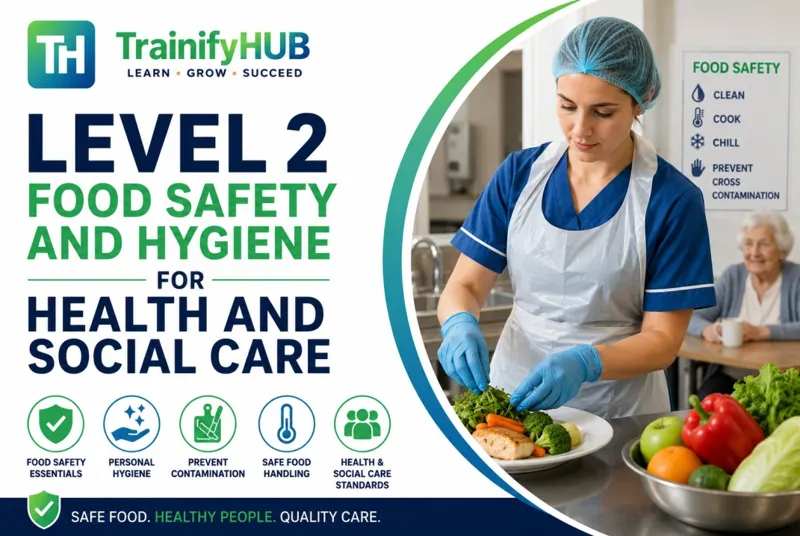
Level 2 Food Safety and Hygiene for Health and Social Care
Learn essential food safety and hygiene practices for catering environments, including legal responsibilities, contamination prevention, personal hygiene, temperature control, cleaning procedures, and food safety management in line with UK standards.
6
2h
12+
intermediate
Course Price
GBP 30.00
One-time payment • Lifetime access
This course includes:
CATEGORY
Health & SafetyLAST UPDATED
Jul 2026
Course Price
GBP 30.00
One-time payment • Lifetime access
This course includes:
CATEGORY
Health & SafetyLAST UPDATED
Jul 2026
About this course
This course provides learners with a practical understanding of food safety and hygiene within catering environments, focusing on the knowledge and responsibilities required to handle food safely and legally. It covers the core principles of food hygiene, the risks associated with contamination, the different types of food safety hazards, and the measures needed to prevent foodborne illness. Learners will also explore the importance of personal hygiene, time and temperature control, safe storage practices, cleaning and disinfection procedures, pest control, and the role of HACCP and documentation in maintaining compliance. Designed in line with UK standards, this course supports safe working practices and helps learners build confidence in maintaining hygienic and legally compliant food environments.
Learning Outcomes
📘 Module 1: Food Safety and Hygiene Principles and Legal Responsibilities
By the end of this module, learners will be able to learn:
Explain the importance of food safety and hygiene in catering environments
Identify the consequences of poor hygiene practices for individuals and businesses
Describe how cross contamination occurs during food handling and preparation
Recognise the main UK legal requirements relating to food safety
Understand the role and responsibility of food handlers in maintaining compliance
📘 Module 2: Food Safety Hazards and Prevention Practices
By the end of this module, learners will be able to learn:
Identify biological chemical and physical food hazards
Explain the risks associated with cross contamination in food environments
Recognise the factors that encourage bacterial growth in food
Describe the 4 Cs of food hygiene and their importance
Apply suitable prevention methods to reduce contamination risks
📘 Module 3: Food Safety Protocol and Personal Hygiene Responsibilities
By the end of this module, learners will be able to learn:
Demonstrate an understanding of effective handwashing practices
Explain the importance of protective clothing in food handling settings
Identify personal habits that increase the risk of contamination
Understand the 48 hour exclusion rule in relation to illness
Recognise the importance of personal behaviour in maintaining food safety
📘 Module 4: Time and Temperature Control in Food Safety
By the end of this module, learners will be able to learn:
Identify safe cooking holding chilling and storage temperatures
Explain the temperature danger zone and its impact on bacterial growth
Apply safe storage and cooling practices to reduce food safety risks
Understand the importance of stock rotation and food labelling
Maintain temperature control throughout delivery storage preparation and service
📘 Module 5: Food Safety Management and Hygiene Control Systems
By the end of this module, learners will be able to learn:
Distinguish between cleaning and disinfecting in food safety practice
Understand how cleaning schedules support hygiene management
Explain the role of pest control in maintaining safe food environments
Describe the purpose and importance of HACCP in food safety management
Recognise the value of documentation such as temperature logs cleaning records and HACCP plans
Accreditation & Recognition
This course is officially recognised and certified
CPD
Points Awarded
All accreditations are verified and recognised by relevant industry bodies. Upon successful completion, your certificate will display the appropriate accreditation marks.
Frequently Asked Questions
5 questions answered
This course is suitable for food handlers, catering staff, hospitality workers, kitchen assistants, chefs, supervisors, and anyone involved in food preparation or service.
Yes, the course is written in line with UK food safety and hygiene standards and reflects the responsibilities expected in catering environments.
Yes, learners who successfully complete the course and pass the final assessment will receive a certificate of completion.
Food safety training helps reduce the risk of contamination, protects public health, supports legal compliance, and promotes safe working practices.
Yes, it covers contamination risks, personal hygiene, temperature control, cleaning procedures, pest control, and food safety management practices.
What You'll Learn
The key principles of food safety and hygiene in catering settings
The legal responsibilities of food handlers under UK food safety standards
How food contamination occurs and how it can be prevented
The different types of food hazards and the risks they present
The importance of personal hygiene in safe food handling
Safe methods for food storage, cooking, chilling, and temperature control
The role of cleaning, disinfection, pest control, and record keeping in food safety management
How HACCP supports the identification and control of food safety risks
Why This Course
This course is important for anyone working, or planning to work, in catering, hospitality, food preparation, or food service roles where hygiene and safety are essential. Poor food handling practices can lead to contamination, foodborne illness, legal action, reputational damage, and business closure. By completing this course, learners will gain the knowledge needed to handle food safely, follow hygienic working practices, meet workplace expectations, and support compliance with UK food safety requirements. It also helps improve confidence, employability, and professional standards within food related roles.
Certificate of Completion
Upon successful completion of this course and passing the final assessment, learners will receive a:
Certificate in Food Safety and Hygiene Catering UK Standards
This certification confirms that the learner has demonstrated knowledge of:
Core principles of food safety and hygiene in catering environments
UK food safety legislation and legal responsibilities of food handlers
Causes of food contamination and effective prevention methods
Safe handling, storage and temperature control of food
Personal hygiene standards and responsibilities of food handlers
Food allergen awareness and prevention of cross contact
Cleaning, sanitation and pest control practices
Safe working procedures to maintain a hygienic food environment
The certificate supports workplace compliance, improves employability within catering and hospitality sectors, and promotes safe, responsible and hygienic food handling practices in line with UK standards.
Course Highlights
12+
Students Enrolled
New
Be the first!
2h
Total Duration
Student Reviews
Based on 0 reviews
🔒 Log In to Review
You must be logged in to submit a review. Please log in or create an account.