
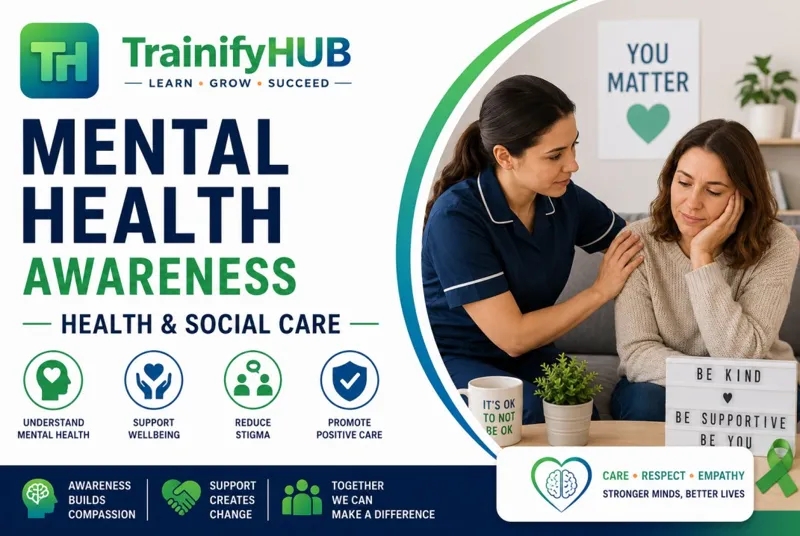
Mental Health Awareness – Health & Social Care
This course provides a comprehensive introduction to mental health awareness within health and social care environments. Learners will explore the foundations of mental wellbeing, recognise common mental health conditions, understand safeguarding responsibilities, and develop practical skills for compassionate communication, crisis response, and recovery-focused care.
No ratings yet
3.00 CPD Points
MODULES
13
DURATION
3h
STUDENTS
9+
LEVEL
beginner
Course Price
GBP 25.00
One-time payment - Lifetime access
This course includes:
13 comprehensive modules
3h of video content
PDF, PPT & Infographics included
Final assessment included
Lifetime access on mobile & desktop
Certificate of completion
3.00 CPD Points
CATEGORY
Health & Social CareLAST UPDATED
Jul 2026
Course Price
GBP 25.00
One-time payment - Lifetime access
This course includes:
13 comprehensive modules
3h of video content
PDF, PPT & Infographics included
Final assessment included
Lifetime access on mobile & desktop
Certificate of completion
3.00 CPD Points
CATEGORY
Health & Social CareLAST UPDATED
Jul 2026
About this course
Mental health awareness is an essential part of providing safe, respectful, and effective care. Professionals working in health and social care environments regularly support individuals who may be experiencing emotional distress, mental health conditions, or challenging life circumstances. Understanding how to recognise mental health concerns, respond appropriately, and provide supportive care is therefore a vital professional skill.
This course introduces the core principles of mental health awareness and professional practice in care environments. Learners will explore the foundations of mental wellbeing, understand common mental health conditions, recognise early warning signs of distress, and develop compassionate communication skills. The course also covers safeguarding responsibilities, legal frameworks such as the Mental Capacity Act, crisis response strategies, and recovery-focused care approaches.
In addition, the course highlights the importance of professional wellbeing and lifelong learning for care staff. By completing this course, learners will gain practical knowledge and confidence to support individuals experiencing mental health challenges while maintaining safe, inclusive, and person-centred care practices.
Learning Outcomes
Module 1: Mental Health Awareness in Construction Environments
By the end of this module, learners will learn:
The importance of mental health awareness in workplace environments
How workplace pressures can affect mental wellbeing
The relationship between mental health and safety
Practical ways to promote wellbeing and support colleagues
Module 2: Foundations of Mental Health and Wellbeing
By the end of this module, learners will learn:
The concept of mental wellbeing and the mental health continuum
The difference between mental health and mental illness
Biological, psychological, and social factors influencing mental health
The role of protective factors in building resilience
Module 3: Recognising Common Mental Health Conditions
By the end of this module, learners will learn:
Key characteristics of common mental health conditions
Signs and symptoms of depression and anxiety disorders
The impact of conditions such as bipolar disorder, schizophrenia, and PTSD
How mental health conditions may appear in real-world settings
Module 4: Recognising Early Warning Signs of Mental Health Concerns
By the end of this module, learners will learn:
Emotional, behavioural, and physical warning signs of mental distress
How early identification can prevent escalation
When and how to raise concerns appropriately
The importance of early intervention in care environments
Module 5: Supporting Mental Health in Care Environments
By the end of this module, learners will learn:
How mental health support varies across different care settings
The needs of vulnerable populations such as older adults and individuals with learning disabilities
The impact of trauma and hospital-related anxiety
Strategies for providing inclusive and supportive care
Module 6: Communicating with Compassion in Care Settings
By the end of this module, learners will learn:
The importance of empathy and active listening in care communication
Principles of person-centred communication
How compassionate communication builds trust and understanding
Ways to support individuals in expressing their emotions safely
Module 7: Compassionate De-escalation in Care Settings
By the end of this module, learners will learn:
How to recognise signs of escalating distress
Techniques for calming and supporting individuals during difficult situations
How to respond safely to verbal aggression or emotional crisis
When to seek additional professional support
Module 8: Safeguarding and Managing High-Risk Situations in Care
By the end of this module, learners will learn:
How to recognise high-risk situations involving vulnerable individuals
The steps involved in safeguarding procedures
How to escalate concerns and seek urgent assistance
The importance of protecting individuals from harm
Module 9: Safeguarding, Legislation and Duty of Care
By the end of this module, learners will learn:
The legal responsibilities of care professionals
The principles of duty of care
Key legislation including the Mental Capacity Act 2005
The importance of confidentiality and information sharing
Module 10: Promoting Recovery and Wellbeing in Care
By the end of this module, learners will learn:
The principles of recovery-focused care
How to support independence and personal goals
The importance of social inclusion and positive routines
Strategies for promoting wellbeing in care environments
Module 11: Professional Wellbeing and Self-Care for Care Staff
By the end of this module, learners will learn:
How to recognise signs of work-related stress and burnout
The importance of maintaining professional boundaries
Strategies for maintaining personal wellbeing
When and how to seek support in professional environments
Module 12: Commitment to Lifelong Learning in Mental Health Care
By the end of this module, learners will learn:
The importance of continuous professional development
How reflection improves professional practice
The role of UK standards and legislation in care practice
How lifelong learning strengthens mental health support skills
Accreditation & Recognition
This course is officially recognised and certified
3.00
CPD
Points Awarded
All accreditations are verified and recognised by relevant industry bodies. Upon successful completion, your certificate will display the appropriate accreditation marks.
Frequently Asked Questions
5 questions answered
This course is suitable for individuals working or planning to work in health and social care environments, including care assistants, support workers, healthcare staff, and anyone interested in developing mental health awareness and professional care skills.
No prior experience is required. The course is designed as a beginner-level training programme that introduces the essential concepts of mental health awareness and professional care practice.
The course takes approximately 4 hours to complete, depending on the learner’s pace. It includes learning materials, practical explanations, and a final assessment.
Yes. Learners who successfully complete the course and pass the final assessment will receive a Certificate of Completion confirming their training in mental health awareness and professional care practices.
This course helps learners develop the knowledge and confidence required to recognise mental health concerns, communicate compassionately, follow safeguarding procedures, and support individuals in care environments while maintaining professional standards and wellbeing.
What You'll Learn
Understand the foundations of mental health and wellbeing
Recognise common mental health conditions and early warning signs
Communicate with empathy and compassion in care environments
Apply safeguarding procedures and legal responsibilities
Respond appropriately to distress and crisis situations
Support recovery, independence, and wellbeing in care settings
Maintain professional boundaries and personal wellbeing
Reflect on practice and commit to continuous professional development
Why This Course
Mental health awareness is essential for professionals working in health and social care. Understanding how to recognise mental health concerns and respond appropriately can improve the safety, wellbeing, and quality of life of individuals receiving care. This course equips learners with the knowledge and practical skills required to provide compassionate support, follow safeguarding responsibilities, and maintain professional standards. It also helps care professionals build confidence in managing challenging situations while promoting recovery, inclusion, and wellbeing.
Certificate of Completion
Upon successful completion of this course and passing the final assessment, learners will receive a:
Certificate in Mental Health Awareness – Health & Social Care
This certification confirms that the learner has demonstrated knowledge of:
• Core principles of mental health awareness and wellbeing
• The mental health continuum and factors influencing emotional wellbeing
• Recognition of common mental health conditions and early warning signs
• Compassionate communication, empathy, and person-centred support
• De-escalation techniques and appropriate responses to distress
• Safeguarding responsibilities, duty of care, and relevant legislation
• Recovery-focused care approaches that promote independence and wellbeing
• Professional wellbeing, stress management, and maintaining professional boundaries
The certificate supports professional awareness, safeguarding responsibilities, and the development of compassionate and effective care practices within health and social care environments.
Course Highlights
9+
Students Enrolled
New
Be the first!
3h
Total Duration
Student Reviews
0.0
0 stars
Based on 0 reviews
5
0
4
0
3
0
2
0
1
0
🔒 Log In to Review
You must be logged in to submit a review. Please log in or create an account.