 More in Health & Safety
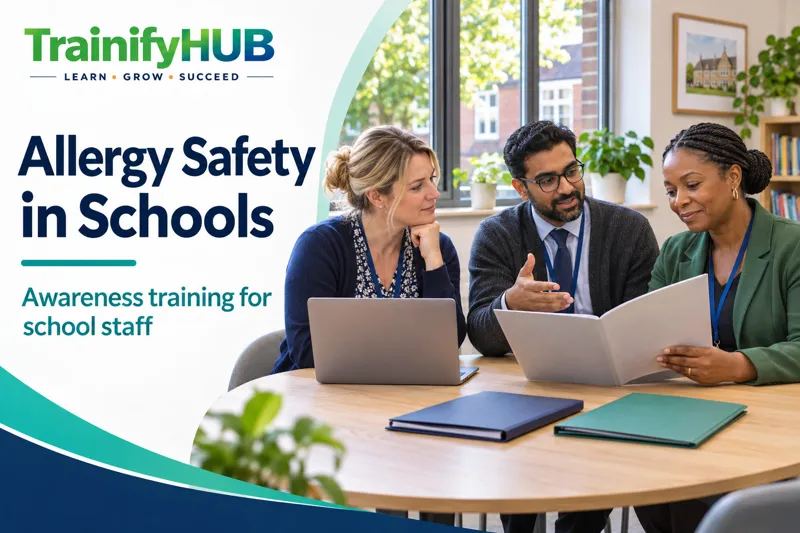
Allergy Safety in Schools
Connect whole-school allergy planning, individual support, rapid medicine access and prompt emergency recognition with inclusive school life and factual reporting.
No ratings yet
2.00 CPD Points
MODULES
9
ESTIMATED DURATION
2h 13m
STUDENTS
0+
LEVEL
beginner
Course Price
£20.00
One-time payment - 9 months' access
Buying for your team?
Up to 30% off per seat: 10+ seats 10%, 25+ seats 20%, 50+ seats 30%.
This course includes:
9 comprehensive modules
8 video lessons
1 downloadable resource (PDF)
Final assessment included
9 months’ access on mobile & desktop
Certificate of completion
2.00 CPD Points
CATEGORY
Health & SafetyLAST UPDATED
Nov 2026
About this course
Allergy safety involves the whole school day. This course helps teachers and other school staff in England recognise concerns, use current support arrangements, identify medicine-access gaps and contribute to inclusive lessons, clubs and visits.
Eight Modules and fictional written activities connect current policy responsibilities, urgent warning signs, Individual Healthcare Plans, clinical action plans, classroom materials, emergency medicine access, emergency priorities and near-miss review. You will distinguish known facts from assumptions and propose reasoned action within your school role.
This is non-regulated awareness learning. It complements current official guidance, school policies, individual plans and local instruction. It does not diagnose, prescribe, approve clinical delegation, assess practical device technique or certify legal compliance. The core school framework is England-specific; online availability does not make national or provider duties identical.
Allow approximately 2 hours 13 minutes, including video learning, independent learning and the final assessment.
💻 What you need
✓ Read or access the learning in a suitable supported format; no previous clinical qualification is required for this awareness course.
✓ Use an internet-connected device and allow time for teaching, eight written activities, official reading and the separate assessment.
✓ Have access to the school allergy policy, relevant individual plans and local emergency, medicine-access, recording and reporting arrangements.
✓ Use fictional information only. Do not enter real pupil records, practise medicine administration or invent clinical instructions.
Learning Outcomes
📘 Module 1 – Understanding School Allergy Responsibilities and Role Limits
Explore why allergy safety reaches beyond catering and why new, supply and club staff need useful local information. Distinguish the defined England school policy duty, annual review and publicity from guidance recommendations and powers for future Regulations. Identify what to locate without assuming that an online pass grants clinical or practical competence.
By the end of this Module, learners will be able to:
✓ Explain why allergy safety is a whole-school responsibility rather than a catering-only task.
✓ Distinguish the current policy duties for covered England schools from guidance expectations and possible future Regulations.
✓ Identify the school policy, named local responsibilities and training arrangements needed for a staff role.
✓ Explain the limits of online awareness learning and the need for local instruction and device-specific training.
Fictional workplace application: A supply teacher arrives at an England maintained secondary school for their first morning. They have received a timetable but have not yet been shown the school allergy safety policy, local emergency arrangements or relevant pupil support information. No incident has occurred.
Written reflection: Prepare a first-morning information checklist. Separate what the teacher needs to locate from what the school leadership must organise, and mark all missing local details as unknown.
📘 Module 2 – Understanding Allergy and Recognising Urgent Concerns
Distinguish allergy, food intolerance and autoimmune coeliac disease while supporting individual needs. Recognise urgent airway, breathing or circulation concerns and consider why a missing rash, unconfirmed trigger or absent previous diagnosis must not create reassurance or routine delay. Apply the distinction to the supplied facts without inventing a medical outcome.
By the end of this Module, learners will be able to:
✓ Distinguish allergy, food intolerance and autoimmune coeliac disease without diagnosing a pupil.
✓ Recognise airway, breathing or circulation warning signs that can indicate anaphylaxis.
✓ Explain why a rash, known trigger or previous allergy diagnosis is not required before urgent concern.
✓ Identify when immediate emergency action takes priority over routine reporting or parental contact.
Fictional workplace application: A pupil with a recorded milk allergy tells a classroom assistant that their throat feels tight and they are finding it hard to breathe. The assistant can hear noisy breathing. A trigger has not been confirmed, and no rash is described. No treatment or emergency call has yet been recorded.
Written reflection: Write the urgent concern and the immediate priorities from the supplied signs. Identify three assumptions that staff must avoid and explain why a parent-first or wait-for-rash approach would delay help.
📘 Module 3 – Using Individual Healthcare Plans and Clinical Action Plans
Consider the different purposes of an Individual Healthcare Plan and a clinician-issued Allergy Action Plan. Identify how impact, risk and additional support guide school planning, and how pupils, parents, relevant staff and healthcare professionals contribute. Preserve current clinical provenance and practical access instead of creating an unreliable substitute.
By the end of this Module, learners will be able to:
✓ Explain the different purposes of a school Individual Healthcare Plan and a clinician-issued Allergy Action Plan.
✓ Identify when functional impact, risk and additional arrangements suggest that an Individual Healthcare Plan is needed.
✓ Use current clinical advice without copying or altering it into an unreliable substitute.
✓ Identify how pupils, parents, relevant staff and healthcare professionals contribute to a personalised plan.
Fictional workplace application: Nila, aged 9, is joining an England primary school. Her parent provides a current clinician-issued Allergy Action Plan for egg allergy and explains that she needs additional support at meals and the after-school club. The school has not yet agreed its own arrangements with the family. No reaction is occurring.
Written reflection: Draft the school-arrangement headings for Nila without writing clinical instructions. List who should contribute and how the current action plan will be linked, accessed and reviewed.
📘 Module 4 – Reducing Allergen Exposure Across the School Day
Look beyond meals to materials used for crafts, lessons, celebrations and clubs. Use actual pupil information and reliable checks rather than assumptions about recipes, residues or nut-free labels. Coordinate with responsible providers and consider proportionate alternatives that support participation without claiming an unverified material is safe.
By the end of this Module, learners will be able to:
✓ Identify allergen exposure risks in classroom, meal, play and extracurricular activities.
✓ Use current pupil information and verified materials rather than assumptions or a nut-free label.
✓ Explain how school staff coordinate with catering and activity providers without replacing their specialist controls.
✓ Propose proportionate alternatives that reduce risk and support participation with peers.
Fictional workplace application: A class is preparing a craft activity using donated food boxes and homemade play dough. One pupil has a recorded wheat allergy. The ingredient information for the dough and the previous contents or cleaning of the boxes have not been verified. The materials have not yet been used and no reaction has occurred.
Written reflection: Prepare a pre-activity decision record: facts, checks, responsible contacts and a proposed inclusive alternative. State what must be verified before the materials are used.
📘 Module 5 – Maintaining Rapid Access to Emergency Medicines
Identify medicine access arrangements across school activities and why expiry, storage, replacement records and current product-specific preparation matter. Distinguish prescribed devices, ordinary school spare-AAI arrangements and MHRA’s exceptional unforeseen life-saving route. Keep current proposals separate from operative permissions and avoid generic product-switching or dose instructions.
By the end of this Module, learners will be able to:
✓ Identify arrangements that keep a pupil’s prescribed emergency devices rapidly accessible throughout school activities.
✓ Distinguish individually prescribed devices from school spare auto-injectors and their separate supply/use arrangements.
✓ Explain why current device instructions, local training, checks and replacement records matter.
✓ Distinguish ordinary spare-device arrangements from exceptional life-saving use without inventing a blanket permission or ban.
Fictional workplace application: Owen, aged 12, is due to take part in outdoor PE. His two prescribed adrenaline auto-injectors are in a locked office, and the member of staff holding the key cannot currently be reached. Owen is well and no allergen exposure or reaction is reported. Staff discover the access problem before the lesson begins.
Written reflection: Write an access-gap escalation and pre-PE readiness plan. Separate the current non-emergency issue from what would change if anaphylaxis were suspected. Identify details that need local checking.
📘 Module 6 – Responding to Suspected Anaphylaxis at School
Use a written school scenario to explain prompt available adrenaline as directed, immediate emergency help, appropriate positioning and continued observation. Separate the immediate first response from the five-minute repeat-AAI review and prepare a factual handover. This activity develops awareness reasoning and does not demonstrate practical administration.
By the end of this Module, learners will be able to:
✓ Apply immediate adrenaline and emergency-call priorities to a supplied school scenario.
✓ Explain safe positioning, supervision and bringing help to the person without making them walk.
✓ Identify the need for continued observation and a second auto-injector after five minutes without improvement, following current guidance and device instructions.
✓ Keep factual emergency handover separate from assumed treatment outcomes or practical competence claims.
Fictional workplace application: In a written school scenario, Amir, aged 11, has a known sesame allergy. After lunch he develops a hoarse voice and wheezing. His own prescribed adrenaline auto-injectors and current written Allergy Action Plan are brought to the classroom. A staff member trained in those devices and another colleague are present. No dose or 999 call has yet been recorded, and the cause has not been confirmed.
Written reflection: Write a prioritised proposed response for the two adults, then a factual handover template with unknown fields left explicitly unknown. Explain the distinction between immediate first treatment and the five-minute review.
📘 Module 7 – Including Pupils in Clubs, Trips and School Life
Plan clubs and visits around current individual needs, food information, trained support, devices and emergency communications. Listen respectfully to worries and consider proportionate participation-focused arrangements. Share current relevant information securely with responsible people, without assuming bullying, a completed plan or a guaranteed safe outcome.
By the end of this Module, learners will be able to:
✓ Plan school clubs and visits around the pupil’s individual needs, current plans and emergency medicine access.
✓ Explain why automatic exclusion or requiring a parent to attend is not a substitute for suitable school arrangements.
✓ Respond to allergy-related anxiety or bullying while involving the pupil respectfully.
✓ Share relevant support information securely with staff and providers who need it without publicising unnecessary health details.
Fictional workplace application: Maya, aged 14, has a known peanut allergy and wants to join a school day visit. She tells a tutor she is worried that she will be left out. The venue’s food information and the school’s arrangements for trained staff and emergency medicine access have not yet been confirmed. No bullying incident, reaction or decision to exclude her has been reported.
Written reflection: Draft an inclusive visit-planning checklist and a short supportive response to Maya. Identify confirmations needed before the trip and a proportionate information-sharing route.
📘 Module 8 – Recording Near Misses and Reviewing School Arrangements
Prepare a factual record where plan currency and medicine access need attention before a club departs. Separate supplied findings, unknown causes, proposed actions and verified completion. Explain how internal review supports improvement while external reporting remains a distinct conditional decision for the responsible person.
By the end of this Module, learners will be able to:
✓ Distinguish supplied facts, attributed reports and unknown causes when recording an allergy near miss.
✓ Explain how prompt internal reporting supports review of policies, Individual Healthcare Plans and handovers.
✓ Distinguish internal learning from separate external reporting criteria without assuming every incident is reportable to HSE.
✓ Identify how review actions, responsibilities and follow-up checks support improvement without claiming a guaranteed outcome.
Fictional workplace application: Before an after-school club leaves the main building for the sports field, a staff member checks the arrangements for a pupil with a known allergy. The club handover refers to an old plan, while the pupil’s prescribed emergency devices are still in the classroom. The group has not departed. No reaction, exposure or injury has been reported. The exact time, reason for the old plan and previous handover history have not been supplied.
Written reflection: Write a factual near-miss record and a proposed action log with owner/check/status fields. Identify the information a responsible leader would need before deciding on any external reporting.
Accreditation & Recognition
This course is officially recognised and certified
2.00
CPD
Points Awarded
All accreditations are verified and recognised by relevant industry bodies. Upon successful completion, your certificate will display the appropriate accreditation marks.
Frequently Asked Questions
15 questions answered
Teachers, teaching assistants, pastoral, office, site, supply, club and other relevant staff who need school-allergy awareness. It distinguishes frontline action from school leadership and healthcare responsibilities.
No. This course supports recognition and reasoning. Current local instruction, product-specific preparation and any practical training required for your assigned role remain necessary. An online pass does not assess administration technique or approve clinical delegation.
No. Lessons, crafts, celebrations, play, PE, clubs and visits can also involve relevant exposure or support needs. Staff need current pupil arrangements, reliable checks, emergency access and clear handovers across the school day.
The core is England. It explains the defined section 100 school scope and current section 100A policy, annual review and publicity duties, keeping guidance expectations and future regulatory powers distinct. Other institutions and UK nations need their own applicable frameworks.
No. Staff learning is one part of school arrangements. The current policy, review, publicity, support, preparation and local responsibilities still need attention. TrainifyHUB certificate terms do not establish statutory retraining periods or a compliance guarantee.
No. Coeliac disease is autoimmune and is distinct from food allergy and ordinary intolerance. Support the pupil’s individual needs without diagnosing them. A person may also have a separate allergy; one label does not cancel another plan.
Take urgent airway, breathing or circulation concerns seriously. A rash, known trigger or previous diagnosis is not required before emergency concern. Follow current emergency guidance and the actual plan/device instructions; do not wait for routine parent or management permission.
It explains prompt available adrenaline as directed, immediate 999 help, staying with the person, appropriate positioning and factual handover. Continued observation and the five-minute repeat-AAI review are distinct from immediate first treatment. The course does not teach a generic dose, device-switching rule or practical rescue procedure.
An Individual Healthcare Plan describes school support, responsibilities and access. The current clinician-issued Allergy Action Plan supplies clinical advice. Link or attach it with provenance and review information rather than rewriting it into an unreliable substitute.
No. Use current pupil information and reliable ingredient, material and preparation checks with the responsible people. A label or apparent cleanliness does not verify every relevant allergen or residue. Consider proportionate verified alternatives that support participation.
No. Prescribed emergency devices need rapid access across activities. Spare AAIs are additional, with ordinary planned arrangements distinct from MHRA’s exceptional unforeseen life-saving clarification. A proposal about nasal stock is not operative permission or general device interchangeability.
No. Suspected anaphylaxis needs prompt action. The five-minute point concerns use of a second AAI if symptoms have not improved, following current instructions and emergency advice. It is not a retrieval allowance or first-dose waiting period.
Automatic exclusion or a blanket parent-attendance condition is not a substitute for school support. Involve the pupil, family and responsible people early; confirm individual plans, provider information, trained support, devices and communications through proportionate arrangements.
No. Record and escalate internally through school arrangements and support verified follow-up. The responsible person separately assesses actual RIDDOR criteria, including work connection and the relevant circumstances. Food-safety or safeguarding reporting has distinct conditions; do not invent harm, blame or external notifications.
Complete eight fictional written activities before checking the separate review guides. The workbook has 64 planned minutes, counted once including matching video pauses. The separate assessment has a 30-minute allocation, 15 questions and four options per question. Pass with 12 correct answers, or 80%. Official reading and local induction are additional. The fee is £20 GBP. Access lasts nine months from assignment; unassigned company-purchased entitlements do not expire. Certificate validity is one year from passing under TrainifyHUB policy. Online access is available across the UK, while the core framework remains England-specific. Completion records awareness learning.
What You'll Learn
✓ Connect allergy arrangements across lessons, meals, play, PE, clubs and visits.
✓ Distinguish current organisational policy duties from guidance expectations and future regulatory powers.
✓ Recognise urgent signs and explain why routine permissions must not delay emergency help.
✓ Link school support arrangements to current clinician-issued action plans without rewriting clinical advice.
✓ Check relevant materials, responsible roles and rapid access to prescribed emergency devices.
✓ Support participation, share relevant information securely and record factual learning from near misses.
Why Take This Course
✓ Practise decisions that connect individual support with whole-school arrangements.
✓ Identify access and information gaps before lessons, clubs and visits proceed.
✓ Distinguish prompt emergency priorities from routine planning and paperwork.
✓ Support participation and useful follow-up through current school responsibilities and factual records.
🌍 Available Online Across the UK
Study Allergy Safety in Schools online from anywhere in England, Scotland, Wales or Northern Ireland, including:
✓ London ✓ Birmingham ✓ Leicester
✓ Coventry ✓ Nottingham ✓ Derby
✓ Manchester ✓ Liverpool ✓ Leeds
✓ Sheffield ✓ Bradford ✓ Newcastle
✓ Bristol ✓ Southampton ✓ Portsmouth
✓ Brighton ✓ Oxford ✓ Cambridge
✓ Norwich ✓ Glasgow ✓ Edinburgh
✓ Aberdeen ✓ Dundee ✓ Cardiff
✓ Swansea ✓ Newport ✓ Wrexham
✓ Belfast ✓ Derry/Londonderry
Online access does not imply local classroom delivery. The core school framework remains England-specific; apply the appropriate national framework and current employer arrangements in your setting.
Certificate of Completion
✓ Complete the teaching, all eight workbook activities and the separate Final Assessment.
✓ The assessment contains 15 single-answer questions with four options each. Pass mark: 80%, or 12 correct answers.
✓ Certificate validity is one year from passing under TrainifyHUB policy.
✓ Completion records awareness learning. It is not a regulated qualification, practical first-aid or device assessment, clinical delegation approval or legal-compliance certificate.
This CPD-accredited awareness course carries 2 CPD points.
Course Highlights
0+
Students Enrolled
New
Be the first!
2h 13m
Estimated Duration


Why book with TrainifyHUB
- CPD accredited training content
- Delivered UK-wide at your workplace
- Certificate of completion included
- Secure, encrypted online payments
Accredited & Trusted
 CPD Accredited Provider
 Secure Payments
Need help choosing a course?
+44 7405 005823 support@trainifyhub.co.uk
Our team can advise on the right training package for your organisation.
Keep learning
Related courses
Picked from what learners take alongside this course.
More in Health & Safety More in Health & Safety
 More in Health & Safety
 More in Health & Safety
 More in Health & Safety
 More in Health & Safety
 More in Health & Safety
Health & Safety
Level 3 Food Hygiene & Safety – Supervisor & Manager Training
New course
11 modules3h 37m
£35.00
 Same industry
Construction
Hand and Power Tool Safety Compliance and Operational Risk Control
4.8(20)
7 modules3h97
£25.00
Student Reviews
0.0
0 stars
Based on 0 reviews
5
0
4
0
3
0
2
0
1
0
🔒 Log In to Review
You must be logged in to submit a review. Please log in or create an account.