 More in Health & Social Care
Health & Social Care
Deprivation of Liberty Safeguards (DoLS) Awareness Update Course (UK) | Mental Capacity Act & Best Interests Training
4.5(20)
7 modules2h72
GBP20.00
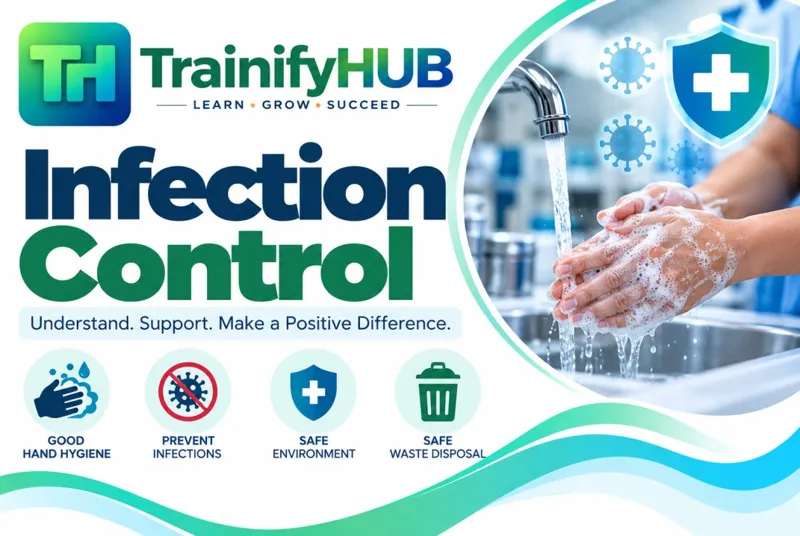
Learn essential infection control practices, hand hygiene, PPE, safe waste disposal and outbreak prevention to promote safer care environments and protect staff, service users and visitors.
11
2h 30m
0+
beginner
Course Price
GBP 20.00
One-time payment - 9 months' access
Buying for your team?
Up to 30% off per seat: 10+ seats 10%, 25+ seats 20%, 50+ seats 30%.
CATEGORY
Health & Social CareLAST UPDATED
Oct 2026
Course Price
GBP 20.00
One-time payment - 9 months' access
Buying for your team?
Up to 30% off per seat: 10+ seats 10%, 25+ seats 20%, 50+ seats 30%.
CATEGORY
Health & Social CareLAST UPDATED
Oct 2026
Infection control is essential for protecting people from preventable infections in healthcare, residential care, community services and other workplaces. Effective infection prevention and control (IPC) practices help reduce the transmission of harmful microorganisms, protect vulnerable individuals and maintain safe working environments.
This Infection Control Training course introduces learners to the principles of infection prevention, standard infection control precautions, hand hygiene, personal protective equipment (PPE), environmental cleaning and safe waste management. It also explores the chain of infection, healthcare-associated infections (HCAIs), antimicrobial resistance (AMR), outbreak management and occupational exposure risks.
Learners will develop an understanding of how everyday actions, including correct handwashing, appropriate PPE use, safe handling of contaminated materials and accurate incident reporting, contribute to safer care delivery. The course also explains professional responsibilities, confidentiality, documentation and the importance of following workplace policies.
Designed for healthcare workers, care assistants, support workers, cleaning staff, students and other professionals who may encounter infection risks, this training provides practical knowledge for recognising hazards and applying appropriate preventive measures.
By completing the course, learners can strengthen their infection control awareness, support safer practices and contribute to a culture of accountability and continuous improvement. Training should be used alongside current workplace procedures, relevant UK guidance and role-specific instruction.
By the end of this module, learners will be able to:
Define infection prevention and control (IPC) and explain its importance in healthcare and social care settings.
Identify common microorganisms, including bacteria, viruses, fungi and parasites.
Explain what healthcare-associated infections (HCAIs) are and how they affect individuals.
Recognise groups at increased risk of infection, including older adults and immunocompromised individuals.
Describe the responsibilities of staff in maintaining safe and hygienic care environments.
Identify the six links in the chain of infection: infectious agent, reservoir, portal of exit, mode of transmission, portal of entry and susceptible host.
Explain how microorganisms spread through direct contact, indirect contact, droplets and airborne transmission.
Recognise common sources of infection in healthcare and residential care settings.
Describe how hand hygiene, PPE and environmental cleaning interrupt the chain of infection.
Apply basic infection prevention principles to reduce the risk of transmission.
Explain the purpose of Standard Infection Control Precautions and their application to every relevant episode of care.
Identify potential infection risks associated with blood, body fluids, non-intact skin and contaminated equipment.
Describe appropriate risk assessment procedures before providing care.
Explain safe sharps management, environmental cleaning and contaminated linen handling.
Recognise the importance of applying precautions consistently, regardless of a person's known infection status.
Explain why hand hygiene is essential for preventing the spread of infection.
Identify the World Health Organization's Five Moments for Hand Hygiene.
Distinguish between when to use soap and water and when to use alcohol-based hand rub.
Describe the correct handwashing technique, including cleaning fingertips, thumbs, between fingers and wrists.
Explain why gloves do not replace hand hygiene and identify when hand hygiene is required before and after glove use.
Identify common types of PPE, including gloves, aprons, gowns, masks, eye protection and respiratory protective equipment.
Select appropriate PPE according to the task, exposure risk and workplace guidance.
Describe the correct sequence for putting on and removing PPE.
Explain how incorrect PPE removal can cause cross-contamination.
Identify safe procedures for disposing of single-use PPE and performing hand hygiene after removal.
Differentiate between cleaning, disinfection and sterilisation.
Explain why cleaning must precede disinfection or sterilisation where required by the relevant process.
Identify frequently touched surfaces that require regular cleaning and disinfection.
Describe safe procedures for handling cleaning products and contaminated equipment.
Explain how effective environmental decontamination reduces infection transmission.
Identify different categories of healthcare waste, including clinical, offensive, domestic and sharps waste.
Explain the importance of correct waste segregation and disposal.
Recognise the risks associated with needlestick injuries and improperly discarded sharps.
Describe safe sharps disposal practices, including avoiding needle recapping and overfilling containers.
Explain how appropriate waste handling protects staff, service users, visitors and the wider environment.
Identify occupational infection risks in hospitals, residential care facilities and community healthcare settings.
Recognise situations involving exposure to blood, body fluids, contaminated equipment or sharps.
Describe immediate actions following a potential exposure incident, including appropriate washing or irrigation.
Explain the importance of prompt reporting, risk assessment and timely medical evaluation after exposure.
Recognise the role of occupational health services in follow-up, vaccination assessment and ongoing support.
Explain antimicrobial resistance and its implications for healthcare and social care.
Distinguish between bacteria and viruses and understand why antibiotics are ineffective against viral infections.
Identify possible outbreak warning signs, including linked cases, symptom clusters and sudden increases in staff sickness.
Explain the importance of promptly escalating suspected outbreaks according to workplace procedures.
Describe immediate outbreak control measures, including appropriate isolation, enhanced cleaning and communication with responsible personnel.
Explain how effective IPC practices and responsible antimicrobial use help reduce infection risks and support AMR prevention.
Explain professional accountability and the duty of care in infection prevention.
Recognise the importance of dignity, inclusion, confidentiality and person-centred communication.
Describe how to maintain accurate, timely and objective infection control records.
Identify situations requiring incident reporting or escalation of unsafe practices.
Explain how staff training, audits, risk management and reflective practice improve infection prevention.
Describe the importance of following organisational policies and applicable UK infection prevention guidance.
By the end of the final assessment, learners should be able to:
Demonstrate understanding of the fundamental principles of infection prevention and control.
Identify infection transmission routes and appropriate preventive measures.
Apply knowledge of hand hygiene, PPE and Standard Infection Control Precautions.
Recognise safe practices for cleaning, decontamination, waste management and sharps disposal.
Identify appropriate responses to occupational exposure incidents and suspected outbreaks.
Demonstrate awareness of professional responsibilities, documentation and continuous improvement.
This course is officially recognised and certified
CPD
Points Awarded
All accreditations are verified and recognised by relevant industry bodies. Upon successful completion, your certificate will display the appropriate accreditation marks.
8 questions answered
Infection control training teaches learners how infections spread and how to reduce transmission risks through hand hygiene, PPE, environmental cleaning, safe waste disposal and appropriate workplace precautions.
Healthcare professionals, care assistants, support workers, residential care staff, cleaning personnel, students and other workers exposed to potential infection risks can benefit from infection control awareness training.
Key principles include hand hygiene, risk assessment, standard infection control precautions, appropriate PPE, environmental cleaning, safe handling of equipment, waste management and prompt reporting of incidents.
Standard infection control precautions are basic preventive measures applied during care and relevant workplace activities, regardless of whether an infection is known or suspected. They include hand hygiene, risk-based PPE, safe handling of equipment and appropriate waste disposal.
Hand hygiene removes or reduces microorganisms on the hands and helps prevent their transfer between people, equipment and surfaces. It is one of the most important measures for reducing infection transmission.
Cleaning removes dirt and organic matter. Disinfection reduces microorganisms to appropriate levels, while sterilisation is a validated process designed to eliminate all forms of viable microbial life, including bacterial spores.
Antimicrobial resistance occurs when microorganisms develop the ability to survive medicines designed to kill them or stop their growth. Appropriate infection prevention and responsible antimicrobial use help address this challenge.
Eligible learners may receive a TrainifyHUB certificate of completion after meeting the course and assessment requirements. The certificate does not automatically establish regulated qualification status or practical competence.
By the end of this Infection Control Training course, learners will be able to:
Explain the principles and importance of infection prevention and control.
Identify common microorganisms and understand how infections spread.
Describe the six links in the chain of infection and explain how to interrupt transmission.
Apply standard infection control precautions in appropriate workplace situations.
Demonstrate an understanding of effective hand hygiene and the World Health Organization's Five Moments for Hand Hygiene.
Identify suitable personal protective equipment (PPE) and understand safe donning, removal and disposal procedures.
Explain the differences between cleaning, disinfection and sterilisation.
Recognise the importance of environmental hygiene, safe laundry handling and appropriate decontamination.
Identify healthcare-associated infections and understand common transmission routes.
Apply safe waste segregation principles and understand the risks associated with sharps.
Recognise occupational exposure incidents and understand the importance of immediate reporting.
Identify early warning signs of infection outbreaks and describe appropriate escalation procedures.
Explain antimicrobial resistance and the responsible use of antibiotics.
Understand professional accountability, confidentiality, documentation and duty of care.
Contribute to infection prevention through risk assessment, incident reporting, reflective practice and continuous improvement.
Infection prevention and control is a shared responsibility across healthcare, social care and other environments where infection risks may arise. Poor infection control can contribute to avoidable illness, outbreaks, increased healthcare costs and serious harm to vulnerable individuals.
This course helps learners understand how infections spread and how practical precautions can reduce transmission risks. It explains the importance of hand hygiene, PPE, environmental cleaning, waste segregation and safe working procedures.
The training also highlights professional responsibilities, including recognising hazards, reporting incidents, protecting confidential information and following organisational policies. These skills support safer working practices and help individuals understand their contribution to infection prevention.
Whether you work in a care home, hospital, community service, domestic support role or another relevant setting, infection control knowledge can improve awareness and encourage consistent preventive behaviour. Completing this course can support workplace learning and professional development, but it does not replace mandatory practical assessment, specialist instruction or employer-specific training where required.
Upon successful completion of the course and its final assessment, learners may receive a certificate of completion from TrainifyHUB, subject to the platform's completion requirements.
The certificate recognises participation in infection control awareness training and demonstrates an understanding of key infection prevention principles. It may support continuing professional development and workplace learning records.
This certificate should not be represented as a professional licence, regulated qualification or proof of practical competence unless the relevant accreditation and assessment requirements have been met.
0+
Students Enrolled
New
Be the first!
2h 30m
Total Duration


 CPD Accredited Provider
 Secure Payments
Our team can advise on the right training package for your organisation.
Keep learning
Picked from what learners take alongside this course.
More in Health & Social CareHealth & Social Care
GBP20.00
 More in Health & Social Care
 More in Health & Social Care
Health & Social Care
GBP20.00
 More in Health & Social Care
 More in Health & Social Care
Health & Social Care
GBP20.00
 More in Health & Social Care
 More in Health & Social Care
Health & Social Care
GBP20.00
 More in Health & Social Care
Health & Social Care
GBP20.00
Based on 0 reviews
You must be logged in to submit a review. Please log in or create an account.