
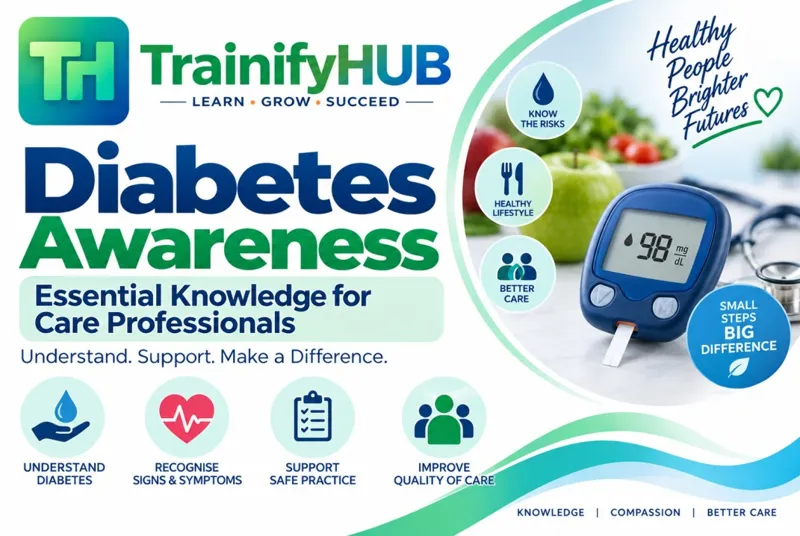
Diabetes Awareness: Essential Knowledge for Care Professionals
Build essential knowledge of diabetes, blood glucose monitoring, medication safety, complications, person-centred care and emergency responses for safer professional practice.
No ratings yet
3.00 CPD Points
MODULES
11
DURATION
3h
STUDENTS
1+
LEVEL
beginner
Course Price
GBP 20.00
One-time payment - Lifetime access
This course includes:
11 comprehensive modules
3h of video content
PDF, PPT & Infographics included
Final assessment included
Lifetime access on mobile & desktop
Certificate of completion
3.00 CPD Points
CATEGORY
Health & Social CareLAST UPDATED
Sep 2026
Course Price
GBP 20.00
One-time payment - Lifetime access
This course includes:
11 comprehensive modules
3h of video content
PDF, PPT & Infographics included
Final assessment included
Lifetime access on mobile & desktop
Certificate of completion
3.00 CPD Points
CATEGORY
Health & Social CareLAST UPDATED
Sep 2026
About this course
Diabetes Awareness: Essential Knowledge for Care Professionals provides practical, accessible training for people working in health and social care who support individuals living with diabetes.
The course explains how diabetes affects the body, including the differences between Type 1 and Type 2 diabetes, blood glucose regulation, common symptoms and important risk factors. Learners explore monitoring approaches, diabetes medication, insulin safety, nutrition, physical activity and person-centred support.
The course also focuses on recognising hypoglycaemia, hyperglycaemia, diabetic emergencies and diabetes-related complications. Learners will understand when concerns should be documented, escalated and referred to an appropriate healthcare professional.
Professional accountability is a central theme. The course covers working within competence, accurate documentation, information governance, incident reporting, clinical governance and collaborative working.
The content is designed around the UK health and social care context and supports safer, more informed practice. It does not replace clinical training, employer policies, competency assessment or professional clinical judgement.
Learning Outcomes
By the end of the course, learners should be able to:
Explain what diabetes is and describe the basic role of insulin in blood glucose regulation.
Differentiate between Type 1 and Type 2 diabetes and identify their main characteristics.
Recognise common signs and symptoms associated with abnormal blood glucose levels.
Describe the purpose of blood glucose monitoring and understand factors that can influence readings.
Identify common diabetes medicines and explain why medication safety is important.
Explain key principles of safe insulin storage, administration and documentation.
Recognise the signs of hypoglycaemia and understand appropriate immediate actions.
Recognise warning signs associated with hyperglycaemia and serious diabetic emergencies.
Identify common diabetes complications and understand the importance of prevention and early escalation.
Apply person-centred principles when supporting individuals living with diabetes.
Explain the importance of accurate documentation, information governance and incident reporting.
Recognise the limits of their own competence and understand when concerns should be escalated to an appropriate professional.
Accreditation & Recognition
This course is officially recognised and certified
3.00
CPD
Points Awarded
All accreditations are verified and recognised by relevant industry bodies. Upon successful completion, your certificate will display the appropriate accreditation marks.
Frequently Asked Questions
5 questions answered
This course provides an educational update on diabetes, including blood glucose monitoring, medication awareness, complications, emergencies, lifestyle support and person-centred care.
The course is suitable for care professionals and support staff who may work with people living with diabetes and need to refresh their awareness of safe, person-centred support.
No. This is an awareness course. Insulin administration requires appropriate training, competency assessment, role authorisation and compliance with local policies and procedures.
The course primarily covers Type 1 and Type 2 diabetes, including differences in how they develop, how they are managed and the risks associated with changing blood glucose levels.
No. The course provides awareness and professional development. Learners must follow their employer's policies, individual care plans, competency requirements and instructions from appropriately qualified healthcare professionals.
What You'll Learn
By completing this course, learners will develop an understanding of:
The fundamentals of diabetes and how glucose is regulated.
The key differences between Type 1 and Type 2 diabetes.
Common diabetes symptoms, risk factors and warning signs.
Blood glucose monitoring and the purpose of different monitoring methods.
Common diabetes medicines and the principles of safe medication management.
Insulin safety, storage, administration responsibilities and documentation.
Healthy eating, physical activity and lifestyle support.
How to recognise and respond appropriately to hypoglycaemia.
How to recognise hyperglycaemia and serious diabetic emergencies.
Common short-term and long-term diabetes complications.
Person-centred diabetes care and effective communication.
Professional accountability, documentation and information governance.
Incident reporting, escalation and quality improvement.
The importance of multidisciplinary working and staying within professional competence.
Why This Course
Diabetes is a common long-term condition that can require ongoing monitoring, medication, lifestyle support and coordinated care. Care professionals may regularly support people who are at risk of changes in blood glucose or diabetes-related complications.
Understanding diabetes helps staff recognise important warning signs, respond appropriately and escalate concerns without working beyond their competence.
This course is particularly valuable because diabetes care involves several areas of risk, including medication administration, insulin, hypoglycaemia, hyperglycaemia, nutrition, foot health and accurate record keeping.
NHS guidance highlights the importance of recognising and treating hypoglycaemia promptly, while NICE guidance emphasises appropriate monitoring and safe diabetes management.
For care providers, accurate documentation, personalised care planning, medicines safety and staff competency are also important aspects of safe care. CQC inspection findings demonstrate the practical importance of appropriate diabetes care plans, risk assessments, monitoring and medicines documentation.
Certificate of Completion
On successful completion of the course and any required assessment, learners will receive a TrainifyHUB certificate confirming completion of Diabetes Awareness training.
Important: The certificate confirms course completion and should not be presented as evidence of independent clinical competence to administer medicines or insulin unless the learner has separately completed the appropriate employer-approved training and competency assessment.
Course Highlights
1+
Students Enrolled
New
Be the first!
3h
Total Duration
Student Reviews
0.0
0 stars
Based on 0 reviews
5
0
4
0
3
0
2
0
1
0
🔒 Log In to Review
You must be logged in to submit a review. Please log in or create an account.