 Similar topic
Health & Social Care
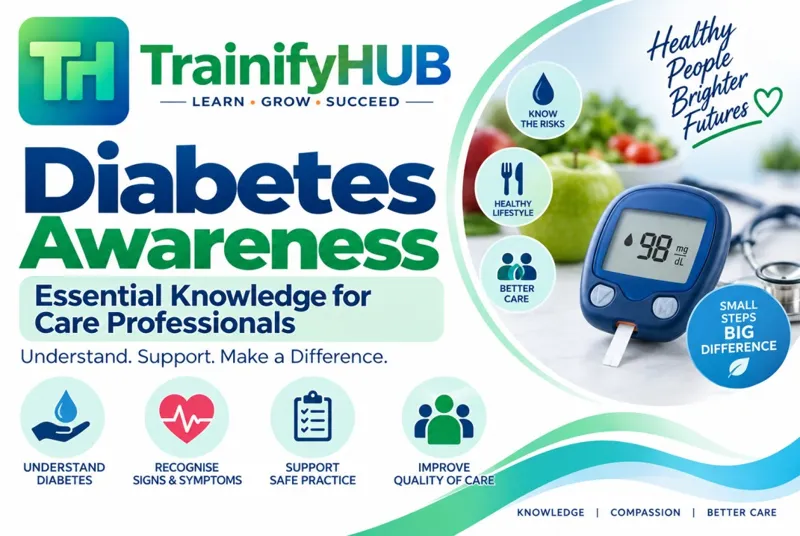
Diabetes Awareness: Essential Knowledge for Care Professionals
4.8(20)
11 modules3h97
GBP20.00
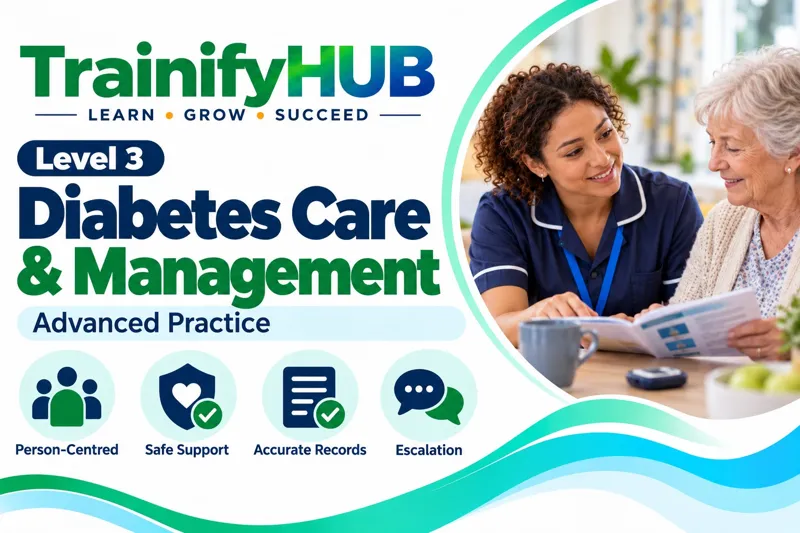
Support adults living with diabetes using person-centred plans. Develop judgement in monitoring, illness and hypo recognition, medicines boundaries, delegated care and reliable handover.
16
4h 55m
1+
advanced
Course Price
GBP 35.00
One-time payment - 9 months' access
Buying for your team?
Up to 30% off per seat: 10+ seats 10%, 25+ seats 20%, 50+ seats 30%.
CATEGORY
Health & Social CareLAST UPDATED
Nov 2026
Course Price
GBP 35.00
One-time payment - 9 months' access
Buying for your team?
Up to 30% off per seat: 10+ seats 10%, 25+ seats 20%, 50+ seats 30%.
CATEGORY
Health & Social CareLAST UPDATED
Nov 2026
Diabetes support depends on the person, exact treatment and current clinical instructions. This course helps experienced care staff identify uncertainty and changing needs, respond within competence and coordinate safe ongoing support. Fifteen teaching Modules, guided reading, two applied case studies and a supervision exercise support deeper learning. Main context: England adult social care. Distinguish applicable England duties from England-and-Wales law and local practice. This is advanced non-regulated Level 3 training, not an RQF qualification or clinical competence sign-off.
Experience of adult care practice, access to an internet-enabled device and time for the teaching, guided reading and applied tasks. Use current local procedures alongside the course and anonymise discussion examples.
Allow approximately 4 hours 55 minutes for the course, including teaching videos, guided self-study activities and the final assessment.
Diabetes affects how the body regulates blood glucose. Type 1 usually involves severe insulin deficiency and requires insulin; type 2 involves insulin resistance and impaired insulin production and may also require insulin.
By the end of this module, learners will be able to:
✓ Explain the relevance of diabetes to daily care
✓ Distinguish supportive care from clinical diabetes management.
Workplace application: Arthur becomes unusually lethargic. Check his current plan, make the required observations within competence and seek advice at the appropriate urgency. Do not dismiss the change as ageing or assume glucose is the only possible cause.
The support plan should state what the person manages themselves, what help is agreed, who monitors glucose or administers medicines, individual targets and escalation thresholds, emergency actions and relevant contacts. Include food routines, preferences, equipment and review arrangements.
By the end of this module, learners will be able to:
✓ Identify individual support preferences and agreed responsibilities
✓ Translate these into a person-centred daily plan.
Workplace application: Meena wants to fast and eat later. Arrange a discussion with her diabetes team before changing the support schedule. Record the agreed medicine, monitoring and meal arrangements; do not transfer a morning insulin dose to the evening on staff initiative.
Type 1 and type 2 diabetes have different treatment needs, but either can produce serious illness. Never assume that all type 2 diabetes is mild or that insulin use identifies the diabetes type.
By the end of this module, learners will be able to:
✓ Distinguish type 1 and type 2 diabetes care implications
✓ Identify why treatment instructions must remain individualised.
Workplace application: David’s usual insulin is becoming difficult to obtain. Contact the pharmacy and prescriber early, communicate remaining stock and arrange a written plan. Do not wait until it runs out or exchange it for another insulin without authorised instructions.
Support an appropriate, individual diet and hydration plan that respects preferences and clinical needs. Timing matters when medicines and food interact, particularly with mealtime insulin.
By the end of this module, learners will be able to:
✓ Support agreed food, hydration and daily routines
✓ Recognise changes that require review of the person's plan.
Workplace application: Florence has received mealtime insulin but breakfast is delayed. Act promptly under her plan, ensure appropriate food is available and seek advice where needed. Record the delay and response and review the system that allowed it to happen.
Activity can affect glucose during and after exertion, particularly with insulin or medicines that can cause hypoglycaemia. Support preferred activities using the agreed plan for monitoring, food, emergency treatment and contacts.
By the end of this module, learners will be able to:
✓ Identify accessible activity and independence goals
✓ Support choices within the individual's agreed care arrangements.
Workplace application: George feels sweaty and dizzy during gardening. Stop the activity safely and follow his hypo/illness plan. Before the next visit, confirm the agreed monitoring and emergency supplies so he can continue participating safely.
Use the monitoring method, frequency and action thresholds specified for the person. Glucose meters and continuous or flash sensors require device-specific training, maintenance and infection-control procedures.
By the end of this module, learners will be able to:
✓ Describe monitoring responsibilities in an individual plan
✓ Record and escalate readings within authorised instructions.
Workplace application: Sarah’s reading is above another resident’s target but within her own plan. Use Sarah’s documented limits and symptoms. If she is acutely unwell, seek advice despite the numerical result rather than declaring her safe solely from the reading.
Hypoglycaemia is commonly identified below 4 mmol/L, with symptoms and individual instructions also important. If the person is conscious and can swallow safely, provide fast-acting carbohydrate according to their agreed hypo plan and recheck as instructed, commonly after 10–15 minutes.
By the end of this module, learners will be able to:
✓ Recognise possible hypoglycaemia
✓ Explain the response and escalation required by the individual's emergency plan.
Workplace application: Harold becomes sweaty, confused and pale. Follow his hypo plan immediately. If swallowing is unsafe, do not put glucose gel or drink in his mouth; call emergency services and provide first aid within training.
Illness, missed treatment and other factors can disturb glucose. Hyperglycaemia with vomiting, marked dehydration, altered consciousness or deep/rapid breathing may indicate a medical emergency.
By the end of this module, learners will be able to:
✓ Recognise deterioration during illness or possible hyperglycaemia
✓ Seek urgent help without independently adjusting treatment.
Workplace application: Evelyn has diabetes, vomiting and unusual drowsiness during an infection. Seek urgent/emergency help according to her condition and communicate medicines and readings. Do not wait for a particular high-glucose threshold before acting.
Diabetes treatment may include different oral or injectable medicines with different risks. Follow current prescriptions, consent and the agreed support plan; do not infer a dose from a previous chart.
By the end of this module, learners will be able to:
✓ Identify diabetes-medicines support boundaries
✓ Explain why dose changes require an authorised clinical instruction.
Workplace application: A new MAR uses “8u” for insulin. Clarify the prescription and correct the record through the authorised process, preserving the audit trail. Brief staff to use “8 units” and investigate whether any dose was affected.
Care workers administering insulin need appropriate specialist training, assessed competence, agreed delegation where applicable and person-specific instructions. The plan must cover product/device checks, prescribed dose, site rotation, storage, sharps and escalation.
By the end of this module, learners will be able to:
✓ Identify the conditions for delegated insulin support
✓ Distinguish course knowledge from assessed practical competence.
Workplace application: Tom has observed insulin administration but has no assessed competence for the resident. He must obtain an authorised competent practitioner rather than attempt the injection. Escalate urgently so essential treatment is not simply omitted.
Report new foot wounds, blisters, colour change, swelling, warmth, discharge or other concerns promptly; absence of pain does not exclude serious disease. NICE NG19 distinguishes immediate referral for limb- or life-threatening problems from urgent referral for other active foot problems.
By the end of this module, learners will be able to:
✓ Recognise new foot, skin or infection concerns
✓ Identify prompt escalation without undertaking specialist foot assessment.
Workplace application: Safiya sees a new heel blister and redness. Record and raise it promptly for the appropriate clinical pathway. If there are signs of severe infection, ischaemia or systemic illness, obtain immediate help rather than relying on the small size of the wound.
Frailty, cognitive change, kidney disease and other conditions can alter treatment risks and the help a person needs. Reduced appetite or ability to self-manage can increase the risk of hypo, errors or missed treatment.
By the end of this module, learners will be able to:
✓ Identify how frailty and other conditions affect daily support
✓ Describe when changing needs require clinical review.
Workplace application: Edith repeatedly forgets whether she has eaten and whether she took her medicine. Arrange a person-centred review of practical support and clinical treatment, document agreed responsibilities and check the new arrangement in use.
Apply the five MCA principles to the particular diabetes decision. Offer practical communication and timing support; an unwise dietary choice or refusal is not itself incapacity.
By the end of this module, learners will be able to:
✓ Apply consent and capacity principles to diabetes support
✓ Identify safeguarding concerns and appropriate reporting.
Workplace application: Ronald declines medicine and asks for cake. Explore his reasons and understanding without presenting medicine and food as an either/or bargain. Respect a capacitous refusal, record it and seek timely clinical advice on the risk and future support.
Records should connect medicine administration, relevant glucose readings, intake changes, symptoms and advice. When nurses and care workers share support, agree where each records actions and how the current information reaches the next practitioner.
By the end of this module, learners will be able to:
✓ Prepare a factual diabetes-care handover
✓ Communicate observations and unresolved concerns to the relevant professional.
Workplace application: Grace’s nurse records insulin separately and staff cannot confirm whether today’s dose was given. Contact the responsible team promptly, reconcile the records and obtain safe instructions. Do not give a second dose on an assumption.
Audit the usability of individual plans, emergency instructions, competence/delegation records, medicine documentation, equipment arrangements and follow-up of incidents. Sample actual practice as well as completed forms.
By the end of this module, learners will be able to:
✓ Audit a sample care plan and record
✓ Identify a competence, supervision or follow-up action.
Workplace application: Karen finds repeated missing injection-site entries. Check the underlying practice and immediate risk, support staff to correct the process and re-audit a defined sample. Report actual results rather than assuming a new form guarantees compliance.
This course is officially recognised and certified
CPD
Points Awarded
All accreditations are verified and recognised by relevant industry bodies. Upon successful completion, your certificate will display the appropriate accreditation marks.
12 questions answered
No. Type 1 and type 2 have different treatment needs, and either can involve serious illness. Insulin use alone does not identify the diabetes type.
Discuss preferences with the person and diabetes team before changing meal, monitoring or medicines arrangements. Staff must not independently move insulin doses.
No. Contact pharmacy and prescriber early about shortages and obtain authorised instructions for the exact product and treatment.
Stop activity safely and follow the individual hypo or illness plan. Review monitoring and emergency supplies so activity can remain supported.
Do not put food, drink or oral gel in the mouth when swallowing is unsafe. Obtain emergency help and give first aid within training.
No. Vomiting, unusual drowsiness or other acute changes can need urgent assessment even without a particular high reading. Consider the whole presentation.
Appropriate training, assessed competence and valid person-specific delegation and instructions. Observing injections or passing a course alone is insufficient.
Test actual practice, current plans, recording and handover. Address present risk, assign improvements and recheck a defined sample without claiming whole-service compliance.
Answer at least 12 of the 15 single-answer assessment questions correctly: 80%.
Nine months from the date the course is assigned to that learner.
No. An unassigned company-purchased entitlement has no expiry or time limit.
One year from the date the learner passes; this is separate from access validity.
✓ Distinguish type 1 and type 2 diabetes and their implications for social care support.
✓ Contribute to person-centred diabetes support plans and daily routines.
✓ Support food, hydration, activity and independence in line with the individual plan.
✓ Use glucose-monitoring information within agreed instructions and role boundaries.
✓ Recognise hypoglycaemia, illness and other changes requiring appropriate escalation.
✓ Understand medicines and insulin-support responsibilities, competence and delegation.
✓ Identify foot, skin, infection and changing-care concerns for professional review.
✓ Use clear records, handover and supervision to improve diabetes support.
Diabetes support in adult social care involves more than completing a monitoring record. Staff need to understand the person’s usual routines, recognise changes and work within individual instructions and authorised responsibilities. This course develops practical reasoning around daily support, medicines boundaries, escalation and reliable handover, without replacing clinical assessment or workplace competency checks.
A TrainifyHUB course completion certificate follows successful assessment at 80%. Certificate validity is one year from the pass date. This does not establish regulated qualification status, professional registration or specialist workplace competence.
1+
Students Enrolled
New
Be the first!
4h 55m
Total Duration


 CPD Accredited Provider
 Secure Payments
Our team can advise on the right training package for your organisation.
Keep learning
Picked from what learners take alongside this course.
Similar topicHealth & Social Care
GBP20.00
 More in Health & Social Care
 More in Health & Social Care
Health & Social Care
GBP35.00
 More in Health & Social Care
Health & Social Care
GBP20.00
 More in Health & Social Care
Health & Social Care
GBP40.00
 More in Health & Social Care
 More in Health & Social Care
Health & Social Care
GBP20.00
 More in Health & Social Care
Based on 0 reviews
You must be logged in to submit a review. Please log in or create an account.