Bricklaying NVQ Level 2 Assessment: What Is Assessed
Peter Traynor Sime
Author
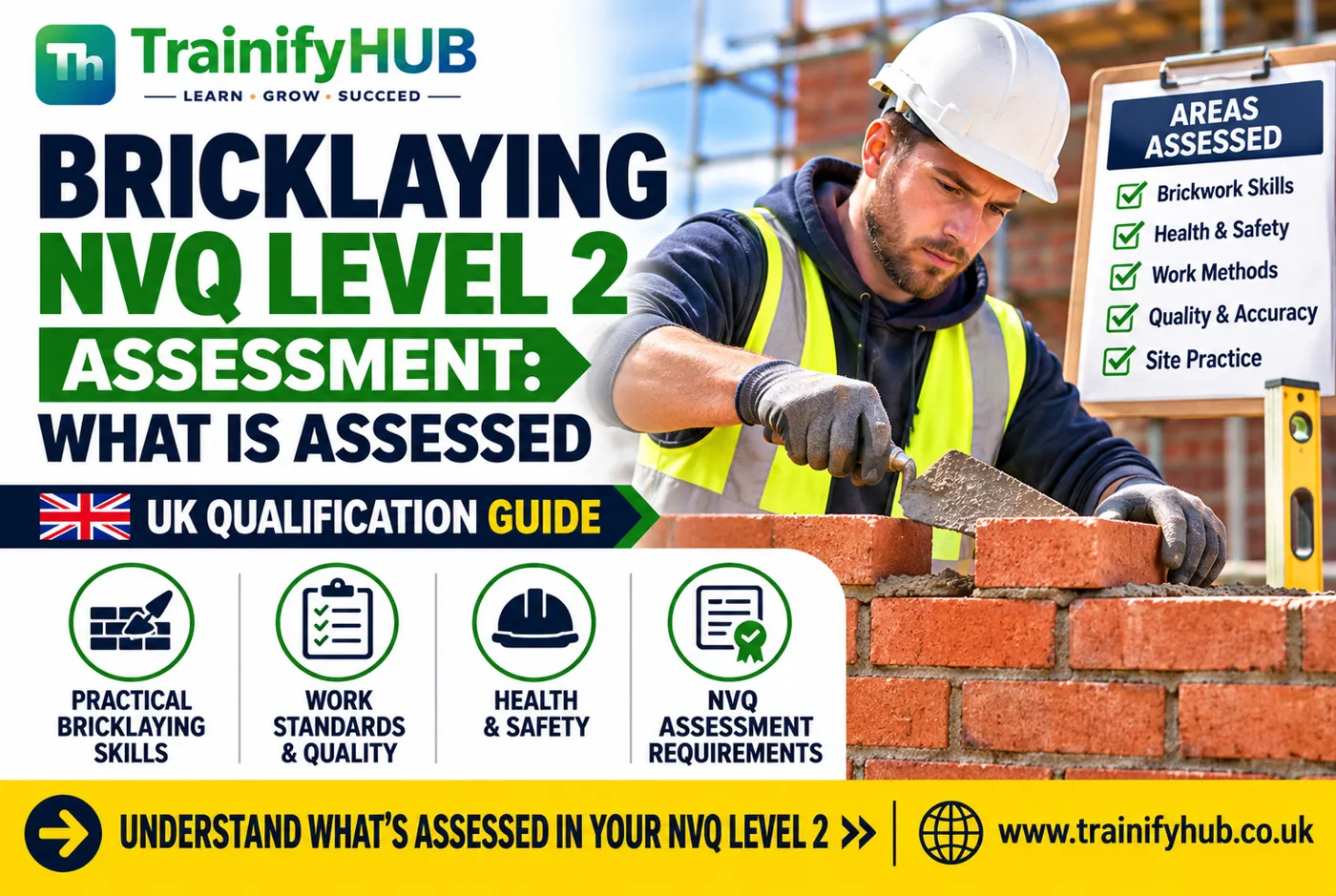
A Level 2 bricklaying NVQ assessment checks whether your work meets the occupational criteria in the specific qualification. It is not necessarily one written exam: the awarding-body specification and centre’s assessment plan determine how competence is evidenced.
If comparing assessment routes, read the TrainifyHUB bricklaying course listing alongside the named awarding-body specification and confirm the route with the provider.
Key takeaways
Verify the exact qualification before preparing evidence.
Expect evidence to relate to real work and the qualification’s performance and knowledge criteria.
Ask the assessor how observations, records and professional discussion are used.
What does an assessor look for?
The NOCN Level 2 NVQ qualification specifies units and criteria for the award. Your centre should explain which evidence demonstrates each requirement. Depending on the assessment plan, this may include direct observation, work products, records, questions or professional discussion. A portfolio organises evidence; it does not replace demonstrating competence.
An assessor considers whether evidence is sufficient, valid and attributable to you. A photo may show a finished wall, for example, without showing the methods, standards or safe working practices used. Ask what combination of evidence is needed for the unit criteria and how the assessor will confirm that the work is yours.
Is the assessment an exam?
Do not assume every bricklaying NVQ uses one final written exam. The format is determined by the qualification and centre. Some experienced-worker routes include a practical assessment and professional discussion; work-based routes may gather evidence from normal jobs. Ask the provider how each required unit will be assessed before enrolment.
How can you tell whether evidence is useful?
For each item, ask whether it relates to a named criterion, shows your own work and is recent enough for the assessor to judge. A site record may help explain the context; a witness statement may confirm what a supervisor observed; a photo or video may illustrate a task where permitted. The assessor decides whether the evidence is sufficient and whether another method is required.
Organise evidence by unit and date, and keep notes about the task and your role. Do not submit confidential site documents or images of other people without permission. If evidence is rejected, ask which criterion remains unmet and what safe, acceptable evidence would close the gap. That feedback should guide the next step rather than simply adding more files to the portfolio.
An assessment plan should also make clear how the centre records decisions and communicates progress. Ask how you will know a unit is complete, whether you can discuss an assessment decision and what the centre’s appeals or complaints route is. Keep copies of submitted evidence and feedback so you can follow up accurately.
How to prepare
Use the TrainifyHUB bricklaying course listing to identify what the provider says it offers, then ask how that maps to each unit and assessment criterion.
Ask for the unit list and evidence guidance. Discuss your normal work with the assessor and identify safe opportunities to show the required tasks. Keep records and photographs only where permitted by the site and employer, and protect confidential information. If you have gaps, agree a realistic plan to gain experience and collect additional evidence.
Before starting, ask: Which tasks must I demonstrate? How recent must evidence be? Can a supervisor provide witness testimony? Are photos or video accepted, and what privacy rules apply? Will assessment happen at work or at a centre? What if a criterion is not yet met? Clear answers help you plan without collecting irrelevant or unsafe material.
Never interrupt work or take a safety risk to create evidence. Follow site procedures and get permission before recording people, drawings or client information. Gather evidence as part of normal safe work, not at the expense of the task or other workers.
Skills England’s bricklayer occupation profile provides wider occupational context. The named qualification—not a generic “Level 2” label—determines formal assessment requirements. Before choosing a provider, confirm the awarding body, qualification number and evidence process.
See our NVQ Level 2 vs Level 3 guide for level context.
If you are checking a card route as well, use the CSCS card application requirements guide.
Conclusion
Ask the centre how it will assess every required unit and what evidence you need to gather safely. Browse the TrainifyHUB homepage for current training options and confirm the exact award and assessment route before booking.
You can review the TrainifyHUB bricklaying course listing, then request the awarding organisation, qualification number and assessment plan in writing.
Frequently Asked Questions
Assessment is qualification-specific; ask the centre for its current assessment plan.
It must contain valid evidence, but the assessor determines whether criteria are met.
Only where permitted and relevant; follow site rules and assessor guidance.
Agree the missing criteria and a safe way to demonstrate them with your assessor.