Level 2 Food Safety Explained: A Complete Guide for Health and Social Care
Peter Traynor Sime
Author
Food safety level 2 is training for people who handle, prepare, serve or support food safely in a workplace. In UK health and social care, it helps staff understand hygiene, contamination, allergens, temperature control, cleaning and safe food-handling responsibilities. This guide is prepared for learners and employers comparing training options on TrainifyHUB.
This guide explains what level 2 food safety usually covers, why it matters in care settings and how training fits with employer duties.
Key Takeaways
Food safety and hygiene level 2 is usually suitable for staff who handle or prepare food as part of their role.
UK food businesses must make sure food handlers are supervised, instructed and trained in food hygiene matters suitable for their work.
A certificate supports training records, but it does not replace workplace procedures, supervision or food safety management.
Health and social care settings need extra care around vulnerable people, allergens, hydration, nutrition and infection prevention.
TrainifyHUB's course can support flexible online learning for care teams and individual learners.
What is food safety level 2?
Food safety level 2 is a common training level for food handlers. It normally goes beyond basic awareness and covers the practical hygiene knowledge needed by staff who prepare, handle or serve food.UK food business registration.UK food business registration. For source context, see Food Standards Agency food hygiene for business.
GOV.UK's food business guidance explains that food businesses must train staff and manage food safety risks: running a food business. Training is one part of that wider duty.
Who needs level 2 food safety in health and social care?
Food safety level 2 may be relevant to care-home staff, kitchen workers, support workers, activity staff, volunteers, domiciliary care workers and supervisors where their role involves food.
Role | Why training may matter |
Kitchen staff | Preparing, cooking, cooling and serving food safely. |
Care workers | Supporting meals, drinks and safe handling during care. |
Domiciliary carers | Helping with food in a person's home. |
Supervisors | Reinforcing procedures and checking good practice. |
Volunteers | Understanding boundaries and safe basic support. |
The exact training level should follow the role, setting and employer's food safety arrangements.
What does level 2 food safety and hygiene cover?
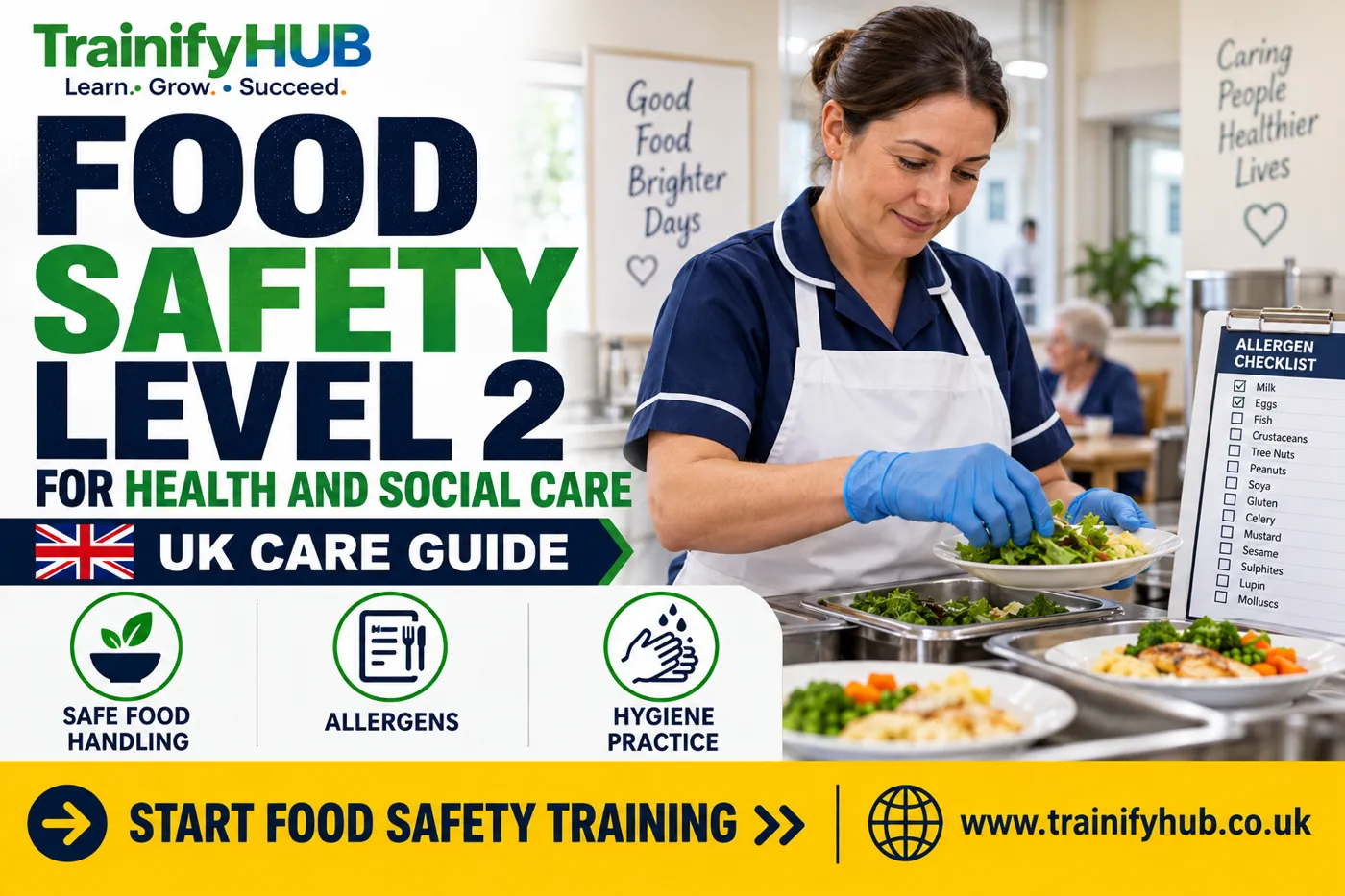
A level 2 food safety and hygiene course usually covers:
personal hygiene and handwashing
food contamination and cross-contamination
bacteria and food poisoning
cleaning and disinfection
time and temperature control
safe storage and labelling
allergen awareness
pest awareness
waste handling
food safety responsibilities
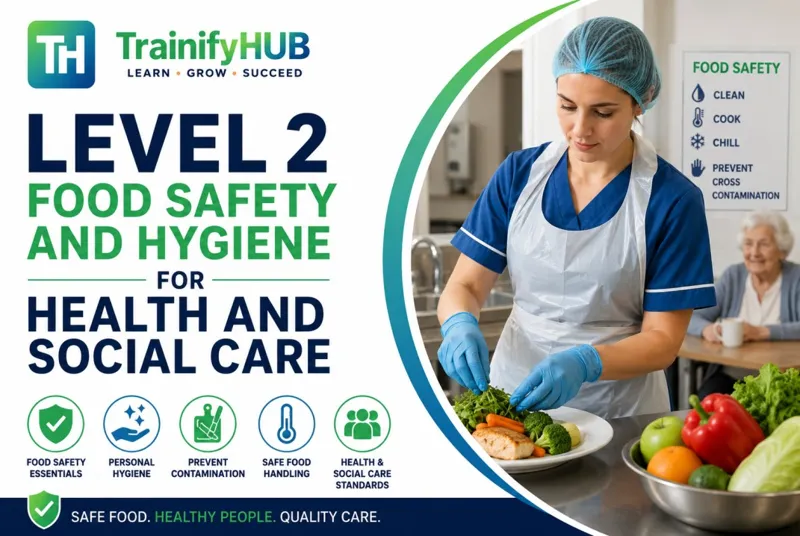
In care settings, the learner also needs to think about the people being supported. Some people may be older, immunocompromised, unable to communicate symptoms clearly or at higher risk from unsafe food handling. A relevant TrainifyHUB course option is the Level 2 Food Safety and Hygiene for Health and Social Care course.
Is a food safety certificate legally required?
UK law focuses on suitable supervision, instruction and training rather than one named certificate. A food safety level 2 certificate can be useful evidence, but employers should make sure the training is appropriate for the worker's tasks. A related TrainifyHUB option is the Food Safety and Hygiene for Catering course.
GOV.UK's food business responsibilities explain that food businesses must train staff and manage food safety risks: running a food business. A certificate should sit alongside local procedures, cleaning schedules, temperature checks, allergen controls and supervision.
What makes food safety different in care settings?
Health and social care settings often support people who may be more vulnerable to foodborne illness. Safe food handling therefore connects with dignity, nutrition, hydration, infection prevention and person-centred care. For further reading, see the Food Hygiene Level 2 vs Level 3 guide.
Practical care-setting examples include checking food texture guidance, supporting hand hygiene before meals, avoiding cross-contamination in shared kitchens, following allergen information and recording concerns about poor appetite or swallowing risks through the correct care route. A relevant TrainifyHUB course option is the Food Safety and Hygiene for Catering course.
Food safety training should never encourage staff to ignore care plans or clinical advice. If someone has a swallowing, nutrition or allergy plan, staff should follow the employer's approved instructions and escalate concerns.
How can TrainifyHUB support level 2 food safety learning?
TrainifyHUB's Level 2 Food Safety and Hygiene for Health and Social Care course supports learners who need flexible online food safety training for care-related roles.
Learners and employers can also review related health and social care training where food hygiene connects with infection control, safeguarding, dignity and care practice.
Conclusion
Food safety level 2 helps care staff handle food more safely and understand the risks behind everyday hygiene rules. It is most useful when employers connect training with local procedures, supervision and food safety checks. A relevant TrainifyHUB course option is the Care Certificate One Portfolio course.
To support your learning, view TrainifyHUB's Level 2 Food Safety and Hygiene for Health and Social Care course.
Frequently Asked Questions
It is training for people who handle, prepare or serve food and need practical knowledge of hygiene, contamination, storage and safe practice.
Yes, where their role involves handling, preparing or supporting food. The employer should decide the required level for each role.
UK rules require suitable supervision, instruction and training. A certificate can evidence learning, but one certificate alone does not prove full compliance. For related reading, see the Food Hygiene Level 2 vs Level 3 guide.
Food hygiene focuses on practices that keep food clean and safe. Food safety is broader and includes systems, risks, controls and responsibilities.
Online training can support knowledge and records. Employers should still make sure workers can apply the learning in their setting.
Refresh timing depends on the employer's risk assessment, role, procedures and any changes in work practice or legislation.