Bricklaying NVQ Level 2 On-Site Assessment: Evidence and Visits
Peter Traynor Sime
Author
On-site assessment can let an assessor see your work in context, but the number and format of visits depend on the qualification and centre. A site visit is only one part of the evidence process; confirm how all criteria will be covered before you enrol.
For a provider example, see the TrainifyHUB bricklaying course listing and check exactly how its assessment is delivered before relying on it as an on-site NVQ route.
Key takeaways
Coordinate access and safe observation with your employer or site manager.
Confirm visit costs, notice, travel and what happens if work is unsuitable on the day.
Keep supporting evidence within site, privacy and confidentiality rules.
What may happen during a visit?
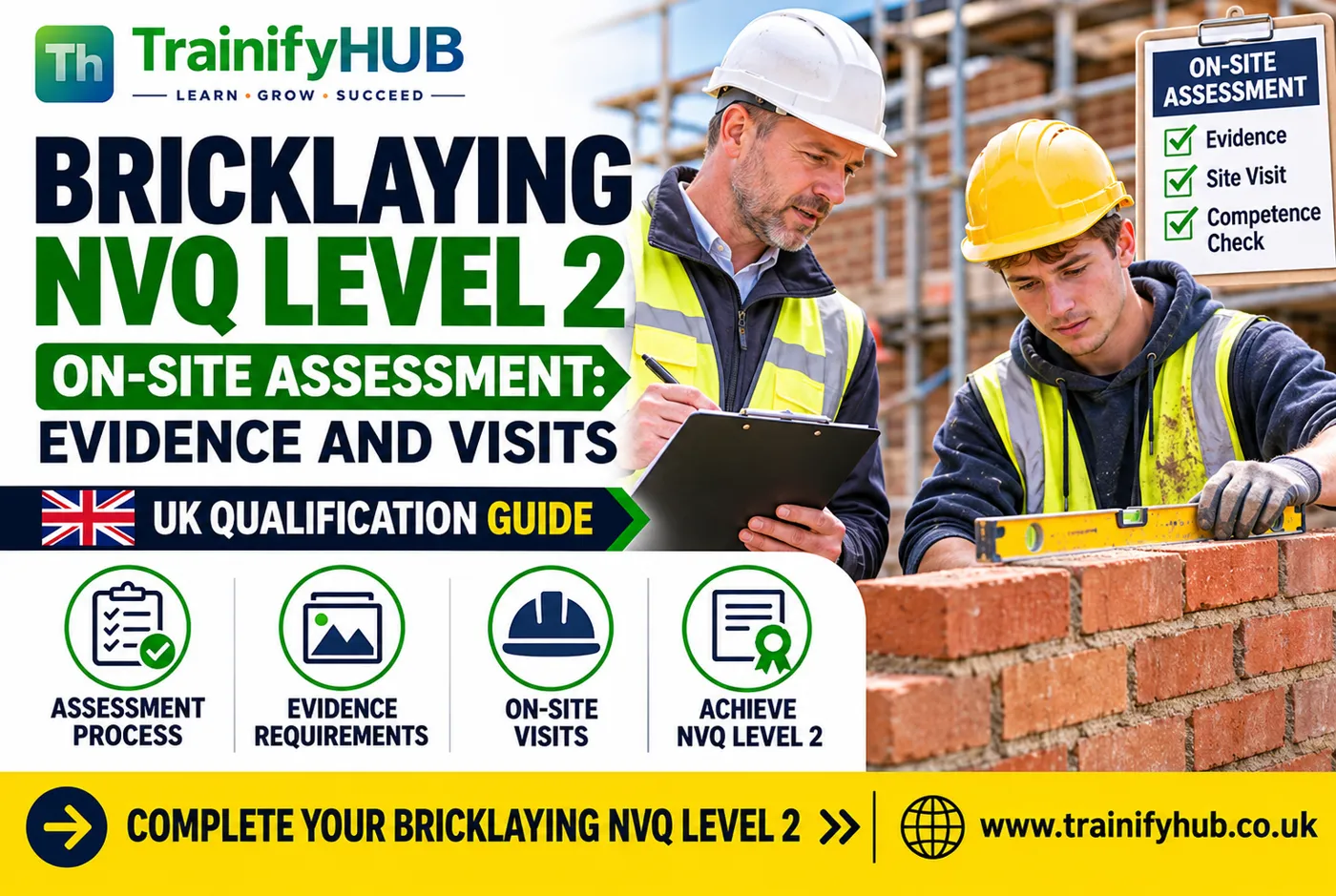
The assessor can observe relevant tasks and ask questions about how you plan and carry out work, subject to the approved assessment plan. The NOCN Level 2 NVQ in bricklaying sets the qualification context. Ask your centre which units need direct observation, what other evidence is accepted and how the assessor records decisions.
An observation should be planned around work you would normally do and the criteria the assessor needs to see. The assessor may ask questions about the task and review relevant records, but must follow the current qualification and centre’s procedures. A visit does not necessarily cover every unit or replace the rest of your evidence portfolio. Confirm the plan beforehand so you know what will be assessed and what evidence remains outstanding.
Before a visit, arrange permission, site induction and suitable PPE. Do not change safe working practices to create a demonstration. If the right task is unavailable, agree another date or approved evidence method. Ask whether travel or extra visits affect your fee.
Give the site manager reasonable notice and confirm access arrangements, induction, parking, PPE, photography rules and any restricted areas. The assessor must follow the site’s safety procedures. If the task cannot be completed safely or the work changes, stop and discuss a new plan; assessment should not take priority over safe production.
After the visit, ask what criteria were demonstrated, what additional evidence is needed and by when. Keep feedback and action points with your portfolio. A clear record helps you avoid repeating evidence collection and lets you discuss any concern with the centre promptly.
How many visits will there be?
Compare the visit and evidence details you are given with the TrainifyHUB bricklaying course listing; ask the provider to clarify anything the page does not specify.
There is no single visit count that applies to every NVQ centre or assessment route. The qualification criteria, the evidence available from your work and the assessor’s plan determine what is needed. Ask for an estimate before you enrol, including what a further visit would cost and whether some checks can be completed remotely. Treat an estimate as a plan, not a guaranteed total, because evidence gaps may only become clear as assessment proceeds.
If you work across several sites, ask whether observations can be planned around different projects or whether access to one consistent site is expected. A visit should be arranged with the relevant site contact and must follow the site’s normal induction and safety requirements.
If an assessor cannot observe a required task during the planned visit, ask what alternative evidence the qualification permits. Do not stage work purely for assessment or ask an unqualified person to sign off a task they did not witness. The centre should explain how any substitute evidence will be checked before you collect it.
Some experienced-worker routes use a different practical assessment model. NHBC’s Experienced Worker Practical Assessment describes its own eligibility and process; do not assume it is identical to every NVQ route.
That distinction matters when a provider says “no site visits” or “remote assessment”. Ask whether evidence is collected through an experienced-worker practical test at a training hub, remote portfolio review, on-site observation, or a combination. The label “online” does not tell you which route applies.
For level comparisons, see NVQ Level 2 vs Level 3.
For the separate card process, see the CSCS application requirements guide.
Conclusion
Agree the observation plan and site access before the visit, and keep the assessment subordinate to safe work. Browse current options from the TrainifyHUB homepage and confirm the exact qualification and assessment method with the provider.
Review the TrainifyHUB bricklaying course listing, then ask for the named awarding body and a written assessment plan before booking.
Frequently Asked Questions
It depends on the qualification and assessment plan; confirm with the centre.
Ask for the included number and any additional visit charges in writing.
Site access and observation need employer/site approval and must follow safety rules.
Only where the awarding-body and centre assessment requirements allow it.