 More in Health & Social Care
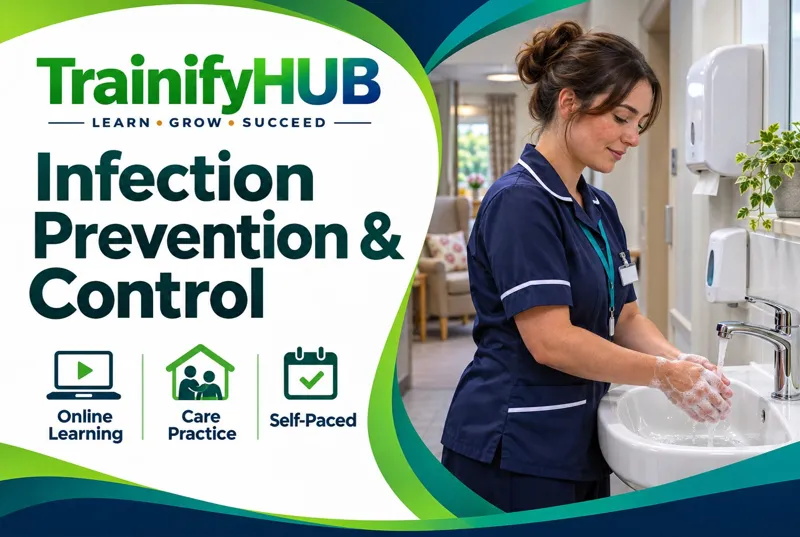
Infection Prevention & Control
Build practical infection-prevention awareness for adult social care, from hand hygiene and PPE to equipment cleaning, sharps concerns and prompt reporting.
No ratings yet
2.00 CPD Points
MODULES
9
ESTIMATED DURATION
2h 16m
STUDENTS
1+
LEVEL
beginner
Course Price
GBP 20.00
One-time payment
Buying for your team?
Up to 30% off per seat: 10+ seats 10%, 25+ seats 20%, 50+ seats 30%.
This course includes:
9 comprehensive modules
8 video lessons
1 downloadable resource (PDF)
Final assessment included
Access on mobile & desktop
Certificate of completion
2.00 CPD Points
CATEGORY
Health & Social CareLAST UPDATED
Nov 2026
About this course
Everyday care tasks can transfer infection through hands, equipment, body fluids and the surrounding environment. This course helps adult social care staff recognise those risks and apply the precautions appropriate to their role and setting. Eight Modules cover standard precautions, hand and respiratory hygiene, PPE, cleaning and laundry, waste and sharps, suspected infection and home-care scenarios. The core context is England. Use the learning alongside employer procedures, individual care plans and current infection advice; practical training and assessed competence remain separate.
👥 Who This Is For
Adult social care workers in people’s homes, care homes and supported living.
💻 What You Need
No formal qualification is required. You need a device and internet access, sufficient English to engage with the learning, and access to employer procedures and relevant support. Obtain task-specific practical training before undertaking unfamiliar cleaning, sharps or clinical activities.
⏱ Learning at Your Pace
Allow approximately 2 hours 16 minutes overall, including videos, guided reading, scenario reflection and the final assessment. Study at your own pace; individual completion times vary.
🧼 Infection Prevention Highlights
The eight modules connect how infection spreads with risk assessment and standard precautions. The learning follows hand and respiratory hygiene, PPE, cleaning and laundry, then waste, sharps, exposure concerns and seeking advice in care settings.
✓ Relate everyday care activities to infection risks.
✓ Explore hygiene and PPE within the relevant task and setting.
✓ Connect equipment, laundry and waste arrangements with local procedures.
✓ Review when infection or exposure concerns need advice and escalation.
Learning Outcomes
📘 Module 1 — How Infection Spreads in Care
Infection can spread when a microorganism moves from a source through a route of transmission to a susceptible person. Hands, contaminated equipment, respiratory particles, blood or other body fluids can contribute, depending on the infection and task.
By the end of this Module, learners will be able to:
✓ Describe relevant routes of transmission.
Workplace application: A worker moves between residents after touching used equipment without cleaning their hands. Worked response: Perform hand hygiene and follow the cleaning and equipment precautions before supporting another person.
📘 Module 2 — Risk Assessment and Standard Precautions
Standard precautions apply to everyday care, whether or not an infection has been identified. Before a task, consider contact with body fluids, skin, equipment, the environment and the person’s needs.
By the end of this Module, learners will be able to:
✓ Identify everyday risks and standard precautions.
Workplace application: A worker is asked to clean a body-fluid spill but has not received training for the task. Worked response: Make the area safe within their role and obtain trained support and the required supplies.
📘 Module 3 — Hand Hygiene and Respiratory Hygiene
Clean hands at the relevant points before and after care tasks and after removing gloves. Follow the source-supported washing method, covering all hand surfaces with soap and running water for at least 20 seconds.
By the end of this Module, learners will be able to:
✓ Apply source-supported hand and respiratory hygiene principles.
Workplace application: After removing gloves used during personal care, a worker prepares to support the next person. Worked response: Clean their hands before the next task; changing gloves alone is insufficient.
📘 Module 4 — Personal Protective Equipment
Choose PPE for the care task, expected exposure and applicable infection advice. Gloves are indicated for relevant exposure to blood or body fluids and are changed between tasks; wearing them continuously can spread contamination.
By the end of this Module, learners will be able to:
✓ Explain selection and safe use within training and policy.
Workplace application: A worker plans to keep the same gloves on for personal care and then handle clean equipment. Worked response: Remove and dispose of the used gloves, clean hands and use task-appropriate precautions for the next activity.
📘 Module 5 — Cleaning, Equipment and Laundry
Clean reusable equipment between users in line with manufacturer instructions and the provider’s procedure. The required process depends on the item and contamination risk; a worker should not invent chemical concentrations or mix cleaning products.
By the end of this Module, learners will be able to:
✓ Identify safe cleaning and equipment arrangements.
Workplace application: A reusable commode is needed for another person before the agreed cleaning process has been completed. Worked response: Complete the authorised decontamination process before reuse or obtain a clean alternative.
📘 Module 6 — Waste, Sharps and Exposure Concerns
Separate waste at the point of use according to the provider’s arrangements and relevant waste guidance. Use the appropriate container; a waste bag itself is not a foot-operated bin.
By the end of this Module, learners will be able to:
✓ Recognise exposure concerns and follow reporting procedures.
Workplace application: A worker discovers a discarded needle while cleaning a room. Worked response: Keep others away and obtain the trained response and correct disposal arrangements without handling it unsafely.
📘 Module 7 — Recognising Infection and Seeking Advice
Notice and report changes such as vomiting, diarrhoea, cough, fever, breathlessness or an unusual deterioration. Some people show less typical changes, but confusion or a fall alone does not prove an infection or an outbreak.
By the end of this Module, learners will be able to:
✓ Escalate suspected infection using local pathways.
Workplace application: Two residents develop vomiting and diarrhoea close together and may be epidemiologically linked. Worked response: Report the suspected linked infection cases promptly so the provider can seek appropriate clinical and public-health advice.
📘 Module 8 — Applying IPC in Care Settings
Apply IPC to the actual setting. Home-care workers bring supplies and keep clean and used items separate, while respecting that the dwelling is the person’s home.
By the end of this Module, learners will be able to:
✓ Apply guidance to home-care and care-home scenarios.
Workplace application: A home-care visit reveals that the required PPE supplies are unavailable. Worked response: Contact the provider for suitable supplies and safe arrangements rather than improvising protection.
📝 Final Assessment
Complete 15 single-answer multiple-choice questions after the teaching and associated activities. Select one correct answer from four options for each question. The pass mark is 80% (12 out of 15).
Accreditation & Recognition
This course is officially recognised and certified
2.00
CPD
Points Awarded
All accreditations are verified and recognised by relevant industry bodies. Upon successful completion, your certificate will display the appropriate accreditation marks.
Frequently Asked Questions
12 questions answered
Adult social care workers in people’s homes, care homes and supported living.
No formal qualification is required. The course supports employer induction and existing care procedures.
England is the core context. Follow the applicable guidance and local procedures in your service.
No. Standard precautions apply to everyday care, with the precautions selected according to the task and risk.
No. Clean hands at the required points, including after removing gloves.
PPE depends on the care task, anticipated exposure and relevant infection advice. Follow assessed arrangements and training.
Awareness alone does not authorise sharps handling. Obtain the relevant task-specific training and workplace authorisation.
No. It helps you recognise and report concerns and seek appropriate clinical or public-health advice.
There are 15 single-answer questions. You need 12 correct answers for the 80% pass mark.
Allow approximately 2 hours 16 minutes, including videos, guided reading, reflection and the assessment. Individual study time varies.
Nine months from assignment. Company-purchased entitlements do not expire while unassigned.
One year from passing. Employer refresher requirements and practical competence assessment remain separate.
What You'll Learn
✓ Describe relevant routes of transmission.
✓ Identify everyday risks and standard precautions.
✓ Apply source-supported hand and respiratory hygiene principles.
✓ Explain selection and safe use within training and policy.
✓ Identify safe cleaning and equipment arrangements.
✓ Recognise exposure concerns and follow reporting procedures.
✓ Escalate suspected infection using local pathways.
✓ Apply guidance to home-care and care-home scenarios.
Why Take This Course
Infection-prevention arrangements depend on how everyday tasks fit together: a shared item, cleaning responsibility or change in a person’s condition can involve several staff. The course uses that care-setting context to connect precautions with communication and local procedures.
A missed hand-hygiene step, contaminated item or delayed report can expose another person to harm. This course helps staff recognise everyday risks, follow agreed precautions and seek the right help when supplies, training or instructions are unclear.
✓ Connect everyday precautions with routes of infection transmission.
✓ Consider the task, setting and assessed risks when following procedures.
✓ Recognise concerns that need supervisor, clinical or infection advice.
🌍 Available Online Across the UK
Study infection prevention and control online from England, Scotland, Wales or Northern Ireland, including Birmingham, Manchester, Glasgow, Cardiff and Belfast. The self-paced modules can be revisited around care work. Apply the learning alongside the current infection-control arrangements, guidance, practical training and role requirements of your own setting.
Certificate of Completion
A TrainifyHUB completion certificate is issued after achieving the 80% assessment pass standard. Certificate validity is one year from passing. This is non-regulated awareness training; the certificate does not confer clinical authorisation or confirm workplace competence.
Course Highlights
1+
Students Enrolled
New
Be the first!
2h 16m
Estimated Duration


Why book with TrainifyHUB
- CPD accredited training content
- Delivered UK-wide at your workplace
- Certificate of completion included
- Secure, encrypted online payments
Accredited & Trusted
 CPD Accredited Provider
 Secure Payments
Need help choosing a course?
+44 7405 005823 support@trainifyhub.co.uk
Our team can advise on the right training package for your organisation.
Keep learning
Related courses
Picked from what learners take alongside this course.
More in Health & Social Care More in Health & Social Care
Health & Social Care
Level 3 Safeguarding Adults, Risk & Professional Practice
New course
16 modules4h 50m1
GBP35.00
 More in Health & Social Care
 More in Health & Social Care
 More in Health & Social Care
 More in Health & Social Care
Health & Social Care
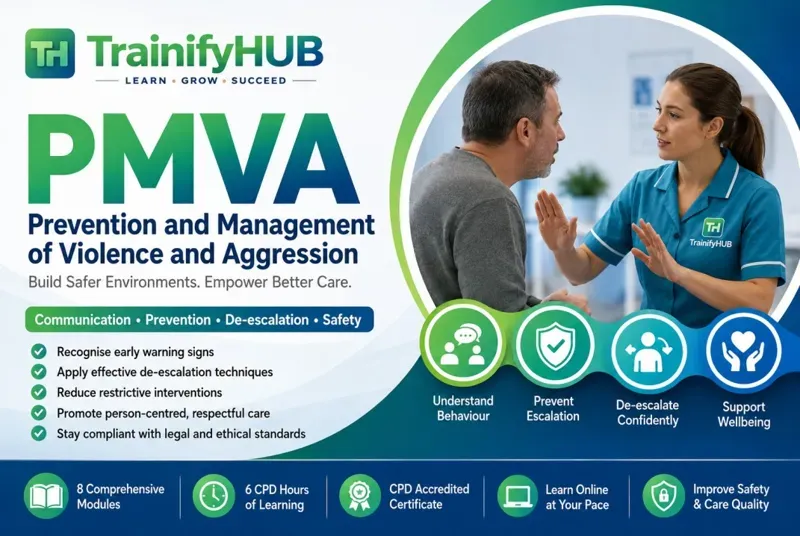
PMVA – Prevention and Management of Violence and Aggression (PMVA) Training Course
4.5(20)
9 modules2h61
GBP20.00
 More in Health & Social Care
 More in Health & Social Care
Health & Social Care
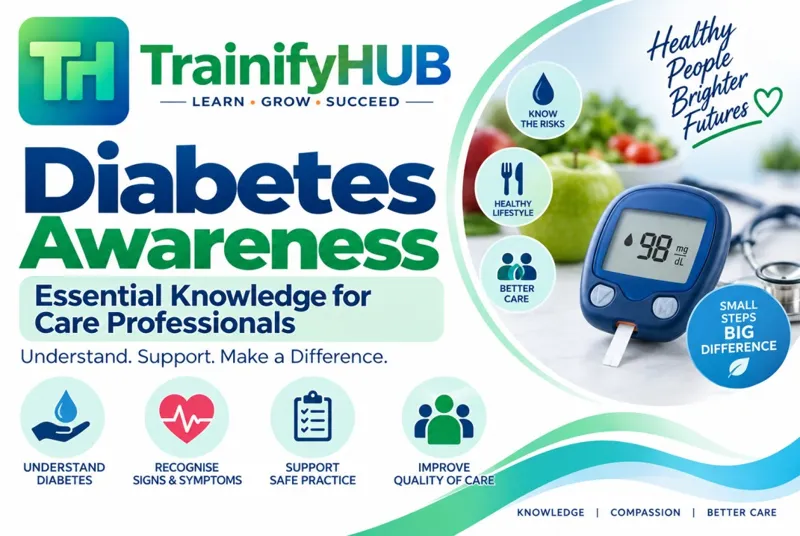
Diabetes Awareness: Essential Knowledge for Care Professionals
4.8(20)
11 modules3h97
GBP20.00
Student Reviews
0.0
0 stars
Based on 0 reviews
5
0
4
0
3
0
2
0
1
0
🔒 Log In to Review
You must be logged in to submit a review. Please log in or create an account.