 More in Health & Social Care
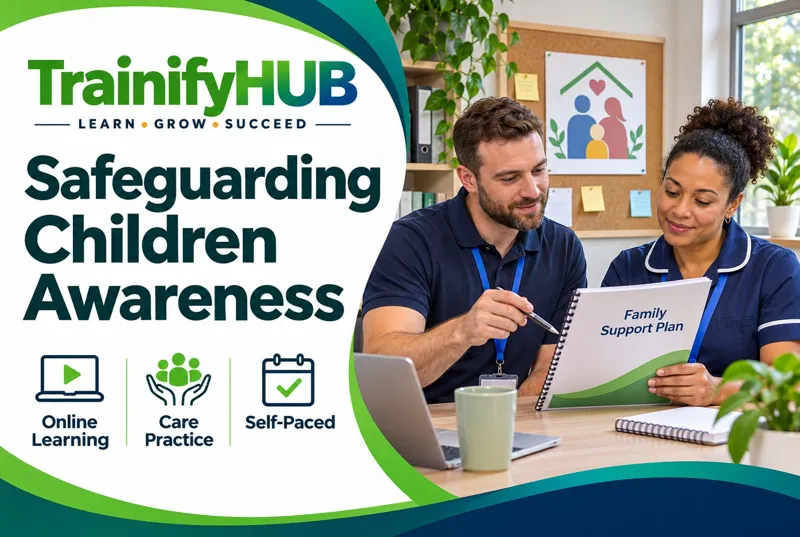
Safeguarding Children Awareness
Recognise child safeguarding concerns encountered in adult social care, respond to disclosures and use appropriate reporting and information-sharing routes.
No ratings yet
2.00 CPD Points
MODULES
9
ESTIMATED DURATION
2h 13m
STUDENTS
1+
LEVEL
beginner
Course Price
GBP 20.00
One-time payment
Buying for your team?
Up to 30% off per seat: 10+ seats 10%, 25+ seats 20%, 50+ seats 30%.
This course includes:
9 comprehensive modules
8 video lessons
1 downloadable resource (PDF)
Final assessment included
Access on mobile & desktop
Certificate of completion
2.00 CPD Points
CATEGORY
Health & Social CareLAST UPDATED
Nov 2026
About this course
Children and young carers may be present during an adult care visit. This course helps care workers notice concerns, hear the child’s experience and respond within their role. Eight Modules cover signs of harm, disclosures, immediate danger, safe information sharing, factual records and professional boundaries. The teaching uses England’s safeguarding context and complements employer induction and local procedures. It is awareness training rather than a designated safeguarding lead qualification.
👥 Who This Is For
Adult social care staff who may encounter children, families and young carers during their work.
💻 What You Need
No previous qualification is required. You need a device and internet access for the learning materials, sufficient English to engage with the course, and access to relevant employer safeguarding procedures and local contacts. Request learning support where needed. Practical competence and task authorisation are assessed separately.
⏱ Learning at Your Pace
Allow approximately 2 hours 13 minutes overall, including videos, guided reading, scenario reflection and the final assessment. Study at your own pace; individual completion times vary.
🧒 Child Safeguarding Highlights
Eight modules keep the child’s voice and family context in view while examining harm, neglect and disclosures. They connect concerns about immediate danger with local referrals, appropriate information sharing, records and multi-agency working.
✓ Explore harm and neglect through the safeguarding role.
✓ Keep the child’s account and family context in the discussion.
✓ Understand the course’s disclosure and referral scenarios.
✓ Review factual recording, professional boundaries and working with other agencies.
Learning Outcomes
📘 Module 1 — Children, Families and the Safeguarding Role
Adult care workers may meet children during home visits, support parents or grandparents, or notice a young carer providing extensive help. Safeguarding therefore extends beyond the person receiving the commissioned care.
By the end of this Module, learners will be able to:
✓ Explain why adult care staff may encounter child safeguarding concerns.
Workplace application: A home-care worker notices a child regularly missing school to provide personal care for a parent. Worked response: Record the observations and raise the child’s support and safeguarding needs through the local child pathway.
📘 Module 2 — Recognising Harm and Neglect
Possible harm includes physical abuse, emotional abuse, sexual abuse and neglect. Exploitation, online abuse and risks outside the family home also matter.
By the end of this Module, learners will be able to:
✓ Recognise potential signs of harm without diagnosing abuse.
Workplace application: A child has repeated unexplained injuries and appears frightened when a particular visitor arrives. Worked response: Record the observable concerns and refer promptly without investigating or treating the signs as proof.
📘 Module 3 — The Child's Voice and Family Context
Child-centred practice asks what daily life feels like for this child. Listen in a way suited to age, language and communication needs, while staying within the worker’s role.
By the end of this Module, learners will be able to:
✓ Keep the child's experience central.
Workplace application: An adult says everything is fine, but the child says they are afraid to be left alone at home. Worked response: Listen to the child, record their words and raise the concern through the appropriate pathway.
📘 Module 4 — Responding to a Disclosure
A disclosure may be direct, hesitant or made during an ordinary conversation. Stay calm, listen and reassure the child that speaking was appropriate.
By the end of this Module, learners will be able to:
✓ Respond without promising secrecy or investigating.
Workplace application: A child says a visitor hurt them and asks the worker to keep it secret. Worked response: Listen without leading questions, explain the need to get help, and record and report the disclosure.
📘 Module 5 — Immediate Danger and Local Referrals
Respond according to urgency. Immediate danger or a medical emergency requires emergency help; do not wait for a manager’s permission.
By the end of this Module, learners will be able to:
✓ Identify immediate safety and local safeguarding routes.
Workplace application: During a visit, a young child is alone with an unresponsive adult and no safe caregiver is available. Worked response: Seek emergency assistance immediately and raise the child’s immediate safeguarding needs without waiting for a manager.
📘 Module 6 — Sharing Information Safely
Share necessary information with appropriate people for a safeguarding purpose, using a secure route and recording what was shared and why. Consent is not always required, but sharing is not automatically lawful simply because a concern exists.
By the end of this Module, learners will be able to:
✓ Apply proportionate lawful information sharing.
Workplace application: A worker needs to pass a child’s disclosure to the local safeguarding service but is unsure about the legal basis. Worked response: Share necessary protective information through the proper route, record the decision and seek organisational guidance without delaying urgent action.
📘 Module 7 — Recording and Multi-Agency Working
Useful records distinguish observation, the person’s exact words, information supplied by others and the worker’s actions. Include the relevant date, time, location, people present and referral details.
By the end of this Module, learners will be able to:
✓ Record observations and contribute within role.
Workplace application: A colleague asks the worker to rewrite a factual note so the concern appears less serious. Worked response: Preserve an accurate record and escalate pressure to misrepresent the concern through the appropriate route.
📘 Module 8 — Professional Boundaries and Scenario Review
Review the whole situation without expanding the worker’s authority. A family may need practical help, an adult-care review and a child safeguarding response.
By the end of this Module, learners will be able to:
✓ Identify next steps in a family-related case.
Workplace application: A family reports having no food, the child has missed school repeatedly and the adult’s care support has broken down. Worked response: Raise the observed child concerns and support needs, while arranging the appropriate adult-care escalation separately.
📝 Final Assessment
Complete 15 single-answer multiple-choice questions after the teaching and associated activities. Select one correct answer from four options for each question. The pass mark is 80% (12 out of 15).
Accreditation & Recognition
This course is officially recognised and certified
2.00
CPD
Points Awarded
All accreditations are verified and recognised by relevant industry bodies. Upon successful completion, your certificate will display the appropriate accreditation marks.
Frequently Asked Questions
13 questions answered
Adult social care staff who may encounter children, families or young carers during their work.
No formal qualification is required. The course complements employer induction and local safeguarding procedures.
The core context is England, including Working Together to Safeguard Children. Use the applicable local arrangements for your service.
No. It develops awareness and appropriate responses within the care worker’s role.
No. Record what you see or hear and report the concern through the appropriate route without investigating it yourself.
No. Explain that relevant information may need to be shared with people who can help keep them safe.
Consent is not always required. Follow organisational guidance on necessary, proportionate and lawful sharing without delaying urgent protection.
Use the alternative escalation route in your local procedures and respond according to urgency.
There are 15 single-answer questions. You need 12 correct answers for the 80% pass mark.
Learner access lasts nine months from assignment. An unassigned company-purchased entitlement does not expire.
One year from passing. Employer refresher requirements and competence assessment remain separate.
No. It is knowledge and awareness training; authorised practical tasks require the relevant training and workplace competence assessment.
Allow approximately 2 hours 13 minutes, including videos, guided reading, reflection and the assessment. Individual study time varies.
What You'll Learn
✓ Explain why adult care staff may encounter child safeguarding concerns.
✓ Recognise potential signs of harm without diagnosing abuse.
✓ Keep the child's experience central.
✓ Respond without promising secrecy or investigating.
✓ Identify immediate safety and local safeguarding routes.
✓ Apply proportionate lawful information sharing.
✓ Record observations and contribute within role.
✓ Identify next steps in a family-related case.
Why Take This Course
Information about a child can be spread across conversations, observations and different services. The course helps learners connect those pieces with appropriate recording and referral, while keeping the child’s experience central and using the local procedures applicable to their role.
An adult care worker may be the first person to notice a young carer missing school or hear a child describe harm. Knowing how to recognise, record and report concerns supports a timely response and helps keep child and adult pathways distinct.
✓ Recognise concerns affecting children encountered in adult care.
✓ Keep the child’s voice central when recording and reporting.
✓ Distinguish child safeguarding routes from adult referrals.
🌍 Available Online Across the UK
Access child-safeguarding awareness online across England, Scotland, Wales and Northern Ireland, including London, Bristol, Edinburgh, Cardiff and Belfast. Self-paced access is suitable for reviewing the learning around your role. Keep the course’s stated jurisdiction separate from access geography, and use the local child-safeguarding and referral procedures applicable to your work.
Certificate of Completion
A TrainifyHUB completion certificate is issued after the learner achieves the 80% assessment pass standard. Certificate validity is one year from passing. This awareness course does not confer a regulated qualification, designated safeguarding lead status or workplace competence sign-off.
Course Highlights
1+
Students Enrolled
New
Be the first!
2h 13m
Estimated Duration


Why book with TrainifyHUB
- CPD accredited training content
- Delivered UK-wide at your workplace
- Certificate of completion included
- Secure, encrypted online payments
Accredited & Trusted
 CPD Accredited Provider
 Secure Payments
Need help choosing a course?
+44 7405 005823 support@trainifyhub.co.uk
Our team can advise on the right training package for your organisation.
Keep learning
Related courses
Picked from what learners take alongside this course.
More in Health & Social Care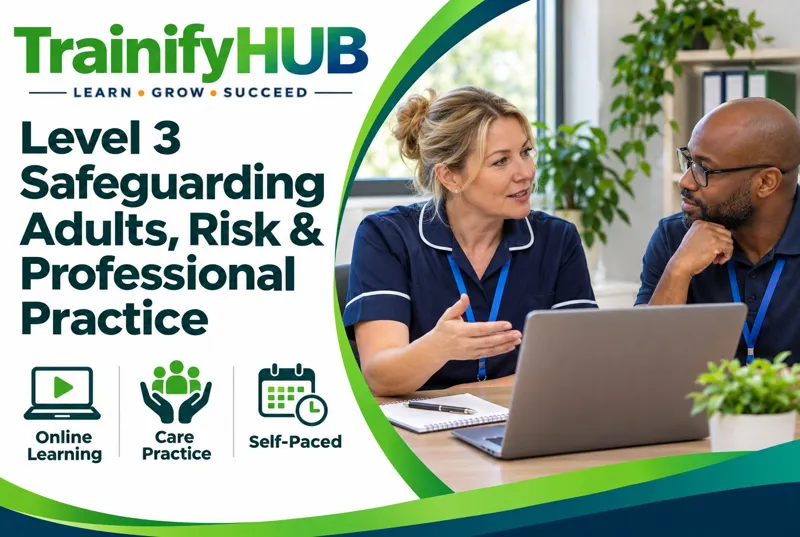 More in Health & Social Care
Health & Social Care
Level 3 Safeguarding Adults, Risk & Professional Practice
New course
16 modules4h 50m1
GBP35.00
 More in Health & Social Care
 More in Health & Social Care
 More in Health & Social Care
 More in Health & Social Care
 More in Health & Social Care
Health & Social Care
Diabetes Awareness: Essential Knowledge for Care Professionals
4.8(20)
11 modules3h97
GBP20.00
 More in Health & Social Care
Student Reviews
0.0
0 stars
Based on 0 reviews
5
0
4
0
3
0
2
0
1
0
🔒 Log In to Review
You must be logged in to submit a review. Please log in or create an account.