 More in Health & Social Care
Shift Handover and Communication in Care
Learn how to communicate effectively during shift handovers in health and social care. Develop skills in accurate reporting, information sharing, confidentiality, and safe continuity of care.
No ratings yet
3.00 CPD Points
MODULES
11
DURATION
2h 30m
STUDENTS
0+
LEVEL
beginner

Course Price
GBP 20.00
One-time payment - 9 months' access
Buying for your team?
Up to 30% off per seat: 10+ seats 10%, 25+ seats 20%, 50+ seats 30%.
This course includes:
11 comprehensive modules
2h 30m of video content
PDF, PPT & Infographics included
Final assessment included
9 months' access on mobile & desktop
Certificate of completion
3.00 CPD Points
CATEGORY
Health & Social CareLAST UPDATED
Oct 2026
About this course
Shift handover and communication are essential components of safe, effective, and person-centred care. Care workers must share accurate information about individuals' needs, daily activities, health conditions, risks, and ongoing support requirements when transferring responsibilities between shifts.
The Shift Handover and Communication in Care course helps learners understand the principles of effective handovers and professional communication in health and social care settings. It explores structured handover techniques, accurate record-keeping, confidentiality, active listening, and the importance of reporting changes in an individual's condition.
This course is suitable for care workers, healthcare assistants, support workers, residential care staff, and other professionals involved in delivering care. Learners will develop practical knowledge to support clear communication, reduce misunderstandings, prevent avoidable errors, and maintain continuity of care.
Whether working in a residential care home, nursing home, hospital, or community care environment, effective shift handover helps ensure that individuals receive consistent, coordinated, and appropriate support.
Learning Outcomes
Learning Outcomes: Shift Handover and Communication in Care
Module 1: The Anatomy of a Safe Shift Handover
By the end of this module, learners will be able to:
Identify a person's baseline condition, including mobility, cognition, and appetite.
Recognise changes in a person's health, behaviour, and daily functioning.
Communicate changes clearly, including when they started and their significance.
Prioritise safety-critical information during shift handovers.
Assign responsibility for outstanding tasks and follow-up actions.
Apply closed-loop communication to confirm understanding and accountability.
Describe observable behaviour objectively rather than using judgemental labels.
Module 2: Mastering the Shift Handover: Safe, Clear, and Person-Centred
By the end of this module, learners will be able to:
Identify the four critical questions that guide an effective handover.
Recognise immediate safety priorities, including breathing difficulties, confusion, medication errors, falls, and safeguarding concerns.
Distinguish routine information from significant changes requiring attention.
Communicate observations using clear, factual, and actionable language.
Apply the observation formula to connect changes with appropriate actions and current care plans.
Use closed-loop communication to confirm that information has been received and understood.
Identify outstanding actions, responsible individuals, and required follow-up times.
Module 3: Deterioration: Spotting the Story, Not Just the Signs
By the end of this module, learners will be able to:
Recognise subtle signs of deterioration, including reduced appetite, increased sleep, withdrawal, and irritability.
Compare current behaviour with an individual's normal baseline.
Record specific observations rather than relying on assumptions or intuition.
Communicate the nature, timing, and progression of a person's deterioration.
Recognise patterns of change rather than relying on isolated observations.
Identify when deterioration requires escalation to an appropriate healthcare professional.
Apply re-escalation procedures when a person's condition worsens after an initial clinical review.
Module 4: Mastering the SBAR Handover
By the end of this module, learners will be able to:
Explain the four components of SBAR: Situation, Background, Assessment, and Recommendation.
Present the main concern first when communicating urgent information.
Provide relevant background information, including the person's baseline condition.
Report objective observations and measurements within their professional role.
Communicate clear recommendations and requests for clinical review.
Distinguish between observed facts and unsupported medical diagnoses.
Use read-back techniques to confirm instructions and reduce communication errors.
Module 5: The Gold Standard for Safe Shift Handover
By the end of this module, learners will be able to:
Explain the difference between a medication administration record (MAR) and an active shift handover.
Identify outstanding actions that require continued attention.
Assign each outstanding task to a specific individual.
Establish clear deadlines for follow-up activities.
Use read-back communication to verify instructions and responsibilities.
Develop contingency plans for missed callbacks, delayed reviews, or unsuccessful actions.
Recognise that repeated incidents or changes must not be treated as routine without appropriate review.
Module 6: The Safety Chain: Closing the Gap in Safeguarding Handovers
By the end of this module, learners will be able to:
Explain why reporting an incident alone does not guarantee a safe transfer of responsibility.
Communicate safeguarding concerns and incidents using factual, person-centred language.
Preserve the person's own words when documenting relevant disclosures.
Identify who is responsible for the next safeguarding action.
Apply the principles of prevention, proportionality, and accountability in communication.
Follow appropriate procedures when a safeguarding concern remains unresolved.
Challenge the dismissal of safety concerns through appropriate escalation channels.
Module 7: Hand Over the Person, Not Just the Problem
By the end of this module, learners will be able to:
Apply person-centred principles when communicating information about individuals receiving care.
Use a person's preferred name and respect their identity.
Replace judgemental descriptions with objective accounts of behaviour.
Identify an individual's usual routines, preferences, and support requirements.
Share information according to confidentiality and need-to-know principles.
Protect verbal and digital privacy during handovers.
Incorporate personal preferences and effective support strategies into handover discussions.
Module 8: Moving the Person, Moving the Safety
By the end of this module, learners will be able to:
Explain the importance of safe transitions between care settings, teams, and services.
Identify risks associated with incomplete or misunderstood transfer information.
Compare a person's baseline condition with their current needs after a transition.
Communicate changes in mobility, cognition, and medication requirements.
Apply SBAR to communicate essential information during transfers.
Confirm that the receiving professional understands and accepts responsibility.
Identify outstanding tasks, responsible individuals, deadlines, and contingency arrangements.
Module 9: From Documentation to Action: The Safe Handover Chain
By the end of this module, learners will be able to:
Explain the importance of accurate, timely, and actionable care documentation.
Distinguish objective observations from personal interpretations.
Record changes chronologically to demonstrate patterns of deterioration.
Differentiate between completed, attempted, and outstanding actions.
Confirm that information has been received and responsibilities have been assigned.
Document the outcomes of referrals, clinical advice, and follow-up actions.
Recognise that recording or acknowledging an alert does not confirm that the required action has been completed.
Module 10: The Safe Handover System: Designing for Reliability in Care
By the end of this module, learners will be able to:
Explain how fatigue, interruptions, workload, and memory limitations affect handover safety.
Identify system-related factors that contribute to communication failures.
Apply standardised handover procedures to improve consistency and reliability.
Use structured checklists and named task ownership to reduce omissions.
Describe the seven-link safety sequence: Observe, Record, Prioritise, Communicate, Confirm, Transfer Responsibility, and Follow Up.
Apply closed-loop communication to confirm understanding and accountability.
Explain how psychological safety and a just culture support the reporting of concerns and learning from errors.
Accreditation & Recognition
This course is officially recognised and certified
3.00
CPD
Points Awarded
All accreditations are verified and recognised by relevant industry bodies. Upon successful completion, your certificate will display the appropriate accreditation marks.
Frequently Asked Questions
10 questions answered
Shift handover is the process of transferring essential information and care responsibilities from outgoing staff to incoming staff. It helps maintain continuity and ensures that important care needs are communicated.
Effective communication helps staff share accurate information, identify risks, coordinate responsibilities, and respond appropriately to changes in an individual's condition.
A handover may include changes in health or behaviour, care activities completed, outstanding tasks, identified risks, relevant appointments, incidents, and updates about individual needs and preferences.
SBAR stands for Situation, Background, Assessment, and Recommendation. It is a structured communication framework that helps healthcare professionals organise and communicate essential information clearly.
The course is suitable for care assistants, healthcare assistants, support workers, residential care staff, nursing home employees, and other professionals involved in health and social care.
Effective handover helps reduce communication gaps, ensures that important information is transferred, and supports timely responses to risks and changes in an individual's condition.
Confidentiality protects personal and sensitive information. Care professionals should share information only with authorised individuals who need it for legitimate care purposes and follow workplace policies.
The worker should promptly report the change to the appropriate senior colleague or healthcare professional, following workplace procedures. Urgent concerns should be escalated immediately according to the situation.
Yes. The course introduces essential handover procedures, professional communication, documentation, confidentiality, and teamwork, helping new care workers understand important workplace responsibilities.
The course provides training in shift handover and communication. Any certificate issued confirms completion under the platform's requirements and should not be confused with a regulated professional qualification unless explicitly accredited.
What You'll Learn
By completing this course, learners will understand how effective shift handover and professional communication support safe, consistent, and person-centred care.
Understand the purpose and importance of shift handover in health and social care.
Identify essential information that must be communicated between shifts.
Apply principles of clear verbal and written communication.
Understand structured handover techniques, including SBAR.
Recognise the importance of accurate, objective, and timely documentation.
Understand confidentiality and the appropriate sharing of personal information.
Identify common communication barriers and ways to overcome them.
Recognise changes in an individual's condition that require reporting or escalation.
Understand the responsibilities of outgoing and incoming care staff.
Support continuity of care through effective teamwork and information sharing.
Why Take This Course
Effective communication during shift handover helps care professionals provide safe, coordinated, and person-centred support. Missing or inaccurate information can lead to misunderstandings, incomplete care tasks, and delayed responses to changes in an individual's condition.
This course helps learners understand how to transfer essential information, document care accurately, protect confidentiality, and report concerns appropriately. It also explains how structured communication and active listening can improve teamwork and professional accountability.
Whether you are beginning a career in care or refreshing your existing knowledge, this training provides a useful foundation for understanding shift handover responsibilities in health and social care settings.
Certificate of Completion
Upon successful completion of the course and its required assessment, learners may receive a certificate of completion in Shift Handover and Communication in Care, subject to the platform's completion and certification requirements.
The certificate recognises completion of training covering effective handover procedures, professional communication, accurate documentation, confidentiality, teamwork, and continuity of care.
This certificate demonstrates course completion but does not, by itself, establish a professional qualification or guarantee employment.
Course Highlights
0+
Students Enrolled
New
Be the first!
2h 30m
Total Duration


Why book with TrainifyHUB
- CPD accredited training content
- Delivered UK-wide at your workplace
- Certificate of completion included
- Secure, encrypted online payments
Accredited & Trusted
 CPD Accredited Provider
 Secure Payments
Need help choosing a course?
+44 7405 005823 support@trainifyhub.co.uk
Our team can advise on the right training package for your organisation.
Keep learning
Related courses
Picked from what learners take alongside this course.
More in Health & Social Care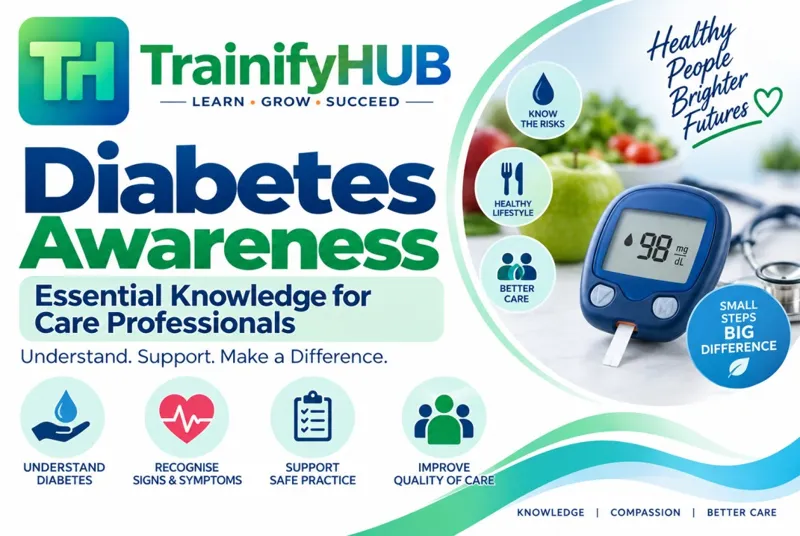 More in Health & Social Care
Health & Social Care
Diabetes Awareness: Essential Knowledge for Care Professionals
4.8(20)
11 modules3h97
GBP20.00
 More in Health & Social Care
 More in Health & Social Care
Health & Social Care
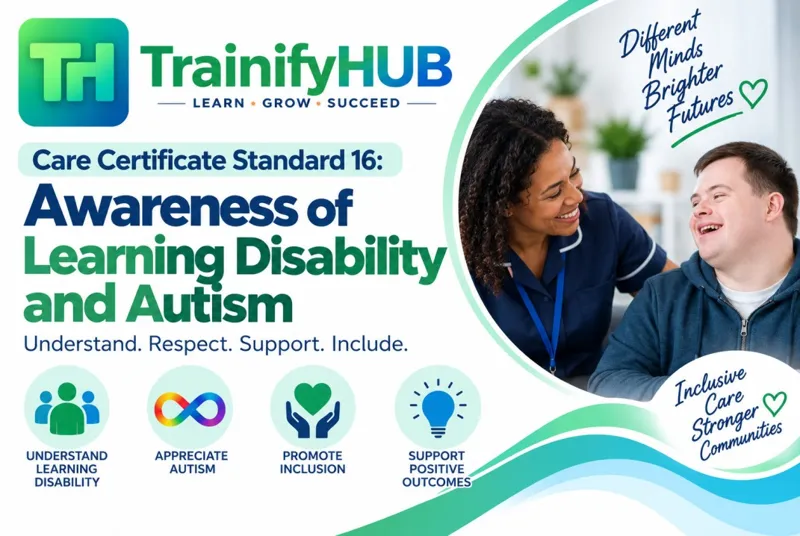
Care Certificate Standard 16: Awareness of Learning Disability and Autism
4.7(20)
11 modules4h93
GBP20.00
 More in Health & Social Care
 More in Health & Social Care
Health & Social Care
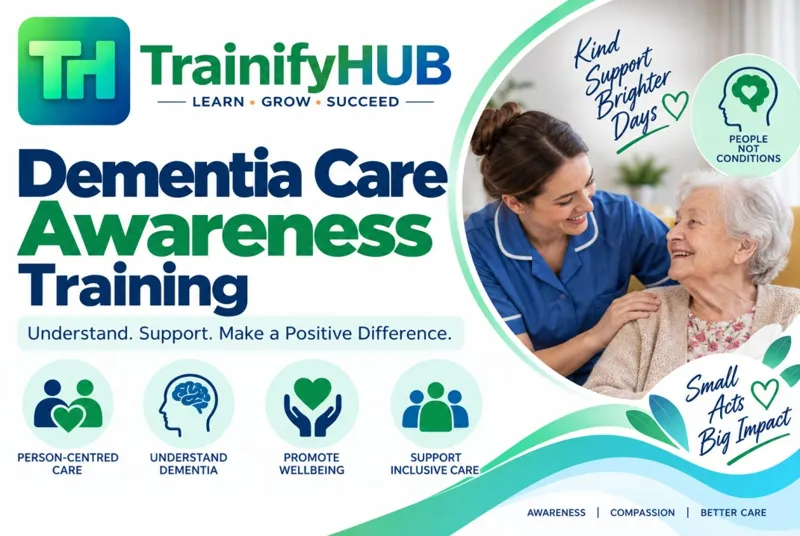
Dementia Care Awareness Training – CPD Certified (Updated 2026)
4.6(20)
11 modules3h83
GBP20.00
 More in Health & Social Care
 More in Health & Social Care
Health & Social Care
Catheter Care Update: Safe, Person-Centred Practice
4.8(20)
11 modules3h61
GBP20.00
Student Reviews
0.0
0 stars
Based on 0 reviews
5
0
4
0
3
0
2
0
1
0
🔒 Log In to Review
You must be logged in to submit a review. Please log in or create an account.