Complete Guide to Food Hygiene for Catering: Rules, Certificates and Best Practice
Peter Traynor Sime
Author
Food and hygiene in catering is about preparing, handling, storing and serving food safely so customers are protected from contamination, allergens and foodborne illness. In the UK, catering businesses must manage food safety properly, train staff in good hygiene practices and keep suitable records to show how risks are controlled.
This guide explains what food hygiene means for UK catering roles, what Level 2 food safety and hygiene for catering normally covers, how certificates should be understood, and how online training can support learners and employers.
Key Takeaways
UK food businesses must make sure food is safe, train staff appropriately and manage food safety risks.
Level 2 food hygiene and safety for catering is usually suitable for people who handle, prepare, cook or serve food in catering environments.
A certificate can help evidence training, but it does not by itself prove legal compliance or replace employer checks, supervision and workplace procedures.
UK catering teams should understand contamination, allergens, personal hygiene, temperature control, cleaning, pest control and HACCP-based food safety management.
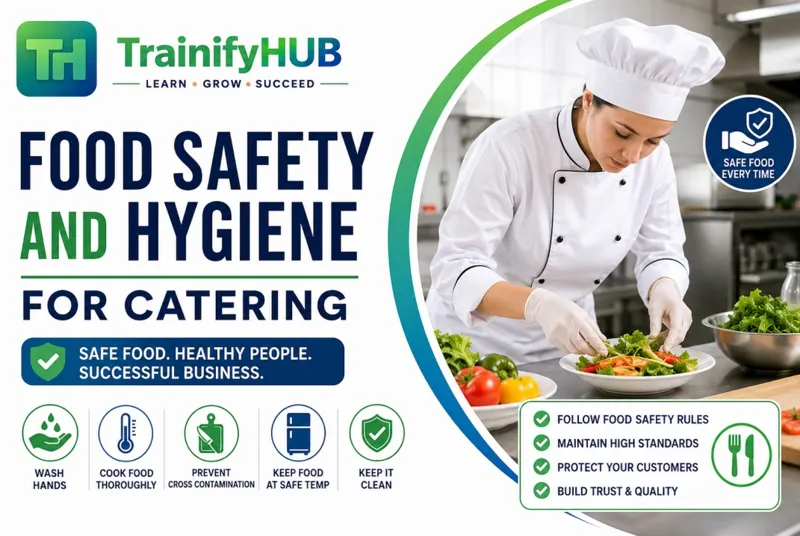
TrainifyHUB's Food Safety and Hygiene for Catering course supports UK learners with online study and a CPD-accredited certificate after successful completion.
What Does Food Hygiene Mean in UK Catering?
Food hygiene means the everyday practices that keep food safe from harm. In a UK catering setting, this includes how food is received, stored, prepared, cooked, cooled, reheated, served and disposed of.
It also includes how staff behave in the kitchen or food service area. Handwashing, illness reporting, clean clothing, safe handling of raw and ready-to-eat food, and correct allergen controls all matter.
For catering businesses, food hygiene is not only a kitchen habit. It is part of a wider food safety management system. GOV.UK guidance on running a food business says food businesses are responsible for making sure food is safe, training staff, managing allergy risks, controlling chemical, physical and microbiological hazards, and keeping traceability records.
Who Needs Level 2 Food Hygiene and Safety for Catering?
Level 2 food hygiene and safety for catering is commonly aimed at food handlers who prepare, cook, handle or serve food as part of their role.
It is relevant for UK roles such as:
kitchen assistants
chefs and cooks
catering assistants
cafe and restaurant staff
takeaway and fast-food workers
hotel and hospitality staff
school, nursery and care setting catering staff
volunteers who regularly prepare or serve food
food handlers in mobile catering or event catering
Level 2 is usually more practical than introductory awareness training. It is designed for people who have direct involvement with food. If someone supervises other food handlers, designs procedures, manages HACCP records or has higher responsibility for food safety decisions, Level 3 training may be more suitable. TrainifyHUB has a separate guide comparing Food Hygiene Level 2 vs Level 3 if you are choosing between training levels.
Which Food Hygiene Training Level Fits Your UK Catering Role?
The right training level depends on the work someone actually does. A person serving wrapped food does not usually need the same depth of training as someone cooking high-risk food or supervising a kitchen team.
Training Level | Best Fit In UK Catering | Typical Purpose |
Level 1 food hygiene | Low-risk or introductory food handling roles | Basic awareness of hygiene, contamination and safe behaviour around food. |
Level 2 food hygiene and safety for catering | Staff who prepare, cook, handle or serve food | Practical knowledge for food handlers working in catering, hospitality, care catering, schools, cafes, restaurants, takeaways or events. |
Level 3 food safety | Supervisors, managers and people responsible for food safety procedures | Deeper understanding of supervising food safety, managing procedures and supporting HACCP-based controls. |
For most UK catering food handlers, Level 2 is the usual starting point. For supervisors or managers, Level 3 may be more appropriate because their responsibilities are broader.
What UK Rules Apply to Catering Food Hygiene?
UK food businesses have a legal duty to sell or serve food that is safe to eat. Food hygiene rules also expect businesses to manage risks in a structured way, train staff appropriately and maintain suitable procedures.
For practical purposes, catering teams should understand four core UK expectations.
1. Staff Must Be Trained for Their Work
Food handlers must receive supervision, instruction and training that matches the work they do. That does not always mean one specific named certificate is legally required for every role, but employers need to show that staff understand safe food handling for their duties.
This is where Level 2 food safety and hygiene for catering certificate training can be useful. It gives learners a structured way to understand the principles they need before applying them at work.
2. Food Safety Procedures Must Be Managed
Food businesses need a food safety management system. GOV.UK food safety management guidance describes this as written processes, checks, rules and records, including cleaning rules, safe cooking and storage procedures, allergen controls, staff training and temperature checks.
The system must meet HACCP principles. HACCP means identifying food hazards, deciding where controls are needed, monitoring those controls, correcting problems and keeping records.
3. Allergen Risks Must Be Controlled
UK catering businesses must manage allergen information and prevent cross-contact where possible. This is especially important in restaurants, cafes, takeaways, schools, care settings and event catering, where customers may rely on staff for accurate information.
Food hygiene training should help staff understand allergen responsibilities, but employers still need clear menus, communication systems, kitchen controls and procedures.
4. Inspection Evidence Matters
Food businesses may be inspected by local authority food safety officers. GOV.UK guidance on food business responsibilities explains that food businesses are inspected to check compliance with food safety laws and given a food hygiene rating.
Training records can support inspection readiness, but they are only one part of the evidence. Cleaning schedules, temperature logs, supplier records, allergen procedures, corrective actions and staff supervision may also matter.
What Evidence Should UK Catering Employers Keep?
Food hygiene training is easier to defend when it sits alongside everyday records. Employers should keep evidence that shows staff have been trained and that food safety procedures are actually followed.
Evidence Type | Why It Matters |
Staff training records | Shows who completed training, when it happened and which topic was covered. |
Cleaning schedules | Shows how cleaning and disinfection are planned, assigned and checked. |
Temperature records | Supports safe chilled storage, cooking, reheating, cooling and hot holding. |
Allergen procedures | Shows how allergen information is handled and how cross-contact risks are controlled. |
HACCP or food safety management records | Shows how hazards are identified, monitored and corrected. |
Corrective action notes | Shows what the business did when something went wrong. |
What Does a Level 2 Food Safety and Hygiene for Catering Course Cover?
A good Level 2 food safety and hygiene for catering course should give food handlers enough knowledge to work safely in a catering environment and understand their responsibilities.
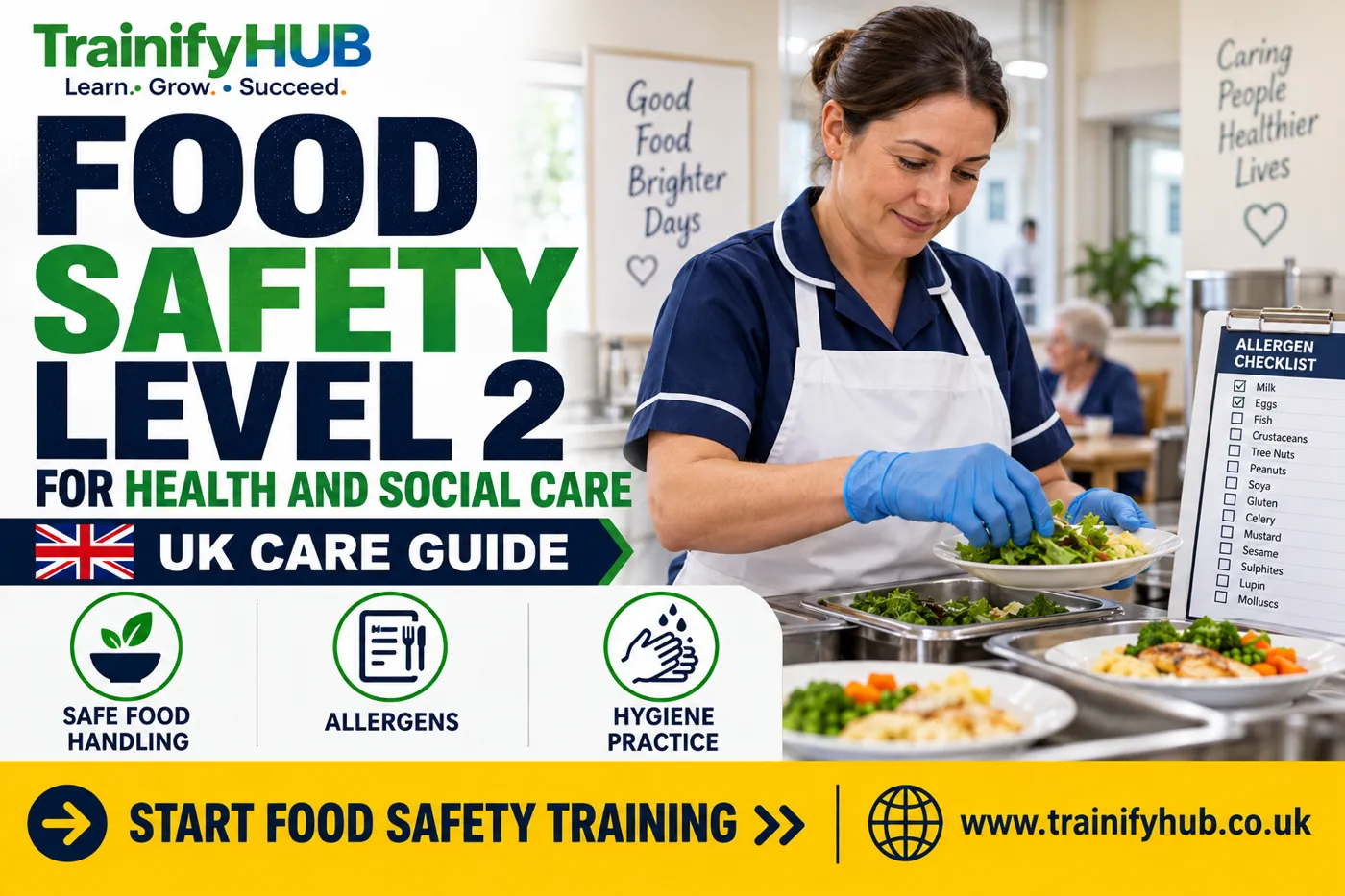
TrainifyHUB's Food Safety and Hygiene for Catering course covers UK food safety law, legal responsibilities, contamination prevention, safe handling, allergen management, personal hygiene, temperature control, storage, cleaning, sanitation, pest control and HACCP systems.
The course currently includes 8 modules and 28 lessons, with a final assessment. Its live course page lists learning outcomes including:
UK food safety laws and legal responsibilities
causes and prevention of food contamination
safe food handling, storage and temperature control
personal hygiene in food environments
allergen management and cross-contact prevention
cleaning, sanitation and pest control
safe working practices in catering environments
workplace hygiene standards and compliance support
These topics match the key risks catering staff meet in real kitchens and food service environments.
Why HACCP Matters in Catering
HACCP is central to food safety management in the UK. It helps businesses identify what could go wrong and decide where controls are needed.
In catering, HACCP thinking may apply to:
chilled food deliveries
raw meat preparation
avoiding cross-contamination
cooking food to safe standards
hot holding and cold holding
cooling and reheating
cleaning schedules
allergen handling
waste and pest control
GOV.UK food safety management guidance says food businesses need to identify hazards, identify critical control points, set limits, monitor them, correct problems, check the system works and keep records. This is why food hygiene training should not be treated as a tick-box exercise. Staff need to understand why procedures exist, not just memorise rules.
How Does a Food Hygiene Certificate Work in the UK?
A Level 2 food safety and hygiene for catering certificate shows that a learner has completed training and passed the required assessment for that course.
For learners, it can support job applications in catering, hospitality, care catering, event work and food service. For employers, it can support training records and help show that staff have received structured food hygiene instruction.
However, it is important to be precise. A certificate does not automatically make a food business compliant. UK compliance depends on the business having suitable procedures, supervision, safe premises, risk controls, records and staff who apply training correctly in the workplace.
When choosing a course, UK learners and employers should check:
whether the course is relevant to catering, not only general food awareness
whether it covers UK food safety law and food hygiene responsibilities
whether it includes allergens, HACCP, contamination, cleaning and temperature control
whether the certificate is suitable for training records
whether the provider explains accreditation or assurance clearly
whether learners can access the course online around shifts or rotas
When choosing training, match the course to the learner's role, risk level and workplace responsibilities. Food handlers need practical knowledge they can apply in a real catering environment, not just a certificate title that sounds relevant.
Is Online Level 2 Food Hygiene Training Accepted in the UK?
Online food hygiene training is widely used by UK learners and employers, especially where staff need flexible access around shifts. What matters is whether the training is suitable for the learner's role and whether the employer supports it with workplace procedures, supervision and practical checks.
For many food handlers, an online Level 2 course can be a practical route to structured learning. Employers should still make sure staff know how the business's own kitchen, equipment, allergen process, cleaning schedule and HACCP records work.
In other words: online training can provide the knowledge foundation. The employer must make sure that knowledge is applied safely at work.
How TrainifyHUB Supports Food Safety and Hygiene for Catering
TrainifyHUB offers a Food Safety and Hygiene for Catering course built around UK standards and practical food handling responsibilities.
The course is designed for learners who need to understand food safety in catering environments and for employers who want clearer training evidence for staff records. It includes a final assessment and, after successful completion, a CPD-accredited certificate.
The course is especially relevant if you need training that covers:
food safety principles and UK legal responsibilities
microbiological, chemical, physical and allergenic hazards
food contamination and cross-contamination prevention
personal hygiene and food handler responsibilities
storage, temperature control and safe handling
cleaning, disinfection, sanitation and pest control
HACCP systems and food safety management
For individual learners, this can help build confidence before starting or progressing in a catering role. For employers, it can support a more consistent training record across teams, alongside workplace-specific induction and supervision. Employers arranging training for multiple staff can also review TrainifyHUB's organisation training options.
Practical Best Practice for UK Catering Teams
Training works best when it is connected to daily routines. UK catering teams should make sure staff can apply food hygiene knowledge in real situations. The Food Standards Agency's Safer Food Better Business guidance is a useful UK reference for practical procedures and records, and its Safer Food Better Business for caterers pack is specifically aimed at restaurants, cafes, takeaways and other small catering businesses.
Useful workplace habits include:
keeping raw and ready-to-eat foods separate
washing hands at the right times and using correct facilities
checking chilled, cooked, hot-held and reheated food controls
following clear allergen communication procedures
cleaning and disinfecting surfaces correctly
reporting illness before handling food
keeping training, cleaning and temperature records up to date
reviewing food safety procedures when menus, suppliers or processes change
If a staff member completes Level 2 training, employers should still show them how the business handles local procedures, equipment, records and escalation steps.
Conclusion
Food hygiene for catering in the UK is about more than passing a course. It means understanding food safety risks, following UK rules, applying safe procedures and keeping good records.
If you handle, prepare, cook or serve food, TrainifyHUB's Food Safety and Hygiene for Catering course can help you build the knowledge needed for safer working and provide a CPD-accredited certificate after successful completion.
Next step: View the TrainifyHUB Food Safety and Hygiene for Catering course.
Frequently Asked Questions
UK law does not usually name one specific Level 2 certificate for every food handler. However, food businesses must make sure staff receive supervision, instruction and training suitable for their work. Level 2 food hygiene training is a common way to evidence structured training for catering food handlers.
It is suitable for people who handle, prepare, cook or serve food in UK catering settings, including kitchens, cafes, restaurants, takeaways, hotels, schools, nurseries, care settings, events and mobile catering.
No. A certificate helps evidence training, but UK food safety compliance also depends on workplace procedures, supervision, HACCP-based systems, records, allergen controls, cleaning, safe premises and staff applying training correctly.
It usually covers food safety law, contamination, allergens, personal hygiene, food storage, temperature control, cleaning, pest control, food handler responsibilities and HACCP principles.
Yes, many UK learners complete food hygiene training online. Employers should make sure the course is suitable for the role and combine online learning with workplace-specific procedures, induction and supervision.
There is no single universal UK expiry date for every certificate. Many employers choose periodic refresher training based on role, risk, workplace policy, inspection expectations and changes in procedures. Staff should be retrained whenever their responsibilities or food safety risks change.