 More in Compliance
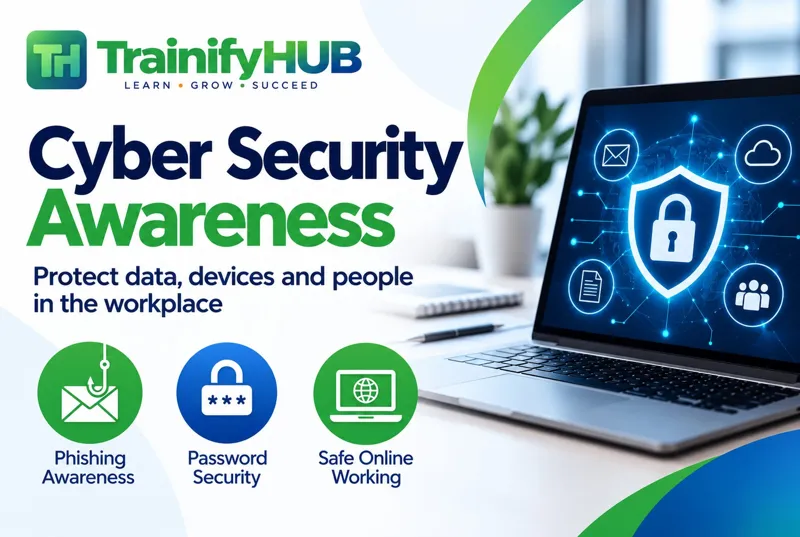
Cyber Security Awareness
Build practical cyber security awareness and learn how everyday workplace choices can reduce digital risk.
4.5 (20 reviews)
2.00 CPD Points
MODULES
9
DURATION
2h
STUDENTS
92+
LEVEL
beginner
Course Price
GBP 20.00
One-time payment - 9 months' access
Buying for your team?
Up to 30% off per seat: 10+ seats 10%, 25+ seats 20%, 50+ seats 30%.
This course includes:
9 comprehensive modules
2h of video content
PDF, PPT & Infographics included
Final assessment included
9 months' access on mobile & desktop
Certificate of completion
2.00 CPD Points
CATEGORY
ComplianceLAST UPDATED
Oct 2026
Course Price
GBP 20.00
One-time payment - 9 months' access
Buying for your team?
Up to 30% off per seat: 10+ seats 10%, 25+ seats 20%, 50+ seats 30%.
This course includes:
9 comprehensive modules
2h of video content
PDF, PPT & Infographics included
Final assessment included
9 months' access on mobile & desktop
Certificate of completion
2.00 CPD Points
CATEGORY
ComplianceLAST UPDATED
Oct 2026
About this course
er Security Awareness helps people who use workplace accounts, devices and information make safer everyday decisions. An unexpected message, a rushed payment request or a lost laptop can become a security problem long before a technical specialist is involved. The course explains these situations in accessible language and keeps the focus on actions within an ordinary employee’s role.
Across eight teaching modules, learners explore common threats, passwords and passkeys, multi-factor authentication, phishing, malware and ransomware. They also consider secure browsing, approved software, remote working and the care needed when sharing personal or confidential information. Practical examples connect the subjects to familiar tasks such as opening attachments, checking recipients and responding to a login prompt.
The learning follows a consistent approach: stop before acting under pressure, check what is being requested, protect accounts and information, report concerns and learn from mistakes. Scenarios help learners distinguish a sensible first response from technical investigation or recovery work that belongs with authorised colleagues.
This course is suitable for employees, contractors and supervisors across office-based, hybrid and other workplaces. It supports induction or refresher training and encourages learners to apply their own organisation’s security policies and reporting routes. No previous cyber security qualification is required.
By the end, learners should be better equipped to notice warning signs, use approved controls and report incidents promptly. A separate final assessment checks understanding of the teaching content. The emphasis is practical workplace awareness, supported by clear role boundaries and a constructive approach to reporting.
Learning Outcomes
By completing this course, learners will be able to:
Explain the employee’s role in protecting workplace systems and information.
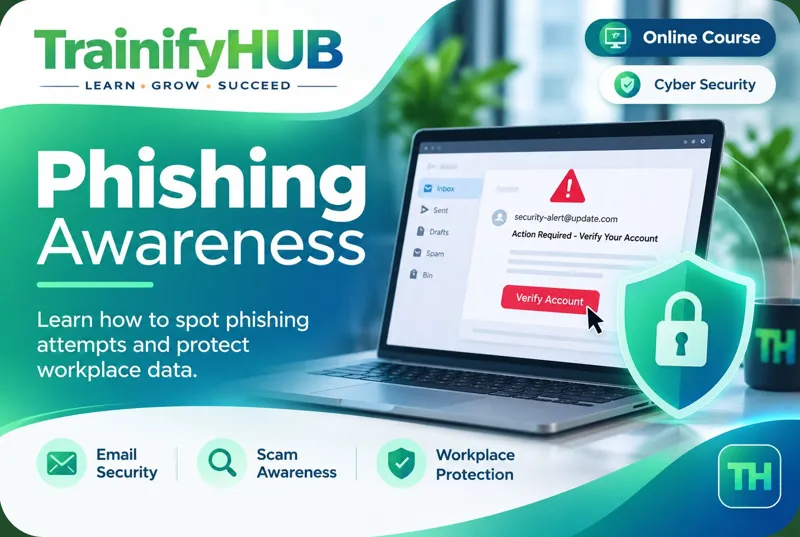
Identify common phishing, impersonation, malware and ransomware warning signs.
Choose a safe response to an unexpected authentication prompt or request for credentials.
Apply approved password and authentication practices to workplace accounts.
Check a suspicious request using a trusted, independent contact route.
Describe safer handling of devices and information when working remotely.
Check recipients, permissions and approved transfer methods before sharing information.
Recognise when an event needs prompt internal reporting.
Provide useful factual details without attempting unauthorised investigation.
Use the stop, check, protect, report and learn approach in a workplace scenario.
Course Content
Module 1 - Understanding Cyber Security and the UK Threat Landscape
Module Learning Outcomes
By the end of this Module, learners will be able to:
• Explain cyber security in plain language and why it matters to day-to-day work.
• Recognise common threats affecting UK organisations, including phishing, impersonation, malware and ransomware.
• Understand confidentiality, integrity and availability as practical security outcomes.
• Recognise that cyber security is a shared responsibility and know when to stop, check and report.
Module 2 - Passwords, Passkeys and Multi-Factor Authentication
Module Learning Outcomes
By the end of this Module, learners will be able to:
• Explain why password reuse creates risk.
• Use strong, unique passwords and password managers where approved.
• Explain the purpose of 2-step verification or multi-factor authentication.
• Understand that passkeys can reduce reliance on passwords and can provide strong phishing-resistant authentication where supported.
Module 3 - Phishing, Scams, Impersonation and Social Engineering
Module Learning Outcomes
By the end of this Module, learners will be able to:
• Recognise common signs of phishing, impersonation, vishing and social engineering.
• Understand how urgency, authority, fear and curiosity can be used to pressure people into unsafe actions.
• Verify unusual requests using a separate trusted channel.
• Report suspicious messages and calls through approved organisational routes.
Module 4 - Malware, Ransomware, Updates and Backups
Module Learning Outcomes
By the end of this Module, learners will be able to:
• Recognise common warning signs that may indicate malware or ransomware.
• Explain why supported software and timely security updates are important.
• Understand the Cyber Essentials 14-day requirement in its correct context.
• Explain why regular, protected and tested backups support recovery.
Module 5 - Secure Devices, Email, Internet and Remote Working
Module Learning Outcomes
By the end of this Module, learners will be able to:
• Use work devices in line with organisational policy.
• Recognise risks linked to lost devices, insecure networks and unauthorised software or media.
• Understand the purpose of VPNs and other secure remote-access controls where required by the organisation.
• Report lost, stolen or compromised devices promptly.
Module 6 - Protecting Data, Access and Information
Module Learning Outcomes
By the end of this Module, learners will be able to:
• Apply need-to-know and least-privilege principles at awareness level.
• Protect personal and confidential information during storage, sharing and disposal.
• Recognise accidental disclosure risks such as sending information to the wrong recipient.
• Understand that staff act on behalf of their organisation and must follow its data-protection and security controls.
Module 7 - Recognising, Reporting and Responding to Cyber Incidents
Module Learning Outcomes
By the end of this Module, learners will be able to:
• Recognise signs that may indicate a cyber security incident or personal data breach.
• Know the importance of immediate internal reporting and escalation.
• Distinguish a general cyber incident from a personal data breach at awareness level.
• Understand that regulatory reporting decisions are normally made by authorised organisational roles.
Module 8 - Building a Cyber-Secure Workplace Culture
Module Learning Outcomes
By the end of this Module, learners will be able to:
• Explain why culture and everyday behaviour matter alongside technical controls.
• Encourage prompt reporting and constructive learning from near misses and incidents.
• Understand the role of regular awareness training and leadership ownership.
• Apply the course-wide STOP - CHECK - PROTECT - REPORT - LEARN model.
What You Need To Do This Course
No previous specialist qualification is required. Learners need sufficient English to follow the teaching and assessment, an internet connection and a suitable device for the online course. Access to the organisation’s relevant policies and reporting contacts will help learners apply the material at work.
Accreditation & Recognition
This course is officially recognised and certified
2.00
CPD
Points Awarded
All accreditations are verified and recognised by relevant industry bodies. Upon successful completion, your certificate will display the appropriate accreditation marks.
Frequently Asked Questions
12 questions answered
It is designed for employees, workers, contractors and supervisors who use workplace systems, devices or information.
No. The course is written for non-specialists and explains key ideas in plain English.
Yes. The content uses British English and UK workplace context.
Topics include phishing, social engineering, weak authentication, malware, ransomware, unsafe data handling and remote-working risks
Yes. The course explains why early reporting matters and how to follow your organisation's reporting route.
No. It provides workplace awareness and should be supported by organisation-specific systems, policies and technical controls.
Yes. The course includes a final multiple-choice assessment.
The standard pass mark is 80% unless the published course settings state otherwise.
Yes. On successful completion of the course and final assessment, you will receive a TrainifyHub certificate of completion for your training records.
Yes. It can support induction or refresher learning alongside organisation-specific procedures.
It includes practical awareness relevant to approved personal-device and remote-working arrangements.
Refreshers should follow organisational risk, policy and review arrangements; the course itself does not create a fixed legal renewal period.
What You'll Learn
How common cyber threats affect everyday work and why individual decisions matter.
Safer use of passwords, approved password managers, passkeys and multi-factor authentication.
Warning signs in emails, messages, telephone calls and unexpected requests.
How urgency, impersonation and social engineering influence decisions.
The purpose of software updates, approved applications and organisational backups.
Secure device, email and internet habits when working on site or remotely.
Checking access permissions, recipients and sharing methods before disclosing information.
How to recognise a possible cyber incident and use the correct internal reporting route.
Why a cyber incident and a personal data breach are not interchangeable terms.
How reporting near misses and learning from mistakes supports a stronger security culture.
Why Take This Course
Cyber security decisions arise throughout the working day, not only when something has visibly gone wrong. Staff may be asked to share information, approve access or act quickly on an apparently routine message. Understanding when to pause can help prevent avoidable mistakes.
This training gives learners a practical foundation for those decisions and explains why approved controls matter. It is relevant to new starters, existing staff and supervisors who want a shared language for recognising and reporting risk.
The course also supports a workplace where people feel able to report a mistake early. It complements local procedures and technical safeguards, helping learners know what they can do themselves and when to seek authorised help.
Certificate of Completion
On successful completion of Cyber Security Awareness and its final assessment, learners will receive a TrainifyHub certificate of completion confirming completion of this awareness training.
The certificate can be used as evidence of learning for staff development, training records and ongoing professional development. It records course completion; it does not replace role-specific competence checks or organisational responsibilities.
Course Highlights
92+
Students Enrolled
4.5
20 Reviews
2h
Total Duration


Why book with TrainifyHUB
- CPD accredited training content
- Delivered UK-wide at your workplace
- Certificate of completion included
- Secure, encrypted online payments
Accredited & Trusted
 CPD Accredited Provider
 Secure Payments
Need help choosing a course?
+44 7405 005823 support@trainifyhub.co.uk
Our team can advise on the right training package for your organisation.
Keep learning
Related courses
Picked from what learners take alongside this course.
More in Compliance More in Compliance
 More in Compliance
 More in Compliance
 More in Compliance
 More in Compliance
Compliance
Professional Exam Invigilation Integrity and Quality Assurance
4.7(20)
11 modules4h64
GBP25.00
 More in Compliance
 More in Compliance
Student Reviews
4.5
5 stars
Based on 20 reviews
5
0
4
0
3
0
2
0
1
0
🔒 Log In to Review
You must be logged in to submit a review. Please log in or create an account.