 More in Compliance
Sexual Harassment Prevention at Work
Recognise sexual harassment, understand boundaries and help build a safer, more respectful workplace.
4.5 (20 reviews)
2.00 CPD Points
MODULES
9
DURATION
2h
STUDENTS
79+
LEVEL
beginner
Course Price
GBP 20.00
One-time payment - 9 months' access
Buying for your team?
Up to 30% off per seat: 10+ seats 10%, 25+ seats 20%, 50+ seats 30%.
This course includes:
9 comprehensive modules
2h of video content
PDF, PPT & Infographics included
Final assessment included
9 months' access on mobile & desktop
Certificate of completion
2.00 CPD Points
CATEGORY
ComplianceLAST UPDATED
Oct 2026
About this course
Sexual Harassment Prevention at Work helps learners recognise concerning behaviour and contribute to a more respectful workplace. It addresses verbal, non-verbal, physical and digital conduct, using clear examples without requiring learners to share personal experiences.
Across eight teaching modules, the course explores boundaries, consent, power imbalances and workplace culture. It considers situations involving colleagues, customers and other third parties, including social events, lone working and other contexts that may require particular care.
Learners are introduced to prevention, workplace risk assessment and the responsibilities discussed in the controlled teaching materials. The course connects these topics to everyday conduct: noticing discomfort, respecting boundaries, responding to concerns and following organisational procedures.
Speaking up, safe bystander action and supporting colleagues are central themes. Learners consider how to listen, where to report and why confidentiality must be handled responsibly. They are not asked to investigate allegations, determine guilt or promise an outcome.
This introductory awareness course is intended for employees, workers, contractors and supervisors. It supports workplace prevention and refresher learning alongside local policies and support arrangements. A separate final assessment checks understanding of the material.
Learning Outcomes
By completing this course, learners will be able to:
Describe sexual harassment using clear workplace examples.
Identify concerning conduct across face-to-face and digital interactions.
Explain why personal boundaries and power imbalances require attention.
Recognise situations that may need preventative controls or advice.
Describe the employee’s contribution to workplace prevention.
Choose a safe and proportionate bystander response in a scenario.
Respond supportively without investigating or making promises.
Identify appropriate reporting and support routes.
Explain why confidentiality and protection from retaliation need careful handling.
Suggest practical actions that help maintain a respectful workplace.
Module 1 - Understanding Sexual Harassment at Work
Module Learning Outcomes
By the end of this Module, learners will be able to:
• Explain sexual harassment as unwanted conduct of a sexual nature.
• Explain the purpose-or-effect test and why intent is not required.
• Explain the additional reasonableness assessment where the allegation relies on the effect of the conduct.
• Distinguish sexual harassment from general bullying, unprofessional conduct and harassment related to other protected characteristics.
Module 2 - Recognising Sexual Harassment: Verbal, Non-Verbal, Physical and Digital Behaviour
Module Learning Outcomes
By the end of this Module, learners will be able to:
• Recognise verbal, non-verbal, physical and digital examples.
• Understand that a single incident can be serious enough to matter.
• Understand that work-related digital or outside-work conduct may still be relevant depending on its connection to employment.
• Know safer ways to document concerns and understand the risks of secret recordings.
Module 3 - Consent, Boundaries, Power Imbalances and Workplace Culture
Module Learning Outcomes
By the end of this Module, learners will be able to:
• Understand why professional boundaries matter.
• Recognise how seniority, job insecurity and power imbalance can affect a person's ability to object.
• Avoid using 'consent' as a substitute for the statutory legal test.
• Recognise that abuse of power may be treated as an aggravating factor when disciplinary action is considered.
Module 4 - Third-Party Sexual Harassment and Higher-Risk Workplace Situations
Module Learning Outcomes
By the end of this Module, learners will be able to:
• Recognise customers, clients, patients, service users, suppliers and others as possible third parties.
• Understand that the current preventative duty already includes reasonable steps to prevent third-party sexual harassment.
• Understand the separate third-party harassment liability change from 30 October 2026.
• Recognise higher-risk contexts and practical prevention measures.
Module 5 - Employer Preventative Duties, Risk Assessment and Reasonable Steps
Module Learning Outcomes
By the end of this Module, learners will be able to:
• Understand the preventative duty as proactive and anticipatory.
• Use the EHRC eight-step framework as practical guidance.
• Understand that what is reasonable depends on the organisation and the risk.
• Understand the 30 October 2026 move to 'all reasonable steps'.
Module 6 - Speaking Up, Bystander Action and Supporting Colleagues
Module Learning Outcomes
By the end of this Module, learners will be able to:
• Know safe bystander options.
• Support the person affected without pressuring them.
• Understand protection from victimisation when supporting certain Equality Act complaints.
• Know when a concern may also engage whistleblowing rules.
Module 7 - Reporting, Complaints, Victimisation, Whistleblowing and Confidentiality
Module Learning Outcomes
By the end of this Module, learners will be able to:
• Understand informal and formal reporting routes.
• Distinguish Equality Act victimisation from whistleblowing detriment.
• Understand the conditions for sexual-harassment whistleblowing protection from 6 April 2026 in Great Britain.
• Understand the limits of NDAs and confidentiality clauses.
Module 8 - Building a Respectful and Prevention-Focused Workplace
Module Learning Outcomes
By the end of this Module, learners will be able to:
• Understand that culture is shaped by everyday behaviour and management response.
• Use feedback and records to identify patterns and hidden risks.
• Understand the value of reviewing training, policy and controls.
• Recognise that prevention is shared, while legal compliance responsibilities remain organisational.
What You Need To Do This Course
No previous specialist qualification is required. Learners need sufficient English to follow the teaching and assessment, an internet connection and a suitable device for the online course. Access to the organisation’s relevant policies and reporting contacts will help learners apply the material at work.
Accreditation & Recognition
This course is officially recognised and certified
2.00
CPD
Points Awarded
All accreditations are verified and recognised by relevant industry bodies. Upon successful completion, your certificate will display the appropriate accreditation marks.
Frequently Asked Questions
14 questions answered
It is designed for employees, workers, contractors and supervisors, including people without HR or legal expertise.
Yes. It uses British English and UK workplace sources.
The course considers verbal, non-verbal, physical and digital behaviour, including conduct at work-related events and through workplace communications.
No. Context, impact, circumstances and applicable legal tests may all matter.
Boundaries are limits that support dignity, consent and respectful professional relationships.
Yes. It considers how authority, status, vulnerability and workplace culture can influence behaviour and reporting.
A witness should consider safety, support the person affected and use an appropriate reporting or bystander route.
Organisations should explain their processes, but absolute confidentiality cannot always be guaranteed.
It provides awareness, not a full investigator qualification or case-specific legal procedure.
Yes. The course includes a multiple-choice assessment.
The standard pass mark is 80% unless the published settings say otherwise.
A TrainifyHub completion certificate may be issued when published course requirements are met.
No. Learners must also follow their organisation's policy, reporting process and support arrangements.
Time-sensitive legal content should be checked at publication and during scheduled course reviews.
What You'll Learn
Recognising sexual harassment in verbal, non-verbal, physical and digital situations.
How context, boundaries, impact and power differences affect workplace interactions.
Risks involving customers, clients, contractors and other third parties.
Higher-risk settings and the importance of preventative planning.
The course’s explanation of employer prevention responsibilities and risk assessment.
Safe options for bystander action within the learner’s role.
Listening and responding sensitively when a colleague shares a concern.
Workplace reporting, complaint and support routes.
Handling information responsibly and understanding limits to confidentiality.
How consistent everyday behaviour supports a prevention-focused culture.
Why Take This Course
Unwanted behaviour can be overlooked, minimised or excused as ordinary workplace interaction. Clear awareness helps people recognise concerns sooner and understand how their own conduct affects others.
The course gives learners practical language for boundaries, prevention and support. It also helps people consider safe responses when they witness behaviour or are approached by someone seeking help.
For organisations, the training supports a shared understanding of respectful conduct and reporting arrangements. It complements prevention measures, local policies and appropriate handling of concerns.
Certificate of Completion
On successful completion of Sexual Harassment Prevention at Work and its final assessment, learners will receive a TrainifyHub certificate of completion confirming completion of this awareness training.
The certificate can be used as evidence of learning for staff development, training records and ongoing professional development. It records course completion; it does not replace role-specific competence checks or organisational responsibilities.
Course Highlights
79+
Students Enrolled
4.5
20 Reviews
2h
Total Duration


Why book with TrainifyHUB
- CPD accredited training content
- Delivered UK-wide at your workplace
- Certificate of completion included
- Secure, encrypted online payments
Accredited & Trusted
 CPD Accredited Provider
 Secure Payments
Need help choosing a course?
+44 7405 005823 support@trainifyhub.co.uk
Our team can advise on the right training package for your organisation.
Keep learning
Related courses
Picked from what learners take alongside this course.
More in Compliance More in Compliance
 More in Compliance
 More in Compliance
 More in Compliance
 More in Compliance
Compliance
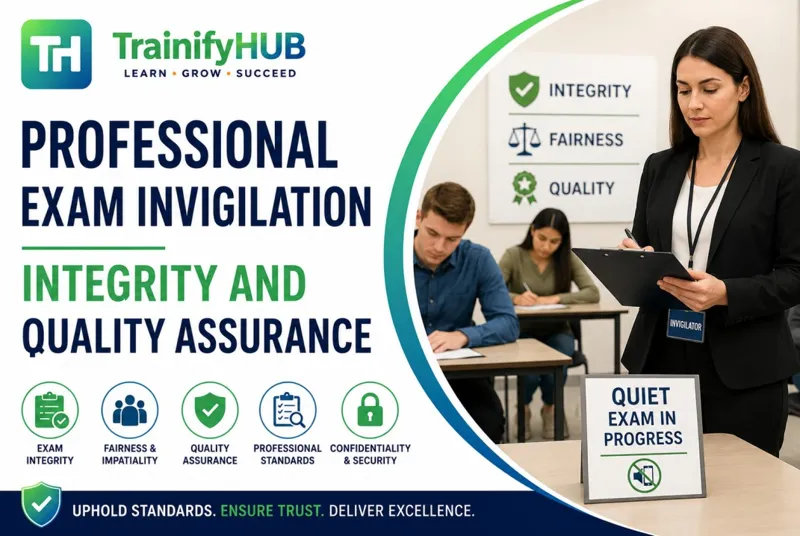
Professional Exam Invigilation Integrity and Quality Assurance
4.7(20)
11 modules4h64
GBP25.00
 More in Compliance
 More in Compliance
Student Reviews
4.5
5 stars
Based on 20 reviews
5
0
4
0
3
0
2
0
1
0
🔒 Log In to Review
You must be logged in to submit a review. Please log in or create an account.