First Aid at Work: Courses, Workplace Requirements and Emergency Response
Peter Traynor Sime
Author
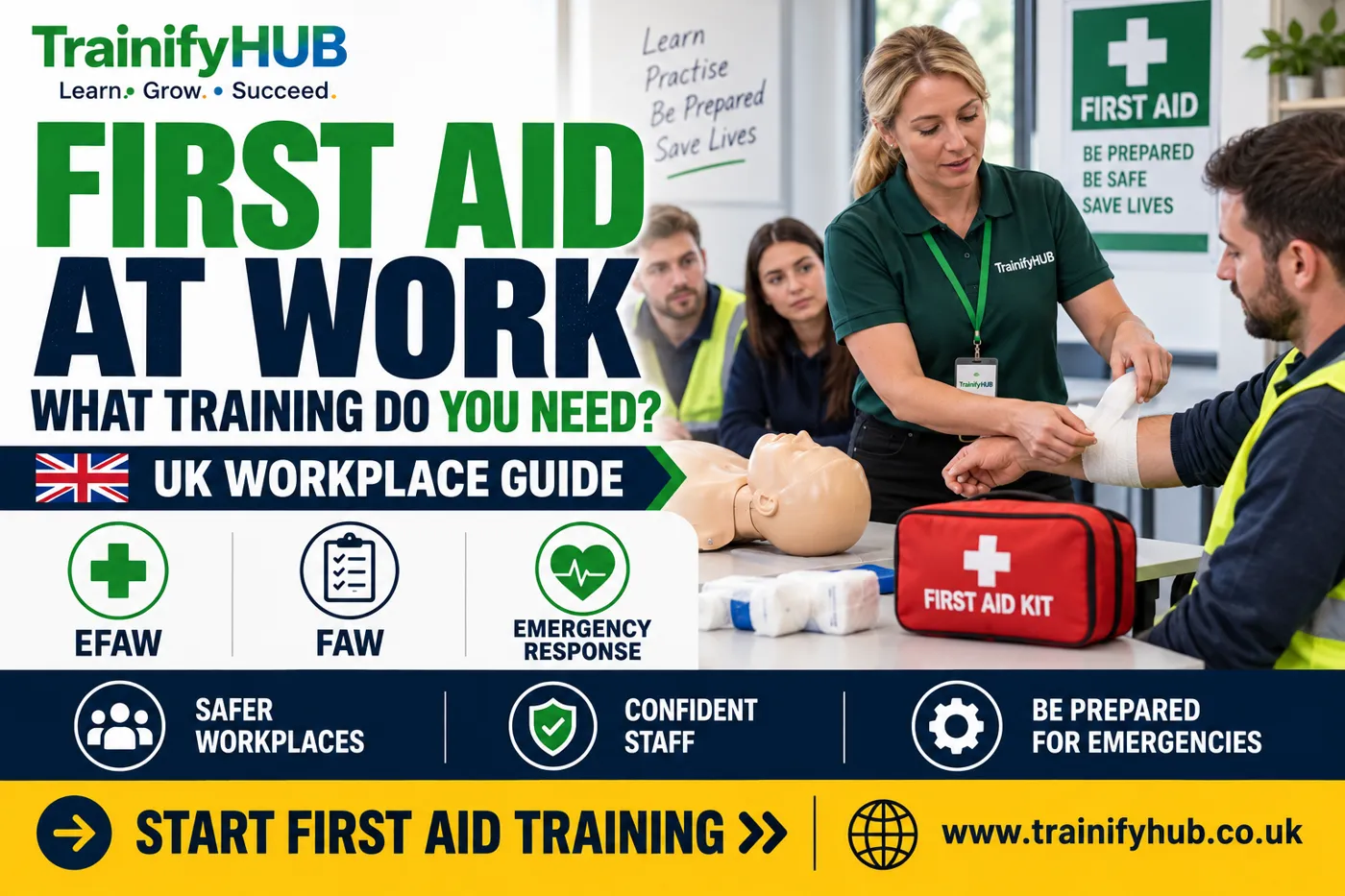
An emergency first aid at work course trains a workplace first aider to give immediate help when someone is injured or becomes ill at work. In the UK, the right first-aid training depends on the employer's first-aid needs assessment, the hazards present and the people who may need help. This guide is prepared for learners and employers comparing training options on TrainifyHUB. This guide is prepared for learners and employers comparing training options on TrainifyHUB.
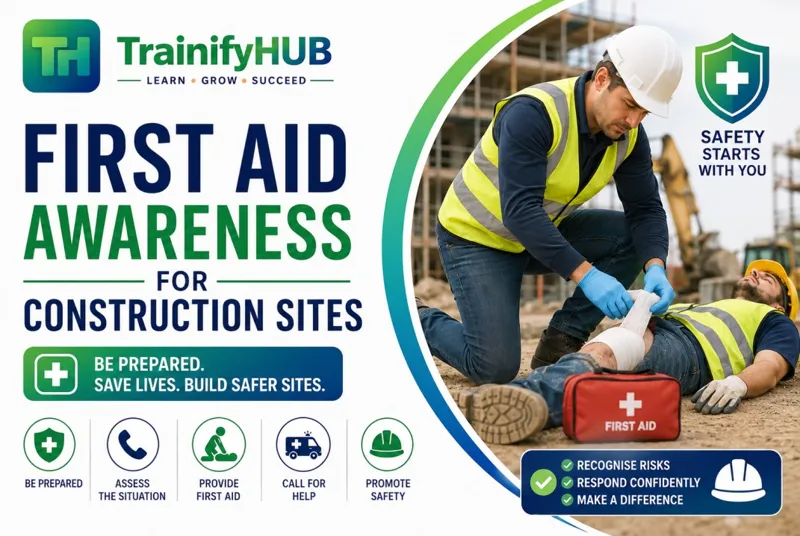
Construction sites need especially careful planning because the work can involve moving plant, tools, height, dust, noise, electricity and changing site conditions. This guide explains Emergency First Aid at Work, First Aid at Work, construction-site arrangements and how online awareness learning can support safer emergency response.
If you are preparing for wider site-safety checks, TrainifyHUB's CITB test guide for CSCS cards explains another common safety route for construction workers.
Key Takeaways
UK employers must provide adequate and appropriate first-aid equipment, facilities and people based on a needs assessment.
Emergency First Aid at Work is different from the fuller First Aid at Work qualification.
Construction sites need a first-aid box, an appointed person or first aider arrangement, and clear information for workers.
Online awareness training can support knowledge and preparation, but it does not replace practical first-aider competence where the needs assessment requires it.
The best course choice starts with site hazards, workforce size, location, shift pattern and emergency-service access.
What is Emergency First Aid at Work?
Emergency First Aid at Work, often shortened to EFAW, is a recognised level of workplace first-aid training. HSE explains that an EFAW first aider is qualified to give emergency first aid to someone who is injured or becomes ill at work: HSE first aiders and training. For related TrainifyHUB guidance, see CITB test guide for CSCS cards. For official context, see HSE first aid training guidance. For source context, see HSE first aid training guidance. A relevant TrainifyHUB course option is the Asbestos Awareness Construction Site Safety course. For related reading, see the CITB test guide for CSCS cards.
It is commonly described as a one-day course. The focus is immediate response: checking danger, assessing a casualty, calling for help, CPR, using an AED where trained, dealing with an unconscious casualty, severe bleeding, choking and shock. Exact delivery and assessment should match the provider and qualification route.
How is EFAW different from First Aid at Work?
First Aid at Work, often shortened to FAW, is a broader qualification. HSE describes FAW first aiders as qualified to the EFAW level and also able to apply first aid to a wider range of specific injuries and illnesses. That extra breadth can matter in higher-risk workplaces. For structured learning on this topic, review the First Aid Awareness for Construction Sites course.
Training route | Typical use | Main limitation |
Appointed person | Takes charge of arrangements and calls emergency services where needed. | Not the same as a trained first aider unless they also hold suitable training. |
Emergency First Aid at Work | Emergency response for lower-risk or selected workplace needs. | May not cover the wider range needed for higher-risk sites. |
First Aid at Work | Wider workplace first-aider role, often used where risks are higher. | Takes more time and still needs workplace arrangements around it. |
The employer's assessment decides what is suitable. A course title alone should not be used as the decision.
What are UK workplace first-aid requirements?
The Health and Safety (First-Aid) Regulations 1981 require employers to provide adequate and appropriate equipment, facilities and personnel so employees can receive immediate attention if injured or taken ill at work. HSE's detailed guidance is here: First aid at work guidance on regulations. A useful source for checking this point is HSE first aid at work regulations guidance. For source context, see HSE first aid needs assessment.
In practical terms, employers should consider workplace hazards, workforce size, working patterns, accident history, lone or remote work, inexperienced workers, members of the public and distance from emergency medical services. HSE's needs assessment guidance explains how these factors shape provision: HSE first aid needs assessment.
For a small, low-risk office, EFAW may be enough. For a construction project with higher hazards, more people or difficult access, FAW cover or additional arrangements may be needed. The answer should be recorded in the first-aid needs assessment.
What first aid arrangements are expected on construction sites?
HSE's construction first-aid FAQ says construction sites must have a first-aid box with enough equipment, an appointed person to take charge of first-aid arrangements, and information telling workers the name of the appointed person or first aider and where to find them: HSE construction first aid FAQ. A related TrainifyHUB option is the Working at Height Safety and Risk Management course.
That is the starting point. The real site plan should also deal with location and movement. A first-aid kit locked in a distant cabin may be difficult to reach. A notice that is hidden behind stacked materials may not help a new subcontractor. A first aider who is only present on one shift may leave a gap.
Use this site-planning checklist:
Where are first-aid boxes kept, and can workers reach them quickly?
Who is the appointed person or trained first aider on each shift?
How are visitors, subcontractors and new starters told about arrangements?
How would emergency services find the casualty on a large or changing site?
What extra equipment is needed for the work being carried out?
How are incidents recorded and reviewed?
Can you take Emergency First Aid at Work online?
People often search for an emergency first aid at work course online because online learning is convenient. Online study can help with awareness, preparation and refresher knowledge. It can also help workers understand site procedures before practical training or induction. For further reading, see the CITB test guide for CSCS cards.
Be careful with wording. If the employer's needs assessment requires a qualified workplace first aider, check whether the chosen route includes the required practical teaching, assessment and certificate for that role. HSE's first-aid training guidance explains employer responsibilities for selecting training and making sure first aiders are competent.
For construction teams, an online first-aid awareness course can support the wider safety culture, but it should not be presented as a replacement for suitable first-aider cover where that is required.
What should an emergency response plan include?
Training is only one part of response. A good plan turns first-aid knowledge into action under pressure. You can compare this with HSE first aid needs assessment.
Plan element | What to decide |
First contact | Who takes charge when an incident happens. |
Location details | How emergency services are directed to the exact site area. |
Equipment | Where kits, AEDs, eye wash or specialist items are kept. |
Communication | Who contacts the site manager, emergency services and family contacts where appropriate. |
Access | How gates, hoists, locked rooms or traffic routes are managed. |
Review | How accidents and near misses lead to better arrangements. |
Run short briefings when the site changes. First-aid arrangements that made sense at groundworks stage may need updating when the project moves to fit-out, roofing or electrical work.
Supervisors and managers should also understand how first-aid planning connects with broader site responsibility. TrainifyHUB's SSSTS and SMSTS guide can help teams decide which management-level training route fits their role.
How can TrainifyHUB support first-aid awareness for construction?
TrainifyHUB's First Aid Awareness for Construction Sites course supports learners who need a flexible online introduction to first-aid awareness in a construction context. It is useful for building understanding before site induction, toolbox talks or employer-led procedures. Teams may also find the Asbestos Awareness Construction Site Safety course relevant. A relevant TrainifyHUB course option is the First Aid Awareness for Construction Sites course. A relevant TrainifyHUB course option is the Working at Height Safety and Risk Management course.
Use the course alongside the employer's first-aid needs assessment. If your organisation needs qualified first aiders, make sure the chosen practical training route and assessment meet that purpose.
Conclusion
First aid at work is not just a course choice. It is a workplace arrangement based on hazards, people, equipment, training and emergency access. For another source on this area, see HSE construction first aid FAQ.
To build construction-site awareness, view TrainifyHUB's First Aid Awareness for Construction Sites course and compare it with your site's first-aid needs assessment.
Frequently Asked Questions
It is commonly delivered as a one-day course, but the employer should check the provider's delivery, assessment and certificate details before relying on it for workplace cover.
Sometimes, but not always. Construction can involve higher risks, so the employer's needs assessment should decide whether EFAW, FAW or additional arrangements are required.
An appointed person takes charge of first-aid arrangements and calls emergency services where needed. A first aider has suitable training and competence for the first-aid role identified by the employer.
Online learning can support awareness and knowledge. If a workplace needs a qualified first aider, the employer should confirm that the training includes the required practical elements and assessment.
Workers should know who the appointed person or first aider is, where first-aid equipment is kept and how to get help quickly. Site notices and induction briefings should be kept current.
No. Training supports the arrangements, but employers must also provide suitable equipment, facilities, people, information and review processes based on their first-aid needs assessment.