Adult Safeguarding Training: Who Needs It and What It Covers
Peter Traynor Sime
Author
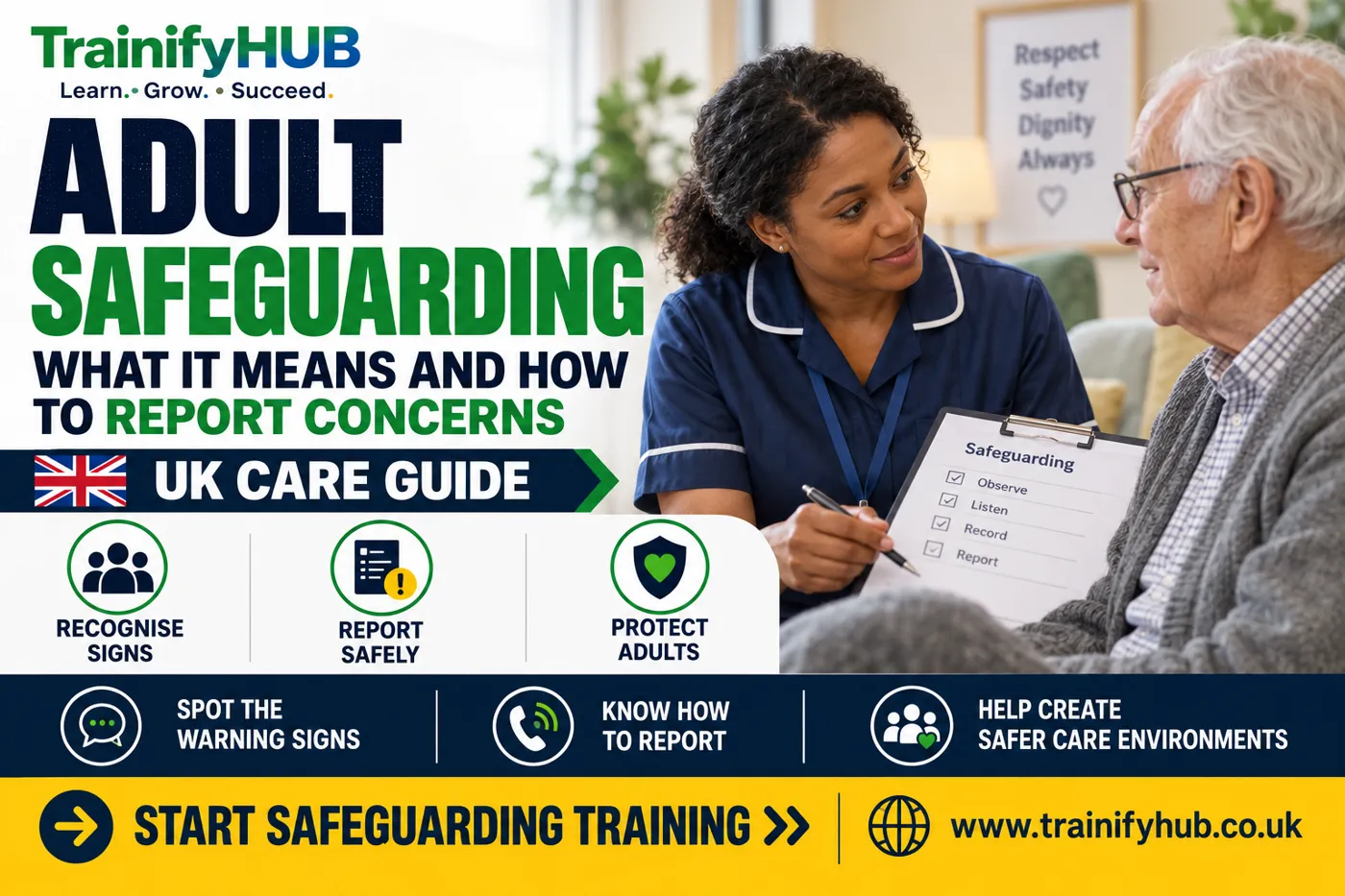
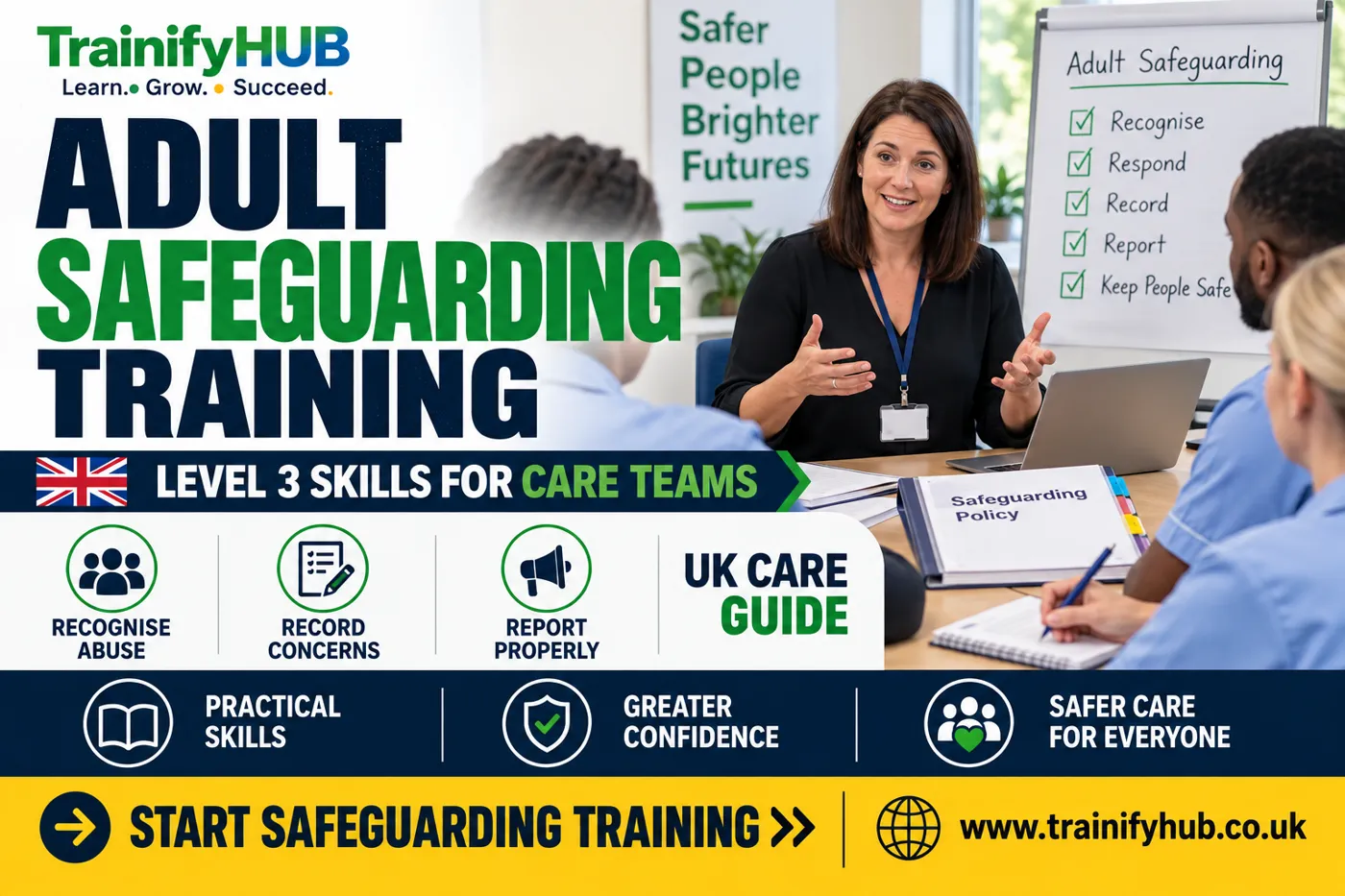
Adult safeguarding training helps workers recognise, respond to and report concerns about abuse, neglect or exploitation involving adults at risk. In UK health and social care, it supports safer practice, clearer reporting and better understanding of each worker's role. This guide is prepared for learners and employers comparing training options on TrainifyHUB.
This guide explains who needs adult safeguarding training, what level 3 usually covers and how a course fits with employer duties.
Key Takeaways
Adult safeguarding is about protecting adults with care and support needs who may be at risk of abuse or neglect.
Training level should match the worker's role, responsibility and contact with adults at risk.
Adult safeguarding level 3 is usually for staff with greater responsibility for responding to, recording or escalating concerns.
A certificate can support training records, but it does not replace local safeguarding procedures or professional judgement.
TrainifyHUB's adult safeguarding course can support awareness and refresher learning for care-related roles.
What is adult safeguarding training?
Adult safeguarding training teaches learners how to recognise possible abuse or neglect, respond safely, record factual information and report concerns through the correct route. It should also explain consent, mental capacity, confidentiality, whistleblowing and the limits of the learner's role.
The Care Act 2014 statutory guidance explains safeguarding adults in England and the need to protect people with care and support needs who are experiencing or at risk of abuse or neglect: Care and support statutory guidance. For source context, see Care and support statutory guidance.
Who needs adult safeguarding training?
Adult safeguarding training may be relevant to care workers, nurses, support workers, domiciliary carers, housing staff, volunteers, reception teams, managers and anyone who may notice or receive a concern about an adult at risk.
Worker or role | Likely training need |
Frontline care staff | Recognise, respond, record and report concerns. |
Supervisors | Support staff and escalate concerns correctly. |
Managers | Make sure systems, training and reporting routes work. |
Volunteers | Understand boundaries and who to tell. |
Multi-agency workers | Share information appropriately and understand referral routes. |
The exact level should be set by the employer, role and local safeguarding procedures.
What does adult safeguarding level 3 cover?
Adult safeguarding level 3 usually goes beyond basic awareness. It may cover types of abuse, making safeguarding personal, mental capacity, consent, information sharing, escalation, referral, record keeping and multi-agency working.
People searching for "who needs level 3 safeguarding training" are often trying to match training to responsibility. A worker who only needs to recognise and report concerns may not need the same depth as a manager, lead practitioner or professional involved in decision-making. A relevant TrainifyHUB course option is the Adult Safeguarding Awareness and Protection course.
What types of abuse should learners recognise?
Safeguarding training should help learners recognise abuse and neglect, including physical, emotional, sexual, financial, organisational, discriminatory and domestic abuse, as well as neglect, self-neglect and modern slavery. A related TrainifyHUB option is the Care Certificate One Portfolio course.
Signs can include injuries, fearfulness, changes in behaviour, poor care, missing money, pressure from another person, poor living conditions or a person saying something that raises concern. A sign is not proof by itself, but it should be recorded and reported through the right route.
How should safeguarding concerns be reported?
Do not investigate the concern yourself unless your role specifically requires that within the safeguarding process. Most workers should respond calmly, record facts and report to the designated person, manager or safeguarding route. For further reading, see the domiciliary care guide.
For CQC-regulated providers, Regulation 13 covers safeguarding service users from abuse and improper treatment: CQC Regulation 13 safeguarding guidance. Providers also need systems that help staff identify and act on concerns. A relevant TrainifyHUB course option is the Care Certificate One Portfolio course.
Good reporting includes what was seen, heard, disclosed, recorded and escalated. Avoid adding unsupported opinions or delaying because you are unsure. If immediate safety is at risk, follow emergency procedures.
How can TrainifyHUB support adult safeguarding training?
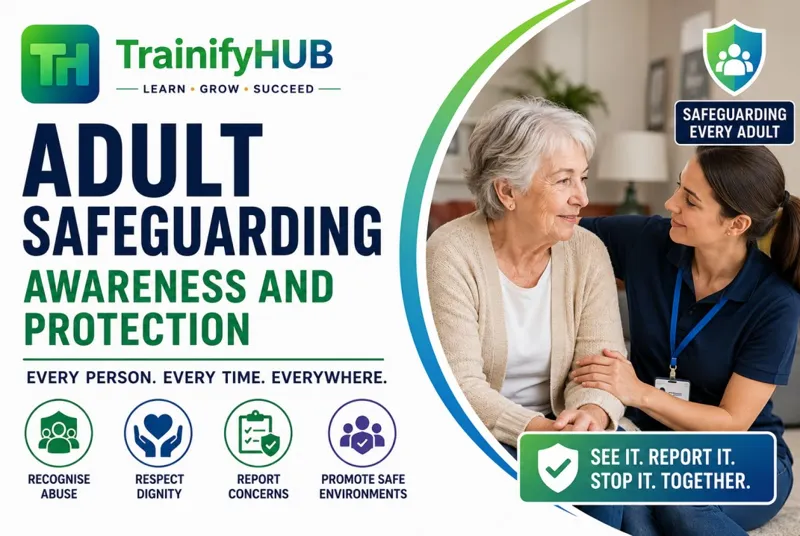
TrainifyHUB's Adult Safeguarding Awareness and Protection course supports learners who need flexible online adult safeguarding learning for care-related roles.
Learners and employers can also review related health and social care training where safeguarding connects with dignity, duty of care, communication and record keeping.
Conclusion
Adult safeguarding training helps workers recognise harm, respond calmly and report concerns through the right route. It is most useful when matched to the person's role and backed by clear local procedures. A relevant TrainifyHUB course option is the Mental Health Awareness for Health and Social Care course.
To support awareness or refresher learning, view TrainifyHUB's Adult Safeguarding Awareness and Protection course.
Frequently Asked Questions
It is training that helps learners recognise abuse or neglect, respond safely, record facts and report concerns about adults at risk.
Anyone who works with, supports or may receive concerns about adults at risk may need training matched to their role.
It is usually a deeper training level for people with greater safeguarding responsibility, but course outcomes vary by provider. For related reading, see the domiciliary care guide.
Staff with responsibility for responding to, escalating, supervising or making decisions around safeguarding concerns may need level 3.
No. Training supports awareness and records, but organisations still need policies, reporting routes, supervision and safe systems.
Record the facts, report through your safeguarding procedure and seek urgent help if someone is in immediate danger.