What Is Autism? Understanding Autism Spectrum Differences and Support
Peter Traynor Sime
Author
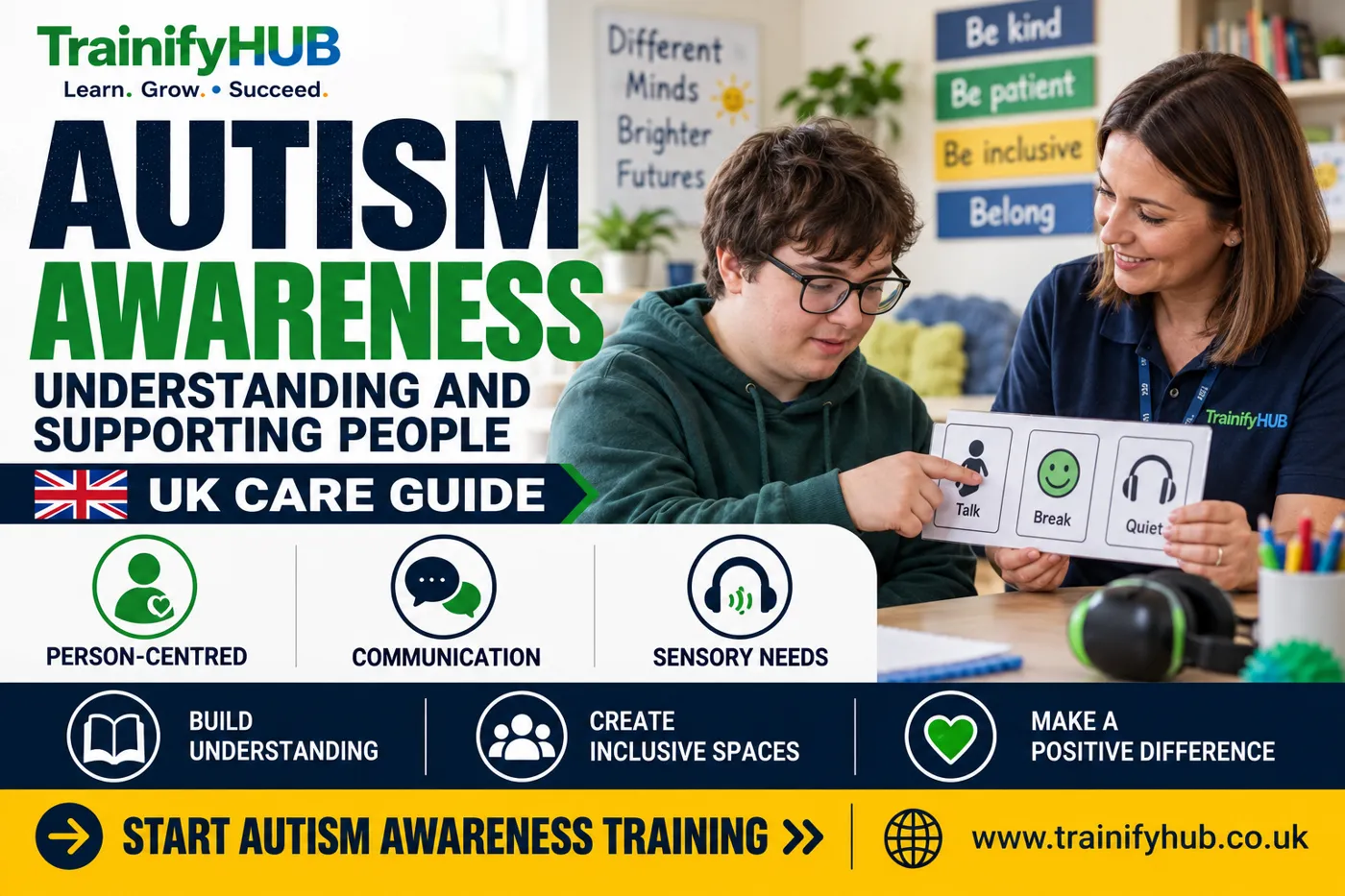
Autism is a lifelong neurodevelopmental difference that affects how a person communicates, interacts, processes information and experiences the world. People often search for different types of autism, but current UK guidance usually explains autism as a spectrum rather than a set of simple separate types. This guide is prepared for learners and employers comparing training options on TrainifyHUB.
This guide explains autism spectrum differences, common myths, support needs and how awareness training can help health and social care workers respond more respectfully.
Key Takeaways
Autism is a spectrum, which means autistic people can have very different strengths, needs and experiences.
Older labels and "types" may still appear online, but support should focus on the individual person rather than a label alone.
The idea that everyone is on the autism spectrum is misleading; many people share traits, but autism has specific diagnostic meaning.
Health and social care staff should use person-centred communication and follow role-appropriate training requirements.
Autism awareness training can support better understanding, but it does not make someone a diagnostic professional.
What are the different types of autism?
Many older resources describe types such as Asperger syndrome, autistic disorder or pervasive developmental disorder. In modern practice, autism is more often discussed as autism spectrum disorder or autism spectrum condition, with support based on individual strengths and needs.
The NHS explains autism as a spectrum and describes common areas of difference in communication, interaction, routines, sensory experience and anxiety: NHS autism overview. For source context, see NHS autism overview.
So when people ask, "what are the different types of autism?", a careful answer is: older labels exist, but they should not be used to assume what a person can or cannot do. Two autistic people with the same label may need very different support.
Is everyone on the autism spectrum?
No. The phrase "everyone is on the autism spectrum" is usually meant kindly, but it can minimise autistic people's experiences. Many people may prefer routines, dislike noise or find some social situations tiring. That does not mean everyone is autistic.
Autism has a specific diagnostic meaning. A better way to speak is to recognise that autistic people are different from each other and that support should be tailored to the individual.
What support needs might autistic people have?
Support needs vary widely. Some autistic people live independently and need only reasonable adjustments in specific situations. Others may need daily support with communication, personal care, decision-making, sensory distress or routines. A relevant TrainifyHUB course option is the Autism Awareness for Health and Social Care course.
Area | Possible support need |
Communication | Clear language, extra processing time or alternative communication. |
Sensory environment | Reduced noise, lighting adjustments or predictable spaces. |
Routines | Advance notice of change and clear plans. |
Social interaction | Respect for different communication styles. |
Health and care | Staff who understand distress, consent, dignity and reasonable adjustments. |
Do not assume support needs from appearance, speech or diagnosis wording. Ask, listen and follow the person's care plan where one exists.
What happened to the triad of impairments?
Some people still search for autism spectrum disorder triad of impairments. This older model described differences in social interaction, communication and imagination or flexibility of thought. It can still appear in training materials, but many autistic people and professionals prefer language that is less deficit-focused. A related TrainifyHUB option is the Care Certificate One Portfolio course.
Modern awareness training should explain communication, sensory needs, routines, anxiety, masking, strengths and reasonable adjustments in a respectful way.
What should health and social care workers know?
Care workers should understand that behaviour may be communication, sensory distress can be real and sudden change can be difficult. Good support is calm, respectful and person-centred. A relevant TrainifyHUB course option is the Care Certificate One Portfolio course.
For CQC-regulated providers in England, staff must receive learning disability and autism training appropriate to their role. CQC guidance explains the requirement and the Oliver McGowan Code of Practice: CQC learning disability and autism training.
That does not mean one generic awareness course covers every duty for every worker. Employers should decide what training is needed for the role, setting and people supported.
How can TrainifyHUB support autism awareness?
TrainifyHUB's Autism Awareness - Health and Social Care course supports learners who need flexible online awareness training in a care context.
Learners can also browse related health and social care training where autism awareness connects with communication, safeguarding, dignity and person-centred support. A relevant TrainifyHUB course option is the Mental Health Awareness for Health and Social Care course.
Conclusion
Autism is best understood through individual strengths, needs and experiences, not simple labels. For the wider training context in health and care, see the Health and Care Act 2022. Awareness training helps staff communicate better, reduce assumptions and support people more respectfully.
To build awareness, view TrainifyHUB's Autism Awareness - Health and Social Care course and agree with your employer how it fits your role.
Frequently Asked Questions
Older labels exist, but autism is now usually explained as a spectrum. Support should be based on the individual person, not the label alone.
No. People may share some traits, but autism has a specific diagnostic meaning and should not be reduced to everyday preferences. For related reading, see the domiciliary care guide.
It is training that helps learners understand autistic experiences, communication, sensory needs, support approaches and respectful practice.
No. Diagnosis should be handled by appropriately qualified professionals. Awareness training supports understanding and practice.
That search usually means someone wants local diagnosis, support or services. A training article can explain autism, but local NHS or council routes may be needed for services.
CQC-regulated providers in England must make sure staff receive learning disability and autism training appropriate to their role.