Safeguarding Adults: A Complete UK Guide to Recognising and Reporting Abuse
Peter Traynor Sime
Author
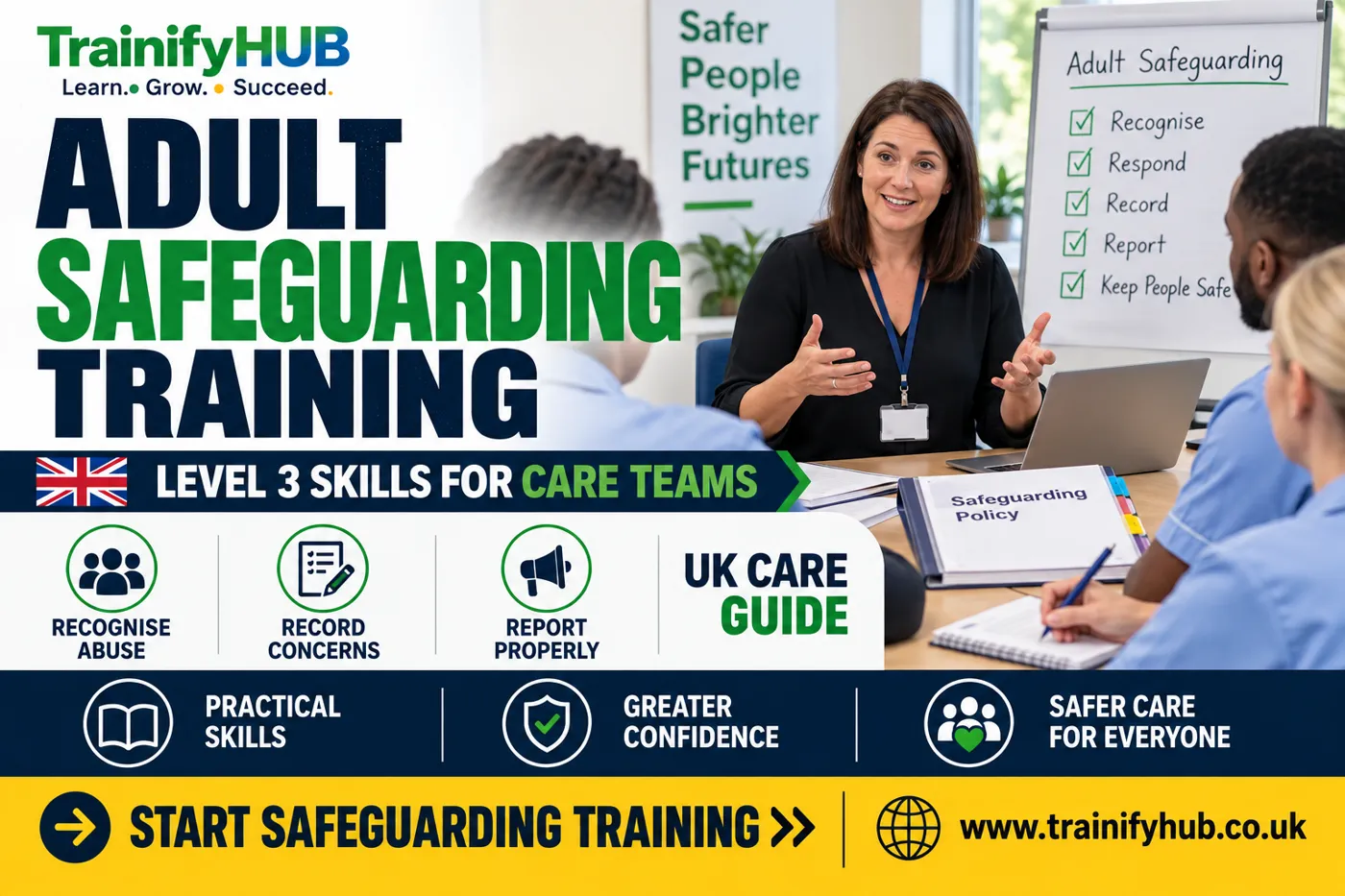
Adult safeguarding training helps UK workers and organisations recognise abuse or neglect, respond calmly, and report concerns through the right local procedures. It is especially important in health and social care, support work, housing, charities, community services, and any role involving adults who may be at risk.
This guide explains what safeguarding adults means in the UK, the warning signs to look for, how concerns are usually reported, and how an adult safeguarding course can support safer practice and stronger training records.
Key Takeaways
Adult safeguarding is about protecting an adult's right to live safely, free from abuse and neglect.
UK employers must make sure staff understand their safeguarding responsibilities, but training alone does not replace supervision, workplace procedures, or competence checks.
Safeguarding concerns should be reported through local policy, with urgent risks escalated immediately to emergency services or the relevant safeguarding lead.
Level 3 adult safeguarding training is usually suited to people with greater responsibility for recognising, responding to, recording, or escalating concerns.
Certificates can help evidence learning, but employers still need role-specific assessment, records, and follow-up action.
What Does Safeguarding Adults Mean In The UK?
In the UK, adult safeguarding is closely linked to the Care Act 2014. The Care Act placed adult safeguarding on a statutory footing in England and focuses on adults who have care and support needs, are experiencing or at risk of abuse or neglect, and may be unable to protect themselves because of those needs.
The Care and Support statutory guidance describes safeguarding as protecting an adult's right to live safely, free from abuse and neglect. In practical workplace terms, that means staff should know how to notice concerns, listen carefully, avoid making promises they cannot keep, record information accurately, and pass concerns to the right person or service.
Safeguarding is not only a care-home issue. It can matter in domiciliary care, supported living, NHS services, charities, community groups, housing, education, transport, customer-facing services, and voluntary roles.
Useful UK sources include the Care Act 2014, CQC Regulation 13, and Skills for Care safeguarding guidance.
Who Needs Adult Safeguarding Training?
Adult safeguarding training is useful for anyone whose work brings them into contact with adults who may be at risk of abuse, neglect, exploitation, or harm.
Common learner groups include:
Care workers and support workers
Healthcare assistants and nursing support staff
Care managers and team leaders
Volunteers and charity staff
Housing and community support workers
HR, L&D, and compliance leads
Reception, transport, and customer-facing staff in care-related settings
Different roles need different levels of depth. A new starter may need awareness training as part of induction. A supervisor, manager, safeguarding lead, or senior practitioner may need more detailed training on decision-making, escalation, recording, information sharing, and multi-agency working.
What Counts As Abuse Or Neglect?
Adult safeguarding training should help learners recognise that abuse can be deliberate, negligent, repeated, or a single incident. It can happen in a person's home, a care setting, a hospital, a public place, online, or within a trusted relationship.
Common forms of abuse and neglect include:
Physical abuse
Domestic abuse
Sexual abuse
Psychological or emotional abuse
Financial or material abuse
Modern slavery
Discriminatory abuse
Organisational abuse
Neglect or acts of omission
Self-neglect
These categories should not be treated as a closed checklist. Real situations can be messy. A person may experience more than one type of abuse, and early signs can be subtle.
Common Signs To Notice
Warning signs may include unexplained injuries, sudden changes in mood, fear around a particular person, poor hygiene, missed medication, unpaid bills, unusual financial activity, isolation, distress, reluctance to speak openly, or a home environment that appears unsafe.
Good safeguarding practice is not about jumping to conclusions. It is about noticing patterns, recording facts, listening without pressure, and following local procedures.
How Should You Report An Adult Safeguarding Concern?
If someone is in immediate danger, call 999. If there is no immediate emergency, follow your organisation's safeguarding policy and report the concern to the appointed safeguarding lead, manager, or local authority safeguarding route.
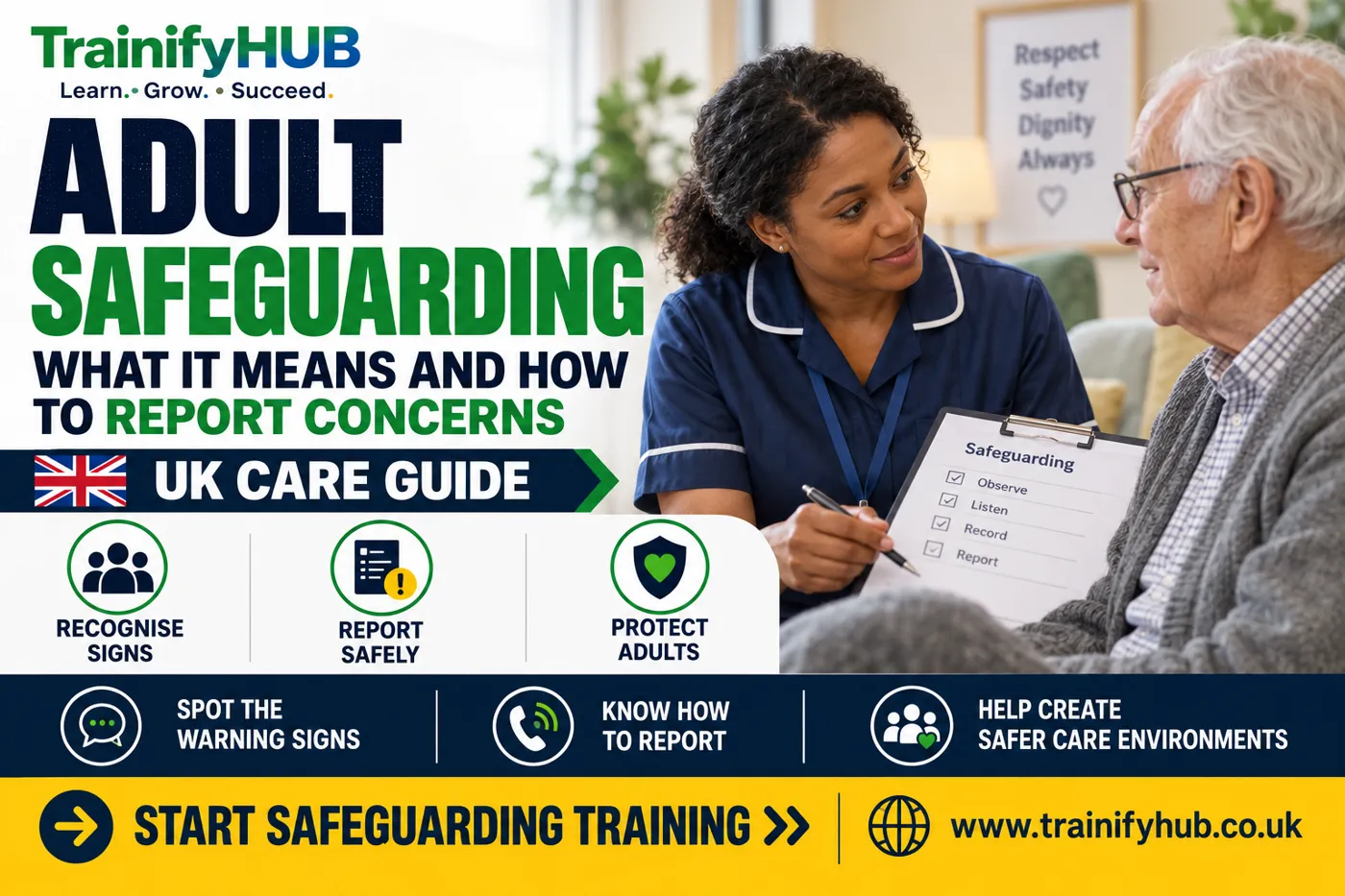
A practical reporting process usually looks like this:
Make the person safe where you can do so without creating further risk.
Listen calmly if the adult tells you something concerning.
Avoid promising confidentiality, because safeguarding information may need to be shared.
Record what you saw, heard, or were told, using factual language.
Report the concern through your workplace procedure.
Escalate if the concern is not acted on or the risk increases.
Keep records secure and share information only with people who need it for safeguarding purposes.
The SCIE guide to safeguarding adults and information sharing is a useful UK reference because it explains why sharing the right information at the right time matters in safeguarding practice.
What Should Level 3 Adult Safeguarding Training Cover?
Level 3 adult safeguarding training is often aimed at staff with additional responsibility for recognising, responding to, recording, or escalating safeguarding concerns. The exact training need depends on the person's role, workplace, and local procedures.
A strong adult safeguarding level 3 course should usually cover:
The UK safeguarding framework and Care Act context
Types and indicators of abuse and neglect
Mental capacity and consent awareness
Responding to disclosures
Recording and reporting concerns
Information sharing principles
Whistleblowing and escalation
Multi-agency safeguarding practice
Safer workplace culture
Case-based examples
For care settings, employers should also consider the Care Certificate standards, which define expected knowledge, skills, and behaviours for relevant health and social care roles.
Can Online Adult Safeguarding Training Support Compliance?
Online safeguarding adults training can support staff awareness, induction, refresher learning, and training records. It can help organisations show that workers have been introduced to key safeguarding concepts and know how to respond to concerns.
However, a course certificate does not automatically prove that an employer is compliant or that a worker is competent in every workplace situation. Employers still need suitable policies, role-specific supervision, local reporting routes, accurate records, safer recruitment, and appropriate workplace assessment.
For regulated health and social care providers, CQC Regulation 13 is especially important. It expects providers to protect people from abuse and improper treatment, and CQC guidance refers to staff being able to recognise abuse and act appropriately.
How TrainifyHUB Supports Safeguarding Adults Training
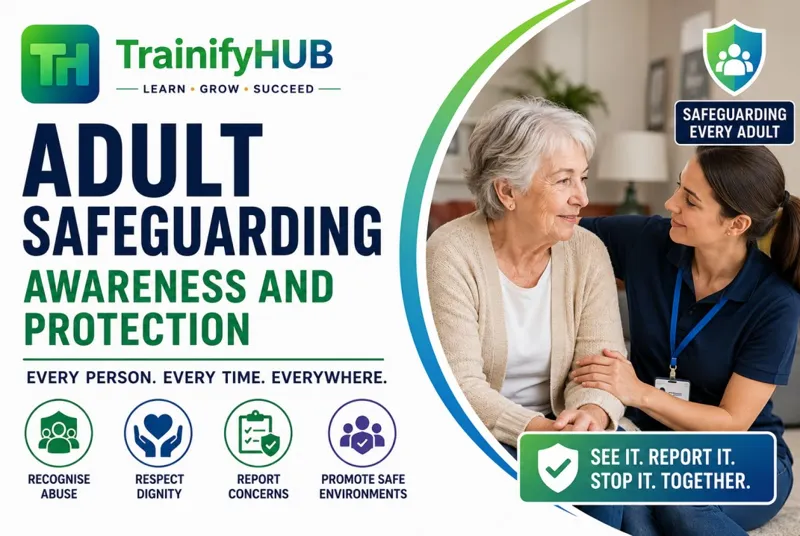
TrainifyHUB provides flexible online training for UK learners and organisations. The Adult Safeguarding Awareness and Protection course is designed to help learners build safeguarding awareness and understand how to respond to concerns in a structured way.
For individual learners, online study can fit around shifts, care responsibilities, or other work. For employers, safeguarding training can support induction, refresher learning, and staff development records when used alongside local policies and supervision.
You can also explore the wider TrainifyHUB course catalogue or review TrainifyHUB accreditation information when comparing certificate and assurance details.
Conclusion
Safeguarding adults is a practical responsibility: notice concerns, respond carefully, report through the right route, and keep accurate records. The right adult safeguarding course can strengthen awareness and confidence, but it should sit alongside workplace policies, supervision, and local safeguarding procedures.
Ready to build recognised safeguarding awareness? View TrainifyHUB's Adult Safeguarding Awareness and Protection course.
Frequently Asked Questions
Many UK roles require safeguarding awareness because workers may come into contact with adults at risk. The exact training requirement depends on the role, sector, employer policy, and regulatory expectations.
Level 3 adult safeguarding training is usually suitable for staff with greater responsibility for responding to concerns, recording information, escalating risk, or supporting team practice.
No. Online training can support knowledge and training records, but employers still need role-specific supervision, workplace procedures, and competence assessment where relevant.
Listen calmly, avoid promising secrecy, record the facts, and report the concern through your organisation's safeguarding procedure. If someone is in immediate danger, call 999.
Yes, certificates can help evidence staff learning. They should be kept alongside induction records, supervision notes, policy acknowledgements, and any follow-up safeguarding actions.